Free Shipping Over $100 · Satisfaction Guarantee · Handcrafted by Artisans

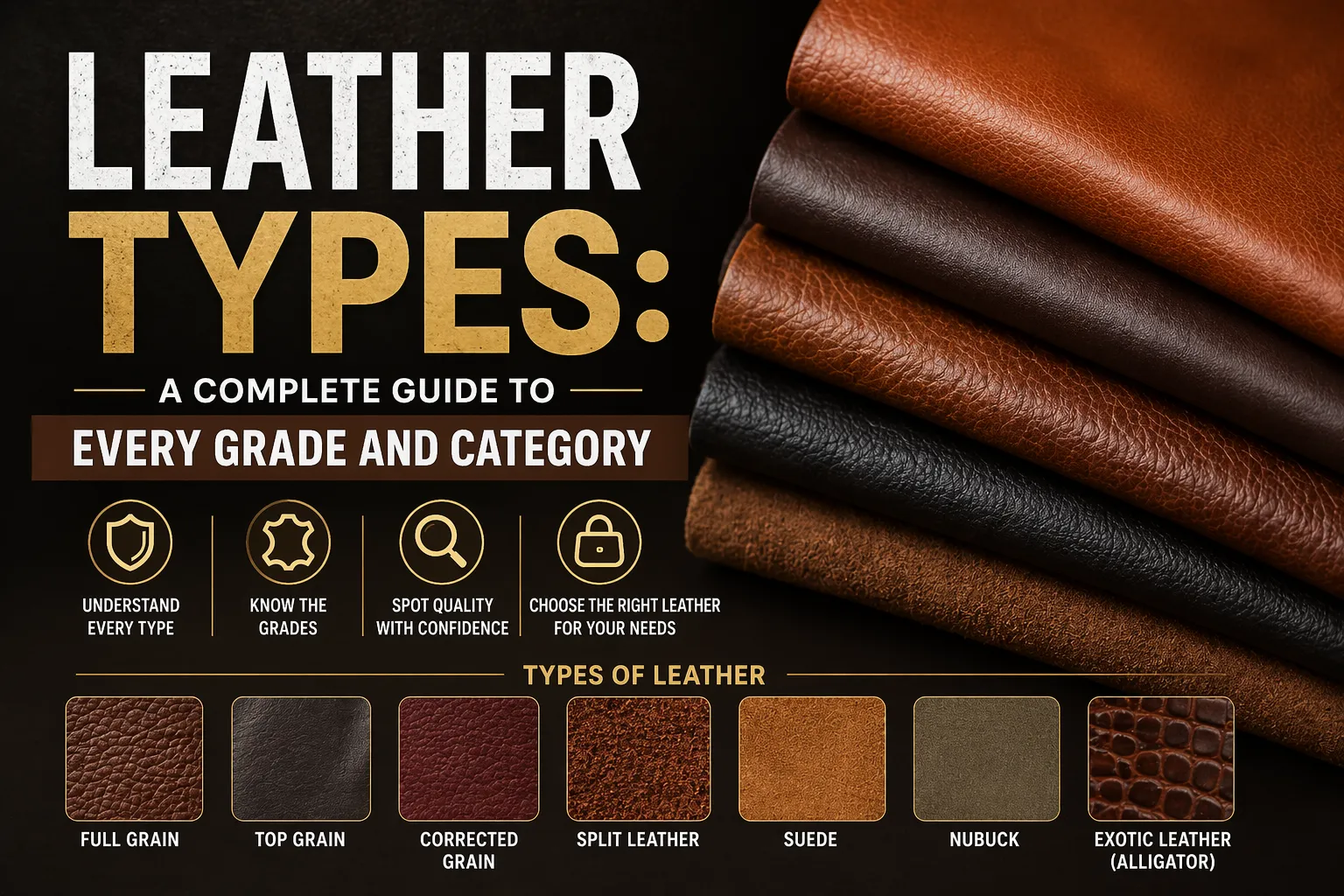
Not all leather is created equal. Walk into any store or scroll through any online shop, and you will see products labelled “genuine leather,” “full grain,” “bonded,” or simply “leather” — but these terms describe vastly different materials with very different lifespans, textures, and price points. Understanding the different leather types is the single most important step you can take before investing in a bag, jacket, or any leather accessory.
In this guide, we break down every major leather type — from the finest full grain to synthetic alternatives — so you know exactly what you are paying for, what will last, and what suits your needs best.
Types of Leather
The leather industry categorises materials based on which part of the animal hide they come from, how that hide is processed, and what finishes are applied. These factors determine everything — the look, the feel, the durability, and ultimately, how long your leather product will last.
Here is an in-depth look at every major leather type you will encounter.
Full Grain Leather
Full grain leather is widely regarded as the highest quality leather available. It is made from the outermost layer of the animal hide — the part directly beneath the hair — and crucially, this surface is left completely intact. No sanding. No buffing. No artificial correction.
Because the natural grain is preserved, full grain leather retains the hide’s original fibre structure in its tightest, strongest form. This makes it exceptionally resistant to moisture, tearing, and wear. A well-made full grain leather bag can easily last 20 to 30 years with minimal care — far outlasting any other leather grade.
One of the most valued characteristics of full grain leather is its ability to develop a patina over time. This is a natural change in colour and sheen that occurs as the leather absorbs oils from your hands and exposure to the elements. Rather than looking worn, full grain leather looks richer and more distinguished with age.
You will notice natural markings on full grain leather — subtle scars, pore variations, and grain patterns. These are not defects. They are proof that the leather is authentic, unprocessed, and of the highest standard. No two hides are exactly alike, which is why every full grain product carries its own unique character.
Full grain leather is the material of choice for premium leather bags, high-end footwear, and luxury accessories. It is also the only grade we use at BagsinLeather for our handcrafted collection.
Top Grain Leather
Top grain leather is the second-highest grade and the most commonly used leather in mid-to-high-range consumer goods. It comes from the same outermost layer of the hide as full grain leather, but with one key difference: the very top surface has been lightly sanded or buffed to remove natural imperfections like scars, insect bites, and uneven textures.
After this sanding process, a finish coat is applied to give the leather a more uniform, polished appearance. The result is a material that looks clean and consistent — but at a cost. Removing the top surface weakens the fibre structure slightly and eliminates the leather’s ability to develop the rich patina that makes full grain so desirable.
Top grain leather is still a good material. It is softer and more pliable than full grain right out of the box, which is why many mainstream brands favour it for handbags, wallets, and upholstery. It resists stains reasonably well due to its finish coat, and it is generally thinner and lighter.
However, top grain leather will not age as gracefully as full grain. Over years of use, the finish coating can wear through, and the leather lacks the deep fibre integrity needed to last decades. If you prioritise a flawless, uniform look over long-term character, top grain is a solid choice — just know that you are trading longevity for aesthetics.
Nubuck Leather
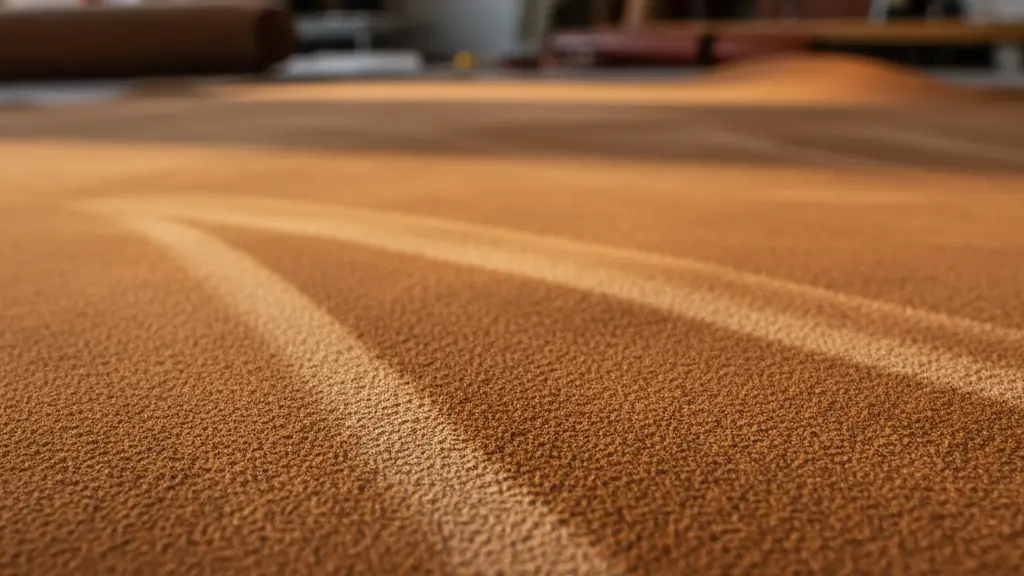
Nubuck is a type of full grain leather that has been lightly sanded or buffed on the outer grain surface to create a soft, velvety nap — similar in feel to suede, but structurally much stronger.
Because nubuck is made from the grain side (the outermost layer) rather than the split side, it retains far more fibre strength and durability than suede. The texture is finer and more consistent, giving it a luxurious feel that works beautifully for boots, bags, and upholstered furniture.
The trade-off is maintenance. Nubuck’s open, textured surface absorbs liquids and stains much more readily than smooth leather. It requires regular brushing with a specialised nubuck brush and occasional application of a protective spray to keep it looking its best. Water can darken the surface temporarily, though it typically dries back to its original colour.
Nubuck is a premium material — you will find it on high-end footwear and designer accessories. If you enjoy the soft, matte look and are willing to invest the extra care, nubuck offers a distinctive texture that smooth leathers simply cannot replicate.
Patent Leather
Patent leather is any leather — typically cowhide — that has been coated with a high-gloss lacquer or synthetic finish to create a mirror-like, reflective surface. The technique dates back to the early 19th century and was originally achieved using linseed oil-based coatings, though modern patent leather typically uses polyurethane or acrylic finishes.
The glossy coating gives patent leather a dramatic, formal appearance that has made it a staple of dress shoes, evening clutches, and statement accessories for over two centuries. It is also practically waterproof, since the coating seals the leather surface entirely, preventing moisture from reaching the fibres beneath.
However, patent leather has notable drawbacks. The thick coating eliminates the leather’s natural breathability, which means it does not develop a patina and can feel stiff or plasticky compared to uncoated grades. The finish is also vulnerable to scuffing, cracking in extreme temperatures, and colour transfer from other materials (a common complaint with dark patent leather rubbing against lighter fabrics).
Patent leather occupies a specific niche — formal occasions and fashion-forward styling. It is not suited for everyday bags or accessories where durability and comfort take priority over visual impact.
Genuine Leather
Few terms in the leather industry cause more confusion than “genuine leather.” Despite what the name implies, genuine leather is actually one of the lower grades of real leather. The label simply confirms that the product is made from real animal hide — it says nothing about quality.
Genuine leather is typically made from the layers of the hide that remain after the top grain has been separated and removed. These inner layers have a looser, weaker fibre structure. To compensate, manufacturers heavily sand the surface and apply an artificial grain pattern through embossing, followed by thick coats of pigment and finish to make it look presentable.
The result is a product that can feel and look like leather on day one, but deteriorates rapidly. Genuine leather tends to crack, peel, and dry out within a few years of regular use. It lacks the fibre density to resist wear, and because the finish is essentially painted on, once it chips away there is nothing underneath to maintain the appearance.
If you see a bag or wallet labelled “genuine leather” at a surprisingly low price, now you know why. It is real leather in the most literal sense, but it sits far below full grain leather bags and top grain in terms of quality, durability, and longevity.
Split Grain Leather
Split leather comes from the lower layers of the hide — the fibrous part that is left over after the top grain layer has been separated during processing. Because it is taken from beneath the grain surface, split leather lacks the tight, interlocking fibre structure that gives full grain and top grain their strength.
To make split leather usable, manufacturers typically apply a polyurethane or vinyl coating to one side to create a smooth surface. They may also emboss an artificial grain pattern to mimic the look of higher-quality leather. This is how many “corrected grain” products are made.
Split leather is significantly cheaper to produce, which makes it popular for budget-friendly goods — think affordable belts, low-cost furniture, and mass-produced bags. However, the weakness of the underlying material means these products wear out far more quickly. The coatings crack, the material stretches and deforms, and it lacks any ability to develop the natural patina that characterises premium leather.
Suede is actually a form of split leather — made from the same lower layer but left with its natural fuzzy texture rather than being coated. While suede has its own appeal, it shares the same structural limitations as other split leathers.
Bonded Leather
Bonded leather is the lowest grade of material that can legally carry the word “leather” in its name, and it sits at the very bottom of the quality hierarchy. It is made by grinding up scraps and fibres of leftover leather — often offcuts from the manufacturing of higher-grade products — and binding them together with polyurethane or latex adhesives onto a fibre backing.
The resulting sheet is then embossed with an artificial grain pattern to resemble real leather. The leather content in bonded products can range from as little as 10% to around 20%, with the remainder being synthetic filler and adhesive. Some manufacturers compare bonded leather to particle board — the furniture-industry equivalent where wood chips are glued together as a cheap substitute for solid wood.
Bonded leather feels thin and plasticky. It peels, flakes, and cracks rapidly, often within the first year or two of use. It cannot be conditioned, repaired, or restored in any meaningful way. Once the thin surface layer breaks down, the product is essentially finished.
If durability, longevity, or the genuine character of real leather matter to you at all, bonded leather should be avoided entirely.
Exotic Leather Types
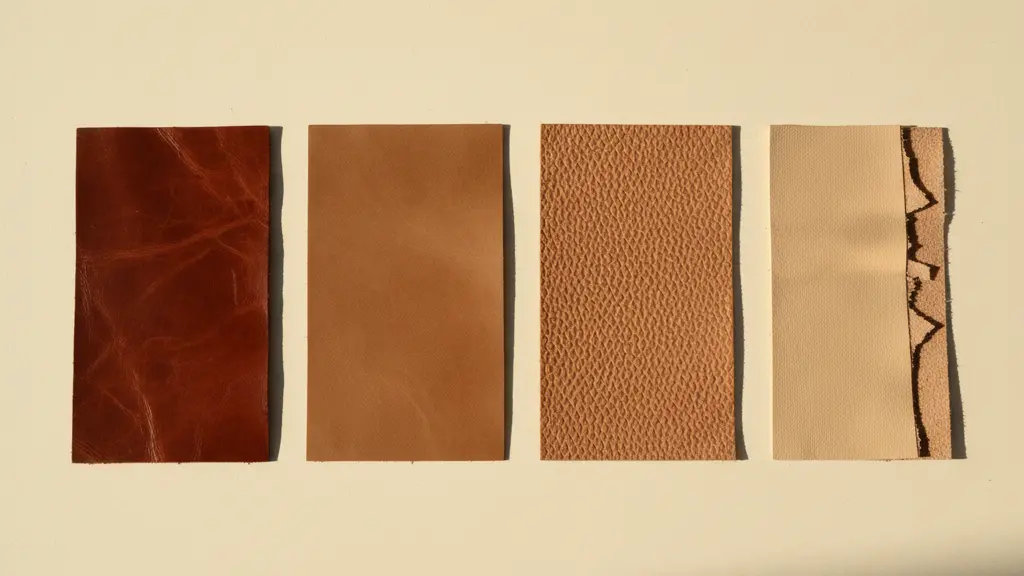
Beyond standard cowhide, the leather industry works with a range of animal skins that are classified as exotic leathers. These materials are prized for their unusual textures, patterns, and rarity — and they come with significantly higher price points.
The most commonly encountered exotic leathers include:
- Alligator and Crocodile Leather — Known for their distinctive tile-like scale pattern, these are among the most luxurious and expensive leathers in the world. Used primarily for high-end wallets, watch straps, and designer handbags. The scales are naturally raised and create a three-dimensional texture that is impossible to replicate convincingly in synthetic form.
- Ostrich Leather — Recognisable by its unique “quill bump” pattern where the feather follicles create raised dots across the surface. Ostrich leather is surprisingly soft and supple while remaining very durable. It is popular in the luxury boot and accessory market.
- Snake Leather — Typically sourced from python or water snake, this leather features the distinctive scale pattern of the original skin. It is thin, flexible, and used predominantly for fashion accessories, shoes, and small leather goods.
- Kangaroo Leather — Lighter and thinner than cowhide but remarkably strong for its weight. Kangaroo leather is widely used in athletic footwear, particularly soccer cleats, because of its excellent strength-to-weight ratio.
- Goat and Sheep Leather — Softer and more pliable than cowhide, these leathers are commonly used for garments, gloves, and book bindings. Goat leather (sometimes called “morocco leather”) is known for its characteristic pebbled grain.
Exotic leathers carry ethical, legal, and sustainability considerations. Many species are protected under international wildlife trade regulations (such as CITES), and reputable suppliers must provide documentation proving legal and sustainable sourcing.
Faux Leather
Faux leather — also called synthetic leather, vegan leather, or artificial leather — is not leather at all. It is a man-made material designed to mimic the look and feel of real leather without using animal hides.
The two most common types are:
- PU (Polyurethane) Leather — A polymer coating applied to a fabric base. PU leather can look convincingly like real leather and feels relatively soft. It is more breathable than PVC alternatives and is the most common type of faux leather used in fashion accessories and furniture.
- PVC (Polyvinyl Chloride) Leather — A plastic-based material that is cheaper and more rigid than PU. PVC has a noticeably artificial feel and does not breathe. It is commonly found in very low-cost goods.
More recently, plant-based alternatives have entered the market — materials derived from pineapple leaves (Piñatex), mushroom mycelium, cactus, and apple waste. These are still in relatively early stages of development and availability, but they represent a growing category.
Faux leather offers a lower price point and avoids animal products entirely. However, it has significant limitations from a durability perspective. Most synthetic leathers begin to crack, peel, and deteriorate within two to five years — a fraction of the lifespan of quality real leather. They also lack the breathability, texture evolution, and repairability of genuine hides. And from an environmental standpoint, petroleum-based faux leathers (PU and PVC) raise their own sustainability questions around microplastics and non-biodegradability.
Choosing Between the Different Types of Leather
With so many leather categories on the market, picking the right one comes down to understanding what you need from the material — and what trade-offs you are willing to accept.
Full grain leather
Is the clear choice if longevity, character, and quality are your priorities. It is the strongest, most durable grade, it develops a beautiful patina over the years, and it can be conditioned and maintained almost indefinitely. If you are investing in a leather bag, briefcase, or accessory that you want to carry for a decade or more, full grain is the material that delivers on that promise. It costs more upfront, but the cost per year of use is actually lower than cheaper alternatives that need replacing.
Top grain leather
Works well when you want a polished, uniform appearance with good — though not exceptional — durability. It is lighter and more pliable than full grain, which makes it popular for everyday handbags and wallets. Expect it to hold up well for several years, though it will not age with the same depth of character.
Nubuck
Is ideal for anyone drawn to a soft, matte texture. It offers the structural strength of full grain with a completely different tactile experience. Just be prepared for more attentive care — nubuck demands regular maintenance to stay looking sharp, especially around moisture.
Patent leather
Fills a specific role: formal events, evening accessories, and statement pieces where high-gloss impact matters more than everyday practicality. It is not the material for your daily commuter bag, but for the right occasion, nothing else captures light quite the same way.
Genuine leather and split leather
Are budget-conscious options that offer the feel of real leather at a lower price point. They are acceptable for items you plan to use lightly or replace within a few years. However, if you expect lasting quality, these grades will disappoint. The fibre structure simply is not strong enough for heavy daily use.
Bonded leather
Should generally be avoided if quality matters to you at all. The minimal leather content and adhesive construction mean rapid deterioration, and the product cannot be meaningfully repaired or reconditioned.
Exotic leathers
Are a luxury choice driven by aesthetics and rarity rather than pure functionality. If a distinctive texture or pattern is important to you and the budget allows, exotics deliver something cowhide simply cannot — but verify sourcing credentials carefully.
Faux leather
Is the right choice if you prefer to avoid animal products entirely or need a very low-cost option. Just manage your expectations around lifespan. No synthetic currently matches the longevity or developing character of real full grain leather.
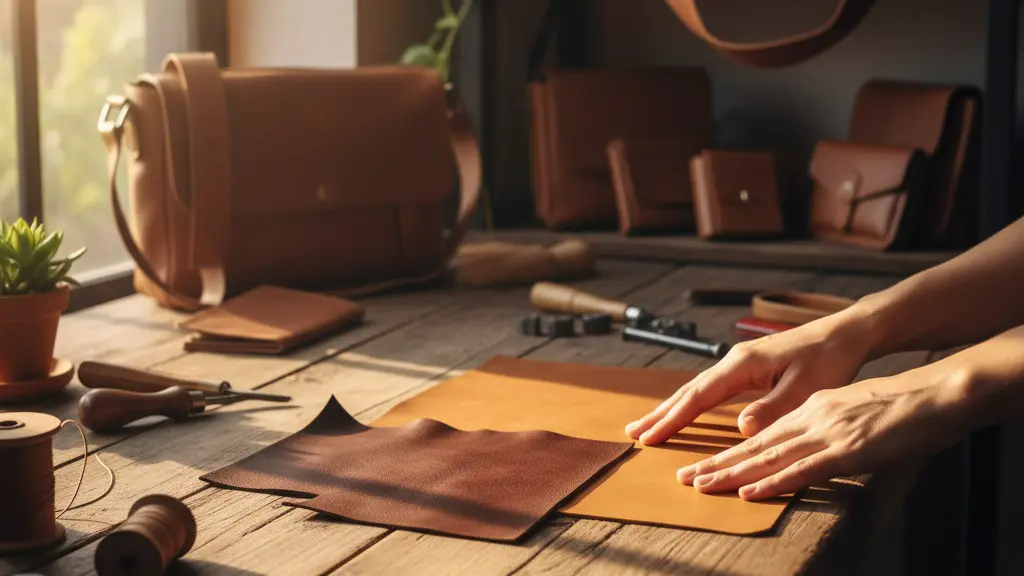
Care and Maintenance of Leather Goods
Quality leather is remarkably low maintenance compared to most materials — but it is not zero maintenance. A little regular attention will keep your leather looking exceptional for decades. Here are the essentials.
Keep It Clean
The simplest and most effective habit is regular dusting. Use a soft, lint-free cloth — a clean cotton rag or microfibre works perfectly — and gently wipe down your leather goods every few weeks. This prevents dirt, dust, and surface grime from building up and settling into the grain.
For deeper cleaning, dampen the cloth slightly with clean water and wipe the surface in gentle, circular motions. Avoid soaking the leather. If you encounter a stubborn stain, use a cleaner specifically formulated for leather — never household cleaning products, alcohol, or harsh detergents, as these strip the natural oils and can permanently damage the finish.
Condition Regularly
Leather is a natural material, and like skin, it needs moisture to stay supple. A quality leather conditioner replenishes the oils that keep the fibres flexible and prevents the material from drying out, cracking, or becoming stiff.
Apply a small amount of conditioner to a soft cloth and work it into the leather in even, circular strokes. Allow it to absorb for a few minutes, then buff away any excess with a clean, dry cloth. How often you condition depends on your climate and usage — every three to six months is a sensible baseline for most leather bags, with more frequent treatment in hot, dry environments.
Always patch-test any new conditioner on an inconspicuous area first. Some products can darken or alter the colour of certain leather finishes.
Store Properly
How you store leather matters more than most people realise. When not in use, keep your leather bags stuffed with acid-free tissue paper or a soft cloth to help them hold their shape. Store them upright in a cool, dry place with adequate air circulation — never in plastic bags or sealed containers, which trap moisture and promote mould growth.
Keep leather away from direct sunlight and heat sources. Prolonged sun exposure fades the colour, while radiators and heaters dry out the material and accelerate cracking. A breathable dust bag is the ideal storage solution for bags you do not use daily.
Handle Water and Moisture
Leather and water are not enemies, but they are not close friends either. If your leather gets wet, do not panic. Blot away excess moisture with a clean cloth — never rub, which can push water deeper into the fibres. Let the leather air-dry naturally at room temperature, away from direct heat. Once dry, apply conditioner to restore any lost moisture.
For proactive protection, consider applying a leather protectant or water-repellent spray, especially if you live in a wet climate or carry your bag in all weather. Beeswax-based products offer a natural barrier that works well on smooth, full grain leather.
Know When to Seek Professional Help
Deep scratches, ink stains, persistent discolouration, or significant water damage are best handled by a professional leather care specialist. Attempting DIY repairs on serious damage risks making the problem worse. A skilled professional can re-dye, refinish, and restore leather products to near-original condition — another reason why investing in high-quality leather pays off long term, since cheaper grades often cannot be repaired at all.
Frequently Asked Questions
What is the highest quality type of leather?
Full grain leather is universally recognised as the highest quality leather available. It is made from the outermost layer of the hide with the natural grain left completely intact, giving it the tightest fibre structure, the greatest durability, and the unique ability to develop a rich patina over time.
What is the difference between full grain and genuine leather?
Full grain leather comes from the top layer of the hide and is left unaltered, making it the strongest and most durable grade. Genuine leather is made from the lower, weaker layers after the top grain has been removed. It is real leather, but it is significantly lower in quality, durability, and longevity than full grain.
How can you tell if leather is real or fake?
Real leather has a distinctive, slightly earthy smell that synthetics cannot replicate. The surface will show natural imperfections — subtle grain variations, pores, and slight irregularities — whereas faux leather tends to look perfectly uniform. Real leather also feels warm to the touch and absorbs a small drop of water, while synthetic surfaces repel moisture and feel cooler or more plasticky.
What is the most durable type of leather?
Full grain leather is the most durable leather type. Because the entire grain surface is preserved, the fibre structure remains at maximum density and strength. It is resistant to moisture, tearing, and everyday abrasion, and it ages gracefully rather than deteriorating — often lasting 20 years or more with basic care.
Is top grain leather good quality?
Yes, top grain leather is a good quality material and sits as the second-highest grade behind full grain. It has been lightly sanded to remove surface imperfections, which gives it a more uniform look but slightly reduces its durability and eliminates the patina development that full grain is known for. It remains a solid choice for bags, wallets, and accessories.
The Bottom Line
Understanding the different types of leather is the foundation of every smart leather purchase. From the unmatched durability and character of full grain leather at the top of the hierarchy, down through top grain, nubuck, split, and bonded alternatives, each grade serves a different purpose, price point, and expectation.
The material you choose directly determines how your bag, wallet, or accessory will look, feel, and perform — not just on day one, but years down the road. When you invest in quality leather, you invest in something that gets better with age rather than falling apart.
At BagsinLeather, every piece in our collection is handcrafted from full grain leather — the strongest, most beautiful grade available. We believe that is the only standard worth building on.
Related posts
Canvas vs. Leather Messenger Bag: Which Is Right for You?
Choosing between a canvas vs leather messenger bag comes down to a few honest trade-offs: weight, cost, durability, weather resistance,...
What Is Nubuck Leather? A Complete Guide
Nubuck leather is top-grain leather that has been sanded on its outer surface to create a soft, velvety nap — a material that looks and...
Fringe Crossbody Bag: The Complete Style Guide
A fringe crossbody bag is the piece that adds movement to an outfit — a hands-free bag trimmed with swaying leather or suede tassels th...

Leather Messenger Bag for Women: The Complete Guide
A leather messenger bag for women is the rare bag that carries a laptop to a meeting, a notebook to a café, and your everyday essential...

How to Choose a Leather Laptop Bag: A Buyer’s Guide
Knowing how to choose a leather laptop bag comes down to five decisions: the right bag type, the right size, the right leather grade, r...

Leather Camera Bag: The Complete Buyer’s Guide
A leather camera bag is where photography gear meets everyday style — a way to protect your camera and lens without carrying something ...