Free Shipping Over $100 · Satisfaction Guarantee · Handcrafted by Artisans

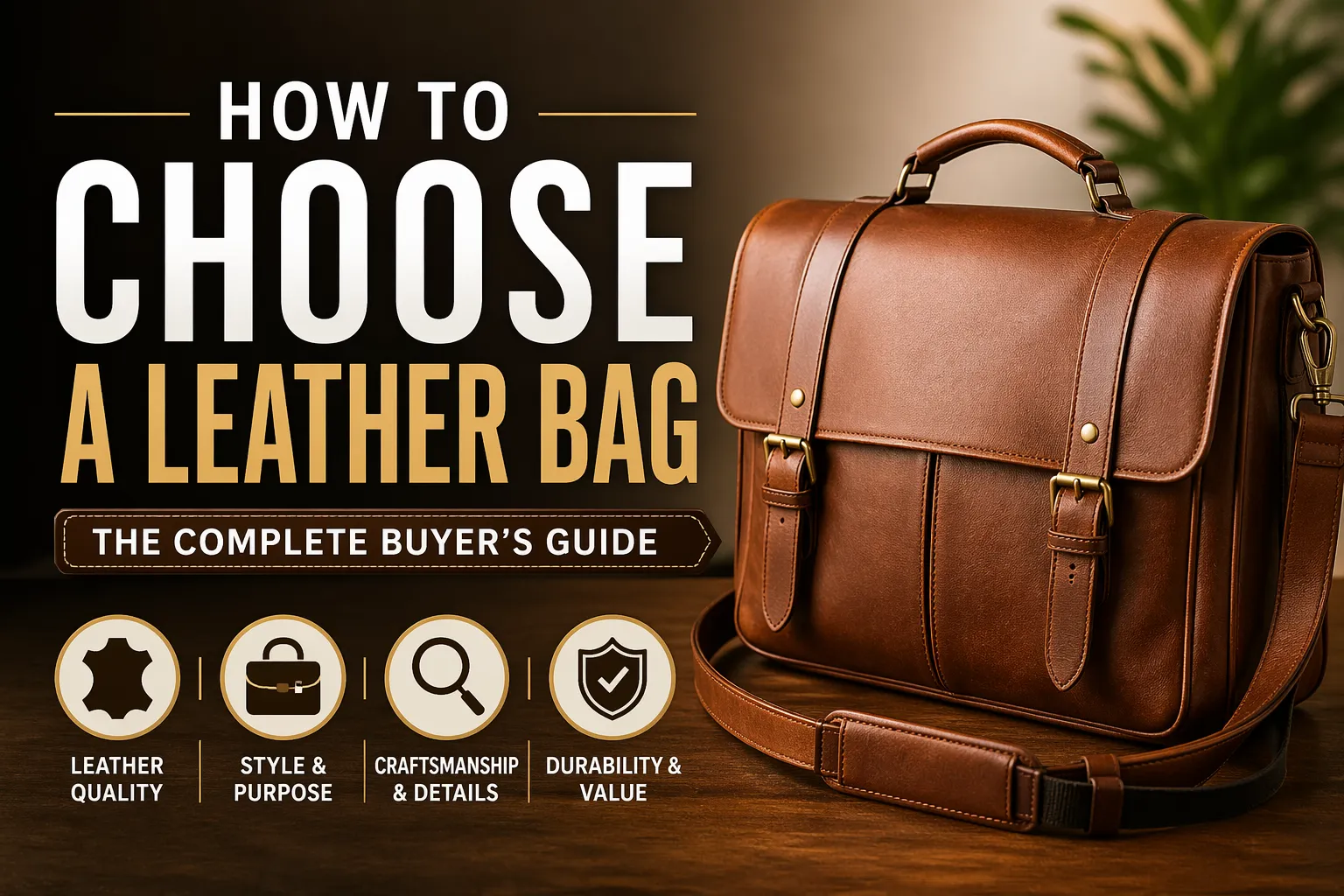
Knowing how to choose a leather bag is the difference between a purchase you carry for decades and one you regret within months. Whether you need something for the daily commute, a travel companion built for years on the road, or an everyday bag that moves with your life, the right leather bag should serve you for a decade or more — not fall apart after a single season.
The challenge is that leather bags vary enormously in quality, materials, and construction, and most of this is invisible to the untrained eye. A bag that looks great in a product photo can disappoint the moment you hold it. Marketing terms like “genuine leather” or “premium quality” often obscure more than they reveal.
This guide covers every factor that matters — from the leather itself to stitching, hardware, size, and purpose — so you spend your money on something you will never regret.
What to Look for in Quality Leather
The leather is the foundation of any leather bag. Get this right and everything else falls into place. Get it wrong and no amount of good design will save the product.
The most important thing to understand is that not all leather is the same. The industry uses a grading system that ranks leather by which part of the animal hide it comes from and how heavily it has been processed.
Full grain leather sits at the top. It uses the outermost layer of the hide with the natural grain left completely intact — no sanding, no buffing, no artificial correction. The fibre structure is at its densest and strongest, which makes full grain leather the most durable grade available. It resists moisture, tearing, and everyday wear, and it develops a beautiful patina over time that makes the bag look better with age. If you are investing in a bag you want to keep for 10, 20, or even 30 years, full grain leather is the only material that realistically delivers on that promise.
Top grain leather is the second-highest grade. The surface has been lightly sanded to remove imperfections, then coated with a pigmented finish. It looks more uniform and feels softer initially, but it lacks full grain’s strength and will not develop a patina. A solid choice for lighter-use bags, but not the best for daily workhorses.
Genuine leather — despite the reassuring name — is one of the lowest grades of real leather. It is made from the weaker inner layers of the hide, heavily processed and coated to look presentable. Products labelled genuine leather typically last only two to five years before cracking and peeling. Avoid it for anything you plan to use regularly.
Bonded leather is ground-up leather scraps glued together. It is the lowest grade and should be avoided entirely for bags.
When examining a leather bag, look for visible natural grain — slight texture variations, pore patterns, and subtle markings that prove the surface is unprocessed. Smell it: real, high-quality leather has a warm, rich, earthy scent, not a chemical or plastic one. And feel the weight — quality leather has substance. If a bag feels thin and flimsy, the leather grade is almost certainly low.
How Stitching and Construction Reveal Quality
After the leather itself, construction quality is the next clearest indicator of how long a bag will last. Even the finest full grain leather will fail if the bag is poorly assembled.
Stitching
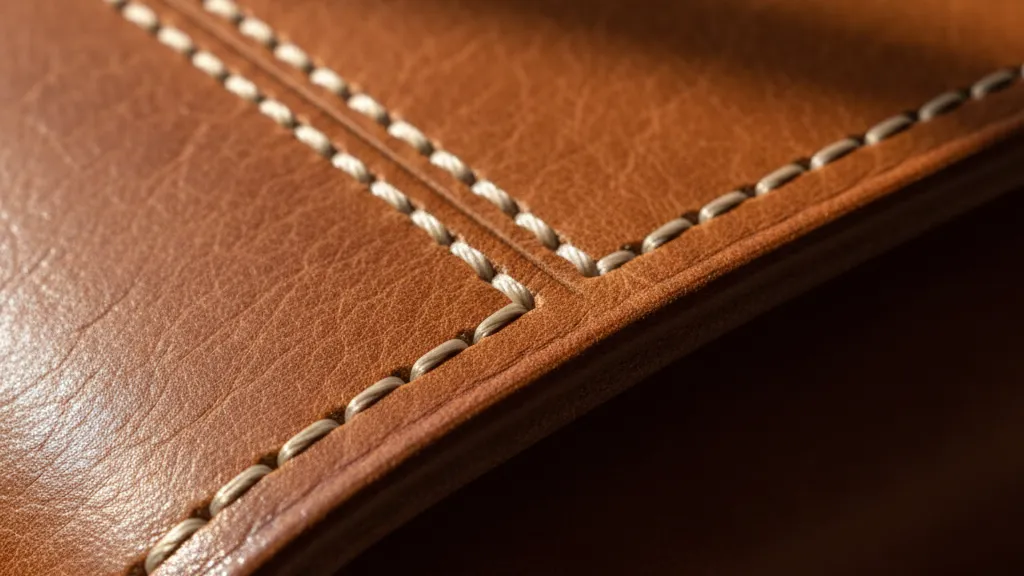
Look closely at the stitching. On a quality bag, the thread lines are straight, evenly spaced, and consistent in tension. There should be no loose threads, skipped stitches, or uneven gaps. Each stitch should sit cleanly in the leather without puckering or pulling the surrounding material.
Hand-stitching is generally stronger than machine-stitching because each stitch is locked independently. If one stitch breaks on a hand-stitched seam, the rest hold. On a machine-stitched seam, a single broken thread can cause the entire line to unravel. Many premium leather bag makers use a saddle stitch — a technique where two needles pass through the same hole from opposite directions, creating an exceptionally strong and self-locking seam.
Double or reinforced stitching at stress points — where straps meet the body, around zipper ends, and at the base of handles — is another sign of thoughtful construction.
Edge Finishing
Turn the bag over and look at the leather edges. On a well-made bag, the edges will be finished — either burnished (heated and smoothed to create a polished, sealed edge), painted with edge paint, or folded and stitched. Raw, rough edges that show exposed fibres suggest shortcuts in construction. Properly finished edges resist fraying and moisture, extending the bag’s lifespan significantly.
Lining
A quality interior lining protects both the leather and your belongings. Cotton canvas and heavyweight twill are common in premium bags — they are durable, breathable, and resist tearing. Synthetic linings can work but are often a sign of cost-cutting. Check that the lining is stitched in cleanly without bunching or puckering, and that it covers all internal seams.
Why Hardware Matters More Than You Think
Hardware is the mechanical backbone of a leather bag. Zippers, buckles, clasps, rivets, D-rings, and magnetic closures take the most repeated stress of any component — and cheap hardware is the single most common point of failure on otherwise decent bags.
What to look for:
- Material. Solid brass, stainless steel, or zinc alloy hardware will last. Avoid plated plastic or lightweight pot metal — these corrode, snap, and lose their finish quickly. Pick up the bag and feel the weight of the hardware. Quality metal has noticeable heft.
- Zippers. YKK is the industry standard for reliable zippers, but what matters most is smooth operation. The zipper should glide without catching, snagging, or requiring force. Test it several times across the full length. Metal-tooth zippers are stronger than nylon-coil zippers for heavy-use bags.
- Buckles and closures. They should engage and release cleanly. Tongue buckles should sit firmly in the holes without wobbling. Magnetic snaps should close with a satisfying click, not a weak attraction that lets the flap swing open.
- Rivets and stress points. Rivets reinforce high-stress junctions — where straps attach to the body, where handles connect to the frame. They should be flush, firmly seated, and show no signs of movement. Missing rivets at stress points is a design shortcut that leads to premature failure.
Hardware also contributes to the bag’s aesthetic. Brass hardware develops its own subtle patina over time that complements the ageing of full grain leather beautifully. Matte black, antique bronze, and brushed nickel finishes each create a different visual tone — choose hardware that aligns with the bag’s overall style.
Choosing the Right Size and Capacity
One of the most common mistakes when buying a leather bag is choosing the wrong size — either too small for what you actually carry, or so large that it becomes bulky and uncomfortable.
Start With Your Daily Essentials
Before browsing bags, lay out everything you carry on a typical day. Phone, wallet, keys, laptop or tablet, charger, notebook, water bottle, sunglasses, headphones — whatever your daily kit looks like. This gives you a realistic picture of the interior volume you actually need.
Match Size to Purpose
- Compact carry (crossbody, small satchel) — Ideal for essentials only: phone, wallet, keys, sunglasses. Best for errands, casual outings, and travel days when you want to stay light.
- Everyday carry (tote, messenger, medium backpack) — Fits a tablet or small laptop, notebook, water bottle, and daily essentials. The sweet spot for most people’s daily needs.
- Work carry (briefcase, laptop bag, structured tote) — Sized for a 13–15 inch laptop plus documents, charger, and work accessories. Look for padded device compartments and organisational pockets. Browse our leather laptop bags or leather briefcases for this category.
- Travel carry (duffle, weekender, travel bag) — Two to four days of clothing plus toiletries. Should fit as airline carry-on (typically under 22 × 14 × 9 inches). Check our leather duffle bags and leather weekender bags for travel-ready options.
Consider the Bag’s Structure
Structured bags (briefcases, satchels) hold their shape whether full or empty, which looks more professional but limits flexibility. Unstructured bags (totes, duffles) collapse when empty, which makes them more versatile and easier to store but less formal.
Think about how you want the bag to look when it is half full — because most days, that is exactly what it will be.
Picking the Right Bag Style for Your Needs
The best leather bag is the one that fits your life — not just your outfit. Here is how to match bag styles to common use cases:
For Work and the Office
A leather briefcase or leather work bag is the professional standard. Look for a padded laptop compartment, internal organisers for documents and accessories, and a clean silhouette that transitions from the commute to the meeting room. A structured messenger bag or a professional-grade leather satchel also works well for less formal workplaces.
For Everyday Use
A leather tote offers open access and generous capacity — great for people who carry a changing mix of items day to day. A leather crossbody bag keeps your hands free while distributing weight comfortably across the body. A leather backpack is the most ergonomic choice for heavier loads.
For Travel
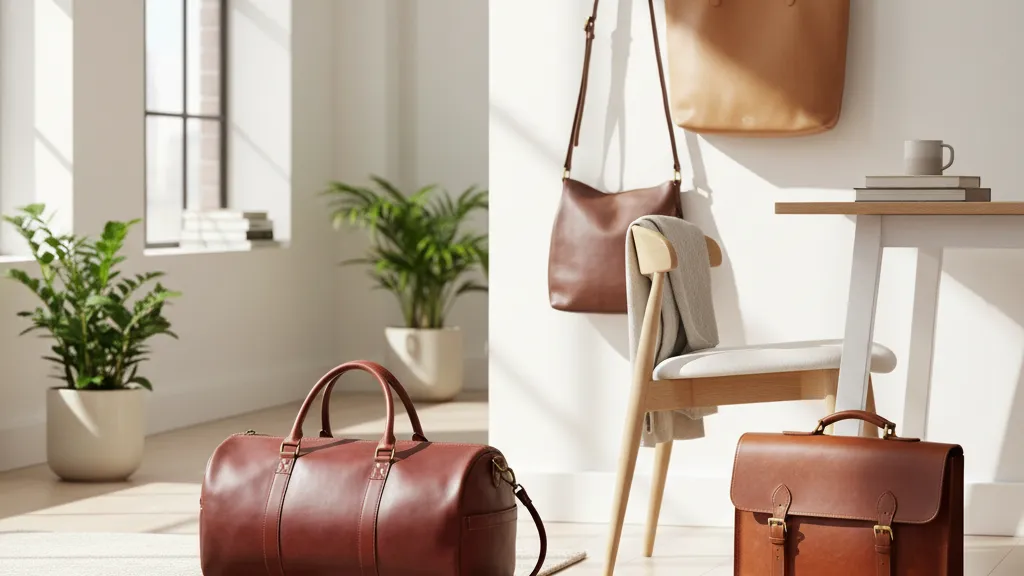
A leather duffle bag or weekender handles two- to four-day trips with ease. For longer journeys, pair it with a larger suitcase and use the leather bag as your carry-on or personal item. A leather travel bag with a luggage sleeve (the strap that slides over a rolling suitcase handle) adds practical convenience for frequent flyers.
For Personal Essentials
A leather toiletry bag is the smartest upgrade most people never think about. It keeps grooming essentials organised at home and while travelling, and full grain leather handles the moisture and daily handling far better than fabric or nylon alternatives.
Understanding Leather Colour and Patina
Colour is personal, but it is also practical. The colour you choose affects versatility, maintenance, and how the bag ages.
Classic Tones That Work With Everything
- Cognac / Tan — The most versatile leather colour. Works with both dark and light wardrobes, casual and professional settings. Develops the most visible and beautiful patina over time.
- Dark Brown / Chocolate — Slightly more formal than cognac. Hides minor scuffs and stains well. Patina is subtler but still develops warmth.
- Black — The most formal option. Matches everything but shows scratches and dust more readily. Patina development is minimal — black leather tends to maintain its colour rather than evolving.
- Olive / Green / Burgundy — Statement colours that add personality. Work best as a secondary bag rather than your only one, unless your wardrobe naturally complements the tone.
How Patina Affects Your Choice
If you love the idea of a bag that changes and develops character over time, choose a lighter full grain leather in cognac or tan — these colours show the most dramatic patina evolution. If you prefer consistency and a bag that looks the same year after year, darker colours or top grain finishes with sealed coatings will stay more stable.
At BagsinLeather, most of our handmade leather bags are available in warm, natural tones specifically chosen to showcase the beauty of full grain patina development.
The Cost Question: What Should a Good Leather Bag Cost?
Price is not always a reliable indicator of quality, but in the leather bag market, there are clear patterns.
Under $50 — At this price, you are almost certainly getting genuine leather, bonded leather, or faux leather. The bag may look acceptable initially but will not hold up to regular use. Expect cracking, peeling, and hardware failure within one to three years.
$50–$150 — This range can include decent top grain leather bags from brands that manage costs through efficient production. Quality varies significantly — examine the leather, stitching, and hardware carefully. Some excellent value can be found here, but so can overpriced low-quality products.
$150–$400 — This is where quality full grain leather bags from artisan and direct-to-consumer brands typically sit. Handcrafted construction, solid hardware, and materials that last a decade or more. This is the sweet spot for long-term value.
$400+ — Premium and luxury territory. You are paying for heritage brand names, exotic leathers, designer exclusivity, or exceptional craftsmanship. Quality at this level is generally excellent, but you are also paying a significant brand premium.
The most important calculation is not the purchase price — it is the cost per year of use. A $200 full grain leather bag that lasts 15 years costs roughly $13 per year. A $50 genuine leather bag that lasts 3 years costs roughly $17 per year — and you have to go through the hassle of replacing it repeatedly.
Red Flags: When to Walk Away
Not every bag deserves your money. Watch for these warning signs:
- Vague labelling. If a product says “leather” or “genuine leather” without specifying the grade (full grain, top grain), assume the lowest quality.
- Plasticky smell. Real leather smells warm and earthy. A strong chemical or plastic odour means heavy synthetic processing or faux leather.
- Lightweight, flimsy feel. Quality leather has weight and substance. If the bag feels thin and hollow, the materials are likely subpar.
- Uneven or loose stitching. Crooked stitch lines, visible thread ends, and inconsistent spacing indicate careless construction.
- Raw, unfinished edges. If the leather edges are rough, fibrous, and unfinished, the manufacturer skipped a critical quality step.
- Plastic-feeling hardware. Test the zippers and buckles. If they feel lightweight, wobbly, or scratchy, they will be the first thing to fail.
- Too-good-to-be-true pricing. Full grain leather bags cannot be made cheaply. If the price seems impossibly low for the size and claimed quality, something has been compromised.
Frequently Asked Questions
What is the best type of leather for a bag?
Full grain leather is the best choice for any bag intended for regular use. It is the strongest, most durable grade of leather, made from the outermost layer of the hide with the natural grain intact. It resists moisture and wear, develops a beautiful patina over time, and can last 20 to 30 years with basic care.
How can you tell if a leather bag is good quality?
Check five things: the leather grade (full grain is best), the stitching (straight, even, with no loose threads), the hardware (solid metal, smooth zippers), the edge finishing (burnished or sealed, not raw), and the smell (warm and earthy, not chemical or plastic). A quality leather bag will also feel substantial in your hands — never thin or flimsy.
Is genuine leather good for bags?
Genuine leather is real leather, but it is one of the lowest quality grades. It is made from the weaker inner layers of the hide and relies on heavy surface processing to look presentable. Products labelled genuine leather typically last only two to five years before cracking and peeling. For a bag you want to use daily, full grain leather is a far better investment.
How long should a leather bag last?
A well-made full grain leather bag can last 20 to 30 years or more with regular care. Top grain leather bags typically last 5 to 15 years. Genuine leather bags usually last 2 to 5 years, and bonded leather products may last only 1 to 2 years. The leather grade and construction quality are the two biggest factors in a bag’s lifespan.
How much should I spend on a leather bag?
For a quality full grain leather bag with handcrafted construction, expect to spend between $150 and $400. This range offers the best balance of material quality, craftsmanship, and long-term value. Bags under $50 are almost always made from lower-grade leather that will not last. The true measure is cost per year of use — a $200 bag that lasts 15 years is cheaper over time than a $50 bag you replace every 3 years.
Invest Once, Carry Forever
Choosing a leather bag is not about finding the cheapest option or the trendiest design. It is about finding the right combination of quality leather, solid construction, appropriate size, and a style that fits your life — and then letting that bag prove its value over years of daily use.
The best leather bags do not just carry your belongings. They develop character. They soften and age and tell your story through every patina mark and subtle wear pattern. That only happens when the materials and craftsmanship are genuinely exceptional.
Every bag in our collection is handcrafted from full grain leather, built by skilled artisans, and designed to last a lifetime. If you are ready to invest in a bag that grows with you, start here.
Related posts
Canvas vs. Leather Messenger Bag: Which Is Right for You?
Choosing between a canvas vs leather messenger bag comes down to a few honest trade-offs: weight, cost, durability, weather resistance,...
What Is Nubuck Leather? A Complete Guide
Nubuck leather is top-grain leather that has been sanded on its outer surface to create a soft, velvety nap — a material that looks and...
Fringe Crossbody Bag: The Complete Style Guide
A fringe crossbody bag is the piece that adds movement to an outfit — a hands-free bag trimmed with swaying leather or suede tassels th...

Leather Messenger Bag for Women: The Complete Guide
A leather messenger bag for women is the rare bag that carries a laptop to a meeting, a notebook to a café, and your everyday essential...

How to Choose a Leather Laptop Bag: A Buyer’s Guide
Knowing how to choose a leather laptop bag comes down to five decisions: the right bag type, the right size, the right leather grade, r...

Leather Camera Bag: The Complete Buyer’s Guide
A leather camera bag is where photography gear meets everyday style — a way to protect your camera and lens without carrying something ...