
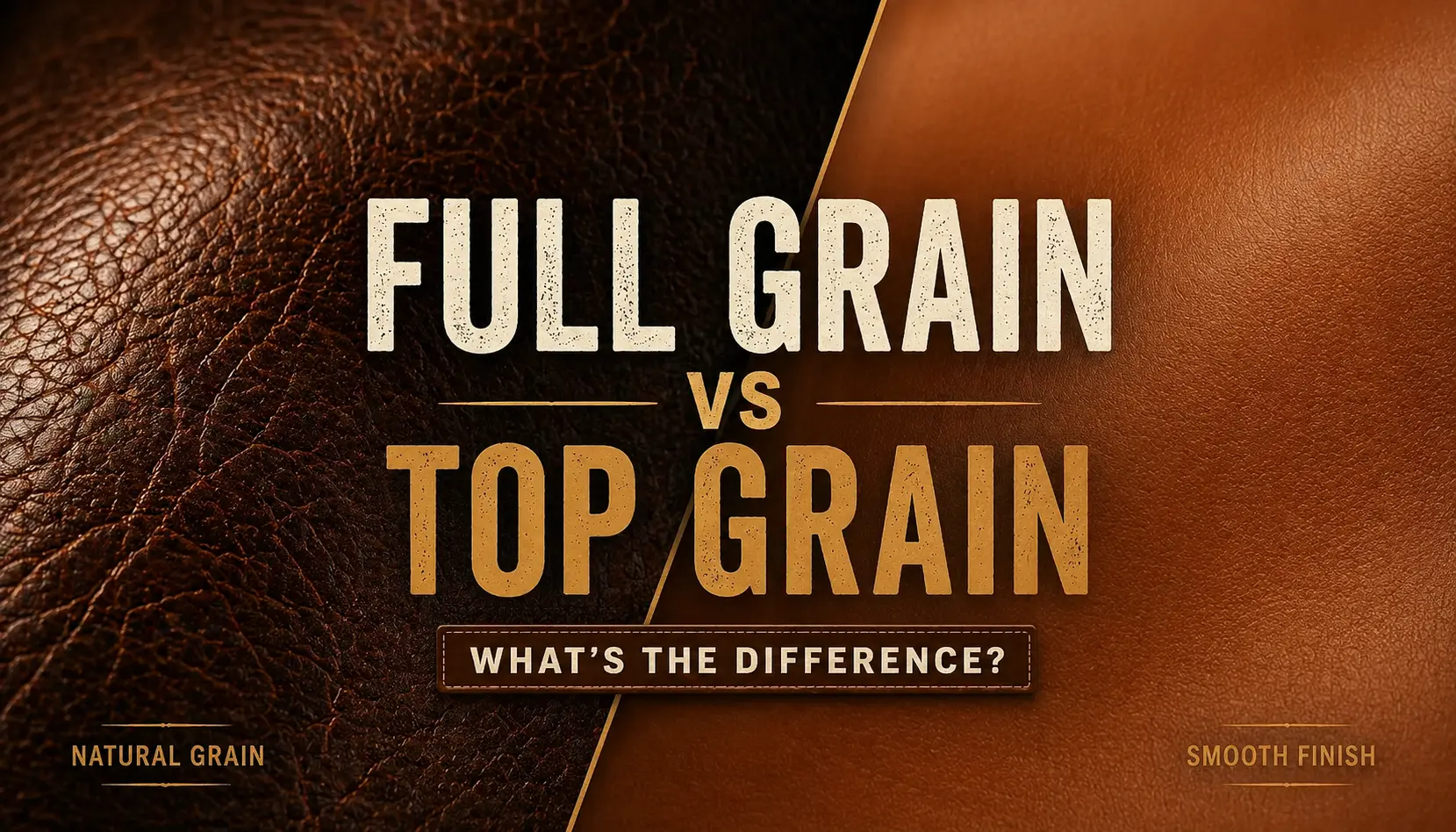
If you have ever shopped for a leather bag, wallet, or jacket, you have almost certainly come across two terms — full grain and top grain. They sound nearly identical, and many shoppers assume they mean the same thing. They do not.
The difference between full grain vs top grain leather affects everything: how long your purchase will last, how it looks and feels over time, what kind of care it needs, and how much you should expect to pay. These are the two highest grades of leather on the market, but they are made differently, they age differently, and they serve different purposes.
This guide puts them side by side so you can make a confident, informed decision the next time you invest in leather.
What Is Full Grain Leather?
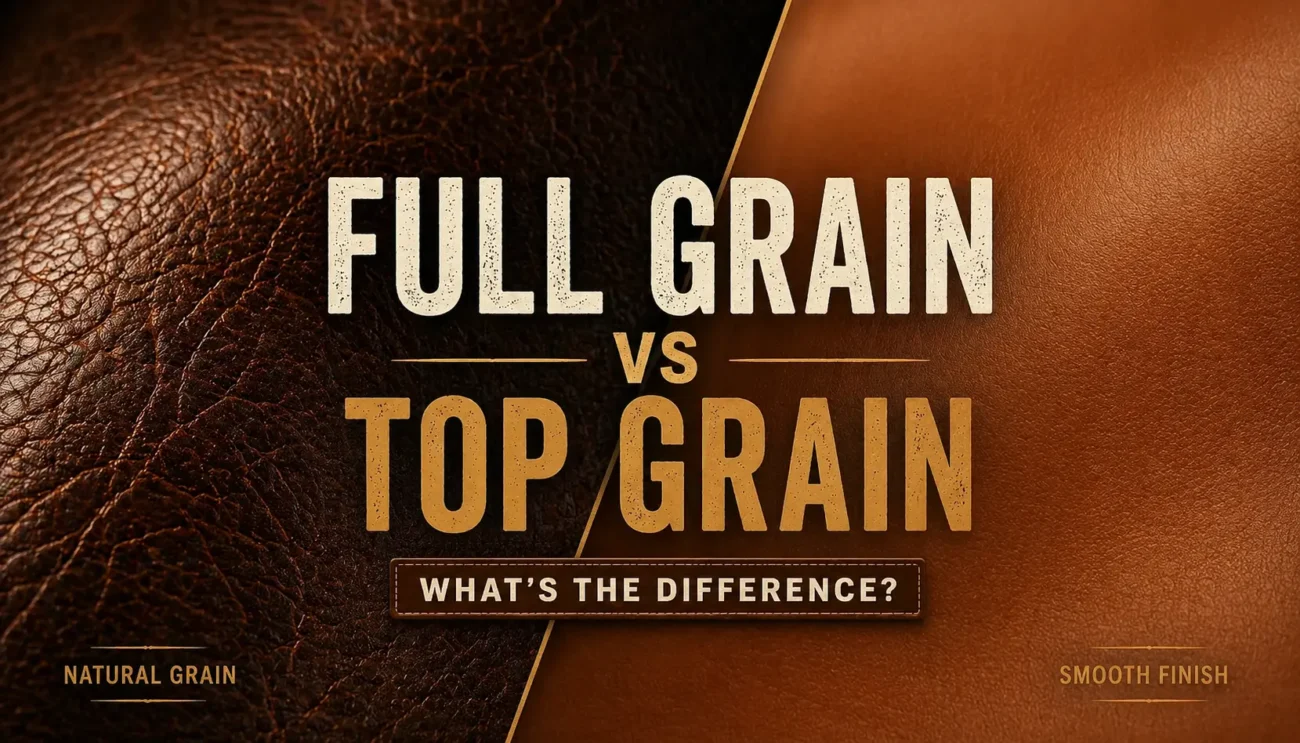
Full grain leather is the highest quality grade of leather you can buy. It is crafted from the outermost layer of the animal hide — the part directly beneath the hair — and this surface is left entirely intact. Nothing is sanded away. Nothing is buffed or corrected. The natural grain, with all of its texture, pores, and subtle markings, is preserved exactly as nature created it.
This matters because the outer grain is where the hide’s fibre structure is at its densest and most tightly interlocked. By leaving it untouched, full grain leather retains maximum strength, moisture resistance, and durability. A well-crafted full grain leather bag can serve you for 20 to 30 years — and it will look better at year ten than it did at year one.
That ageing process is one of full grain’s defining traits. Over time, the leather absorbs natural oils from your hands and gentle exposure to the elements. The surface gradually darkens and develops a warm, lustrous sheen called a patina. This is not damage — it is the leather telling your story. Every mark, every tonal shift, every slight variation in colour is evidence of a living material that evolves with use.
The natural markings you see on full grain leather — faint scars, grain variations, pore patterns — are not flaws. They are authentication. They prove the leather has not been processed, sanded, or artificially corrected. No two hides look exactly the same, which gives every full grain product its own individual character.
Full grain leather is the material favoured by heritage leather brands, luxury goods houses, and serious craftspeople. It is also the only grade we use at BagsinLeather for our handmade leather bags.
What Is Top Grain Leather?
Top grain leather is the second-highest grade, and it is the most widely used leather in mainstream consumer products — from mid-range handbags and wallets to car interiors and furniture upholstery.
Like full grain, top grain leather comes from the outermost layer of the hide. The critical difference is what happens next. With top grain, the very surface of the grain is lightly sanded or buffed to remove natural imperfections — things like insect bites, minor scars, stretch marks, and uneven textures. After this surface correction, a finish coat (often pigmented) is applied to give the leather a smooth, uniform, polished look.
The result is visually clean and consistent. Top grain leather looks “perfect” in a way that full grain intentionally does not. It feels softer and more supple straight out of the box because the sanding process thins the leather slightly and the finish coat adds a smooth hand-feel.
However, this processing comes at a cost. Removing even a thin layer of the grain surface disrupts the natural fibre structure that gives leather its strength. The finish coat also seals the surface, which means top grain leather does not breathe as well as full grain and — critically — it will not develop a patina. Instead of ageing gracefully, the finish layer gradually wears through over years of use, sometimes revealing a duller, less attractive surface underneath.
Top grain leather is still real, quality leather. It is a significant step above genuine leather, split leather, and bonded leather. But it is not full grain, and understanding that distinction is important before you decide where to put your money.
Full Grain vs Top Grain: At a Glance
Before we go deeper into each comparison point, here is a quick reference table summarizing the key differences between full grain and top grain leather.
| Feature | Full Grain Leather | Top Grain Leather |
|---|---|---|
| Grade | Highest quality | Second-highest quality |
| Surface treatment | None — natural grain intact | Sanded/buffed to remove imperfections |
| Finish | Minimal or aniline (transparent) | Pigmented finish coat applied |
| Fibre strength | Maximum — tightest fibre structure | Slightly reduced by surface removal |
| Durability | 20–30+ years with care | 5–15 years depending on use |
| Patina | Develops rich patina over time | Does not develop patina |
| Appearance | Natural markings, unique character | Smooth, uniform, consistent |
| Feel | Firmer initially, softens with use | Softer and more pliable from day one |
| Breathability | Excellent — natural pores intact | Reduced — sealed by finish coat |
| Stain resistance | Lower initially (improves with conditioning) | Higher due to finish coating |
| Repairability | Excellent — can be reconditioned and restored | Limited — finish coat cannot be fully renewed |
| Price range | Higher | Moderate to high |
| Best for | Premium bags, heirloom goods, long-term investment | Everyday accessories, fashion goods, uniform aesthetic |
How Do They Differ in Appearance?
The visual difference between full grain and top grain leather is something you notice immediately once you know what to look for.
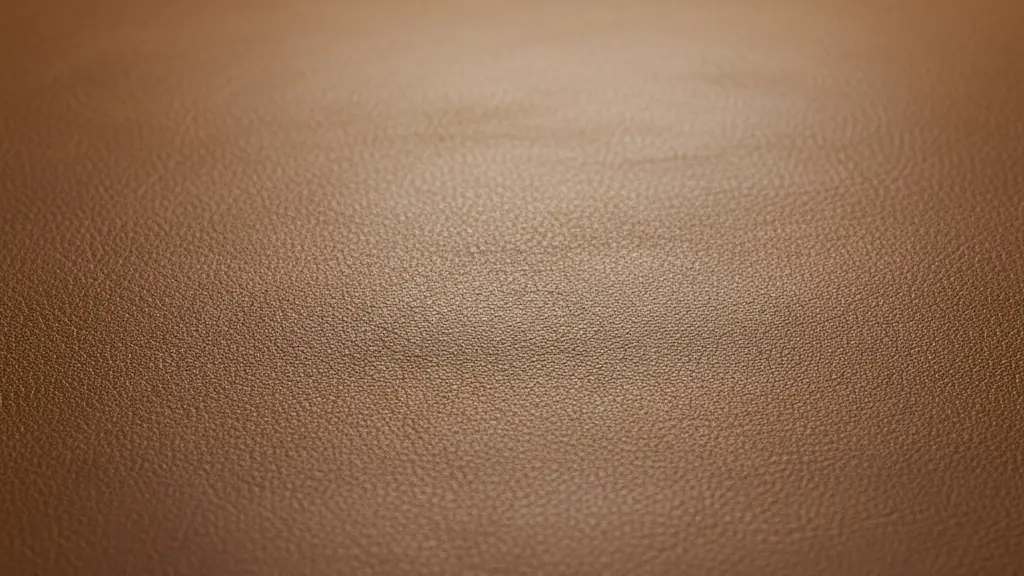
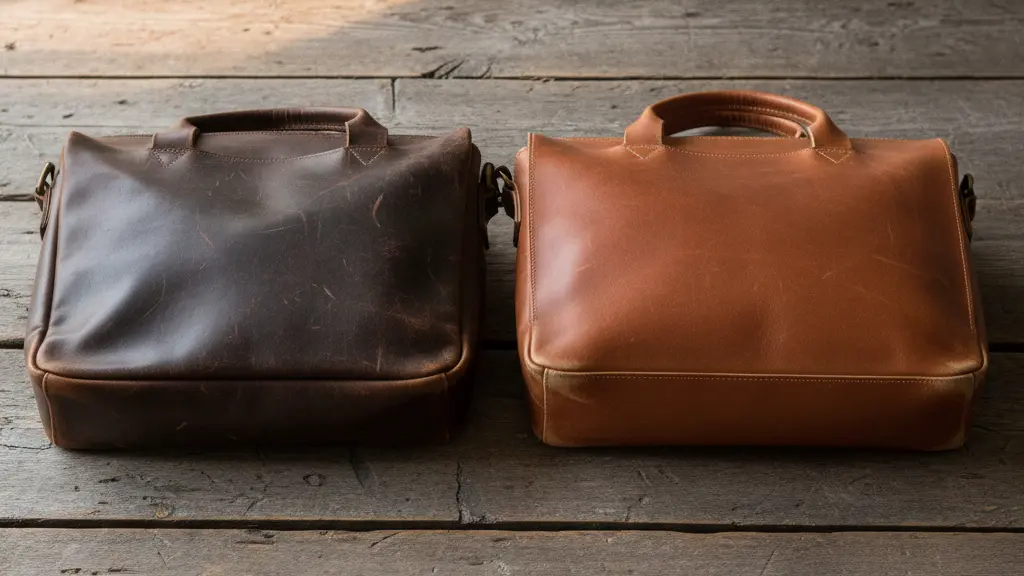
Full grain leather has a natural, organic look. The surface shows visible pores, subtle grain patterns, and occasional markings — tiny healed scars, growth lines, or slight variations in texture. These characteristics change from hide to hide, which means every full grain leather product looks slightly different. The colour tends to have depth and warmth, especially in aniline-dyed pieces where the transparent finish allows the natural grain to show through clearly.
Over time, this appearance evolves. Full grain develops a patina — a gradual darkening and lustre that emerges as the leather absorbs oils and ages naturally. Many leather enthusiasts specifically seek out full grain for this reason. The bag you carry today will look different — and arguably more beautiful — in three, five, or ten years.
Top grain leather, by contrast, looks polished and uniform. Because the surface has been sanded and coated, there are no visible pores, no grain irregularities, and no natural markings. The colour is even and consistent across the entire piece. It has a cleaner, more “finished” aesthetic that appeals to buyers who prefer a sleek, predictable look.
The trade-off is that top grain leather looks essentially the same on day one as it does on day five hundred. It does not develop character. It does not tell a story. When the finish eventually wears, it tends to look tired rather than distinguished.
Neither appearance is objectively better — it comes down to what you value. If you want leather that evolves and becomes more personal with age, full grain is the clear choice. If you prefer a controlled, consistent look that matches everything, top grain delivers that.
Which Leather Is More Durable?
This is where the difference between full grain and top grain leather becomes most significant — and most measurable.
Full grain leather is substantially more durable. Because the entire grain surface is left intact, the fibre structure remains at its natural maximum density. These tightly interlocked fibres create a material that resists tearing, stretching, moisture penetration, and everyday abrasion far more effectively than any other leather grade. A full grain leather bag that receives basic care can realistically last 20 to 30 years of regular use.
Full grain leather is also more resilient to damage. Minor scratches often blend into the surface naturally as the patina develops. Scuffs can be buffed out or conditioned away. And because the material is structurally intact, it can be professionally reconditioned and restored — even after years of hard use.
Top grain leather is durable by most material standards, but it cannot match full grain’s longevity. The sanding process removes the densest part of the fibre network, which reduces the leather’s overall tensile strength. The pigmented finish coat provides some protection against surface stains and light scratches, but this coating is a consumable layer — it wears away gradually with friction and use.
Once the finish breaks down, top grain leather is difficult to restore. You cannot easily re-apply a factory-quality finish at home, and the exposed surface underneath is weaker than full grain’s natural face. Most top grain products last anywhere from 5 to 15 years, depending on the quality of construction and how heavily they are used.
If you are buying leather to last, full grain is the clear winner. If you need something for a few years and value uniform appearance over long-term resilience, top grain will serve you well within that window.
Quality and Price: What Are You Paying For?
Full grain leather costs more than top grain — sometimes significantly more. Understanding why helps you evaluate whether the premium is worth it for your specific purchase.
Why full grain commands a higher price:
- Raw material selection. Only the best hides qualify. Full grain requires hides with minimal natural blemishes, since nothing will be sanded away to hide imperfections. This means a higher percentage of hides are rejected or downgraded, reducing supply and increasing cost.
- Tanning and finishing. Full grain leather typically receives lighter, more skill-intensive finishing — such as aniline or semi-aniline dyes — that preserve the natural grain while adding colour. These processes require more expertise and tighter quality control than the heavy pigmented coatings used on top grain.
- Waste factor. Because full grain hides must be largely blemish-free, usable yield per hide is often lower. Craftspeople need to work around any areas with significant marks, which increases material waste.
- Longevity value. A full grain product that lasts 20+ years effectively costs less per year than a top grain product that needs replacing after 8–10 years. The upfront price is higher, but the total cost of ownership is often lower.
Why top grain is more affordable:
- Sanding and finishing can correct imperfections on a wider range of hides, meaning more of each hide is usable.
- The pigmented finish coat is applied more quickly and uniformly.
- Thinner material means lighter products that use less leather per unit.
As a general rule, if the product you are buying is something you will use daily for years — like a leather briefcase, work bag, or travel bag — the premium for full grain leather pays for itself over time. For lighter-use items or fashion-forward pieces with a shorter expected lifespan, top grain offers solid quality at a more accessible price point.
How to Care for Full Grain and Top Grain Leather
Both full grain and top grain leather benefit from regular care, but their different surfaces mean slightly different maintenance routines.
Caring for Full Grain Leather
Full grain leather is the lower-maintenance of the two, largely because its natural surface is self-sustaining. The key habits are:
- Wipe down regularly. Use a soft, dry cloth to remove dust and surface dirt every few weeks. This simple step prevents grime from settling into the pores.
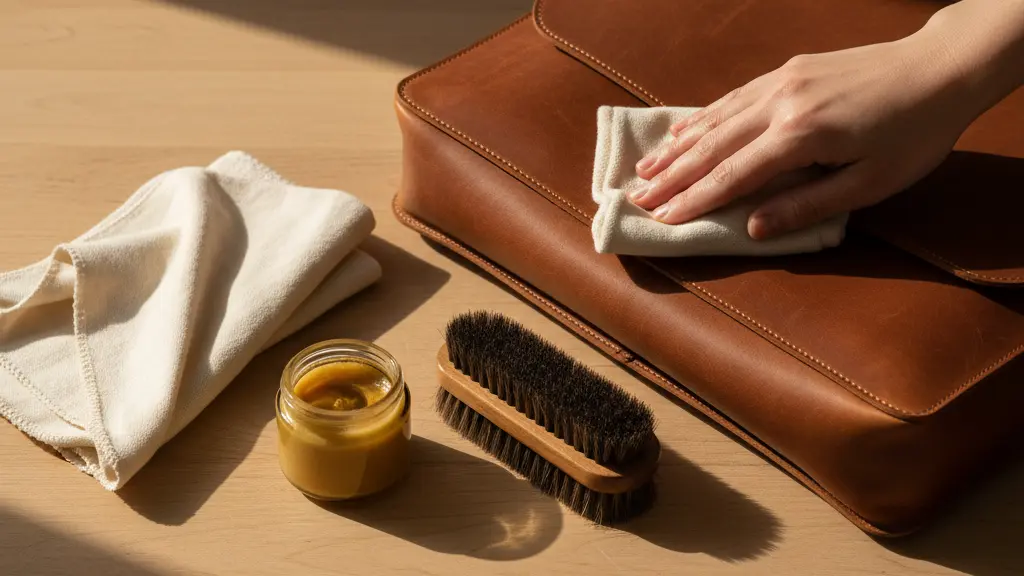
- Condition every 3–6 months. Apply a quality leather conditioner with a soft cloth in gentle circular motions. This replenishes the natural oils that keep the fibres supple and prevents drying and cracking. Conditioning also accelerates the development of a rich, even patina.
- Let it breathe. Store full grain bags stuffed with tissue paper in a breathable dust bag — never in plastic. Keep them away from direct heat and prolonged sunlight, which dry out and fade the leather.
- Embrace the patina. Minor scratches and marks on full grain leather often blend naturally into the surface over time. Resist the urge to over-clean. The patina is part of the value.
Caring for Top Grain Leather
Top grain leather’s finish coat makes it slightly more resistant to surface stains, but that coating also requires its own protection:
- Clean gently but promptly. Wipe spills immediately with a damp cloth. The finish coat provides some protection, but prolonged contact with liquids can seep through.
- Use a leather protectant. Because the finish layer is what shields the leather, applying a quality protectant spray helps extend the life of that coating. Look for products specifically designed for finished leather.
- Avoid heavy conditioners. Top grain does not absorb conditioner the same way full grain does, because the finish coat acts as a barrier. Use a lighter cream or lotion designed for finished leather, and apply sparingly.
- Watch high-friction areas. The corners, handles, and edges of top grain bags are where the finish wears through first. Inspect these spots regularly and treat with a protective balm to slow the wear.
For Both Types
- Never dry leather with a hair dryer, radiator, or direct heat source — this causes irreversible cracking.
- Always test any new care product on a small, hidden area first.
- If your leather sustains serious damage (deep stains, significant water damage, structural tears), consult a professional leather care specialist rather than attempting home repair.
Which One Should You Choose?
The right choice depends on what you value most and how you plan to use the product.
Choose full grain leather if you:
- Want a product that lasts decades, not years
- Value natural character and a surface that develops a unique patina
- Are investing in an everyday piece — a bag, briefcase, or accessory you will reach for daily
- Prefer authenticity over uniformity
- See leather as a long-term investment rather than a short-term purchase
Choose top grain leather if you:
- Prefer a smooth, polished, uniform appearance
- Want leather that feels soft and pliable from the first use
- Need better initial stain resistance for lighter-coloured goods
- Are buying a fashion-forward item with a shorter expected lifespan
- Want quality leather at a more moderate price point
For bags specifically, our recommendation is straightforward. If you are spending money on a leather bag you expect to carry regularly — to work, while travelling, or through daily life — full grain leather is the grade that justifies the investment. It holds up, it gets better, and it can be repaired and reconditioned if needed. Top grain is a reasonable choice for lighter-use pieces, but it simply will not deliver the same long-term return.
Frequently Asked Questions
What is the difference between full grain and top grain leather?
Full grain leather uses the outermost layer of the hide with the natural grain left completely intact — no sanding or buffing. Top grain leather comes from the same layer but has been sanded on the surface to remove imperfections, then coated with a pigmented finish. Full grain is stronger, develops a patina, and lasts significantly longer.
Is full grain leather better than top grain?
For durability, ageing, and long-term value, yes — full grain leather is the superior grade. It retains the hide’s full fibre strength, develops character over time, and can last 20–30 years. Top grain offers a more uniform, polished look and is softer initially, which some buyers prefer, but it lacks full grain’s longevity and patina development.
Does top grain leather peel?
Quality top grain leather should not peel under normal conditions. However, the pigmented finish coat can wear through over time, especially in high-friction areas like bag corners and handles. This is different from bonded or genuine leather, which frequently peels due to their lower-quality construction. Top grain may show finish wear, but it does not disintegrate.
How can you tell the difference between full grain and top grain leather?
Look at the surface closely. Full grain leather shows visible natural pores, slight grain variations, and occasional subtle markings — the surface looks organic and unique. Top grain leather looks smooth, even, and uniform with no visible pores or markings, because the surface has been sanded and coated. Full grain also feels slightly firmer and has a more natural scent.
How long does top grain leather last?
With proper care, top grain leather products typically last 5 to 15 years depending on quality and usage intensity. This is considerably less than full grain leather (20–30+ years) but still far longer than genuine leather, split leather, or bonded leather products.
The Right Leather Makes All the Difference
Full grain and top grain are the two best leather types on the market — but they are not interchangeable. Full grain gives you unmatched durability, natural character, and a surface that grows more beautiful with every year of use. Top grain gives you a refined, uniform aesthetic with good quality at a more accessible price.
The choice comes down to your priorities. If you want leather that lasts a lifetime and tells your story along the way, full grain is the answer.
Every bag in our collection is handcrafted from full grain leather — because we believe the material should be as exceptional as the craftsmanship.