Free Shipping Over $100 · Satisfaction Guarantee · Handcrafted by Artisans

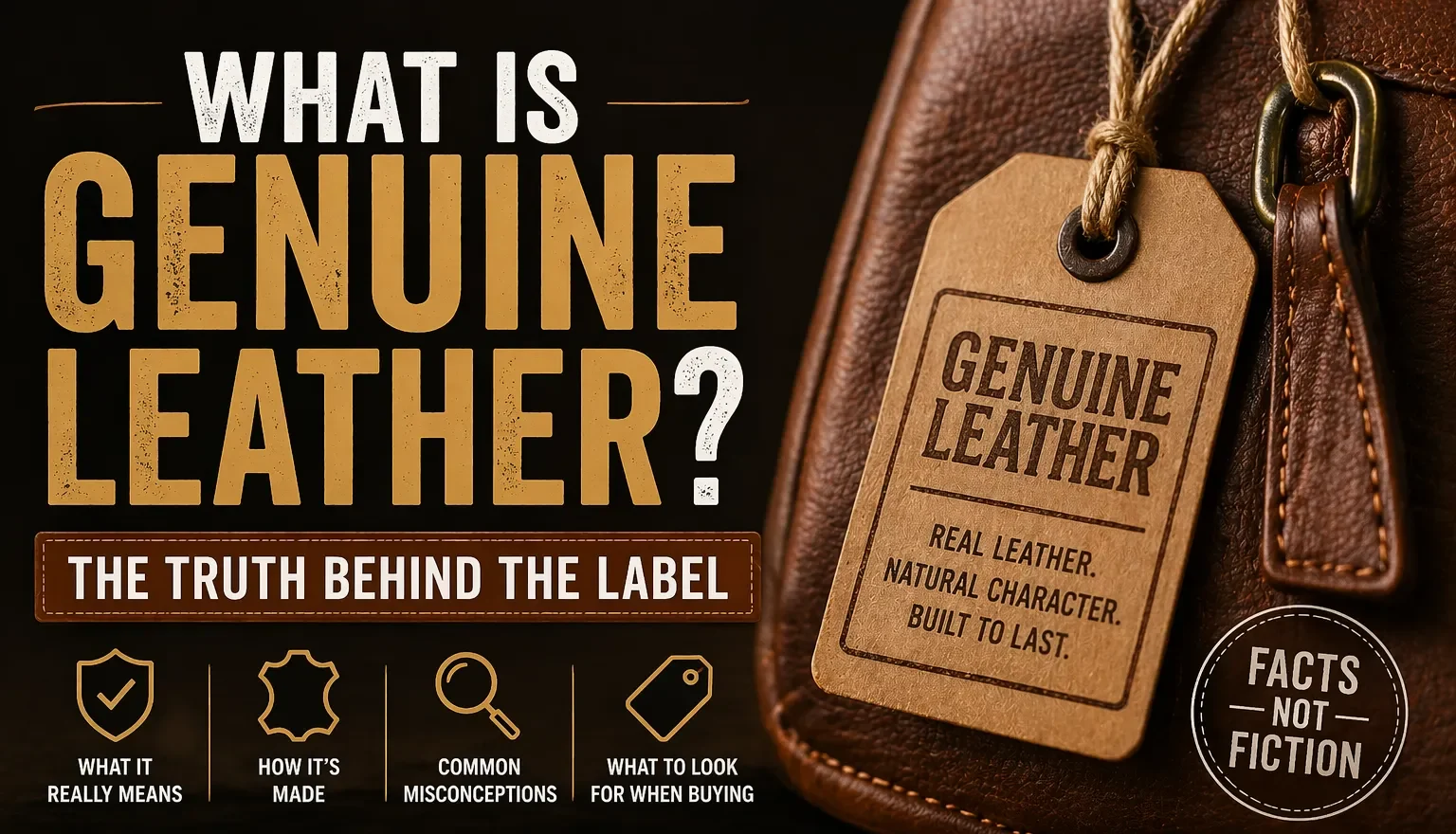
Few terms in the leather world are as misleading as “genuine leather.” Most people see the word genuine and assume it means high quality — authentic, trustworthy, the real deal. In everyday language, that is exactly what genuine means. But in the leather industry, it means something very different.
Genuine leather is real leather, yes. But it is one of the lowest grades you can buy. It sits near the bottom of the leather quality hierarchy, well below full grain and top grain, and just above bonded leather. Understanding what genuine leather actually is — how it is made, what it is made from, and how it compares to higher grades — can save you from spending money on a product that will not last.
This guide explains everything you need to know before buying anything labelled “genuine leather.”
What Does “Genuine Leather” Actually Mean?
In the leather industry, “genuine leather” is not a quality endorsement — it is a classification. The term simply confirms that the product is made from real animal hide rather than a synthetic material. It tells you nothing about which part of the hide was used, how the leather was processed, or how long it will last.
Think of it this way: if a brand had premium leather to work with, they would label it “full grain leather” or “top grain leather.” Those terms carry real value and communicate specific quality standards. The label “genuine leather” is what gets used when there is nothing more impressive to say. It is technically accurate — the material is genuinely leather — but it is the lowest bar a real leather product can clear.
This is not a new trick. The leather industry has used this grading language for decades, and most consumers have never been taught the difference. Retailers know that the word “genuine” triggers a positive response, which is why you see it stamped on wallets, belts, bags, and shoes that are priced to look like a bargain.
How Is Genuine Leather Made?
To understand genuine leather, you need to understand how a raw animal hide is processed.
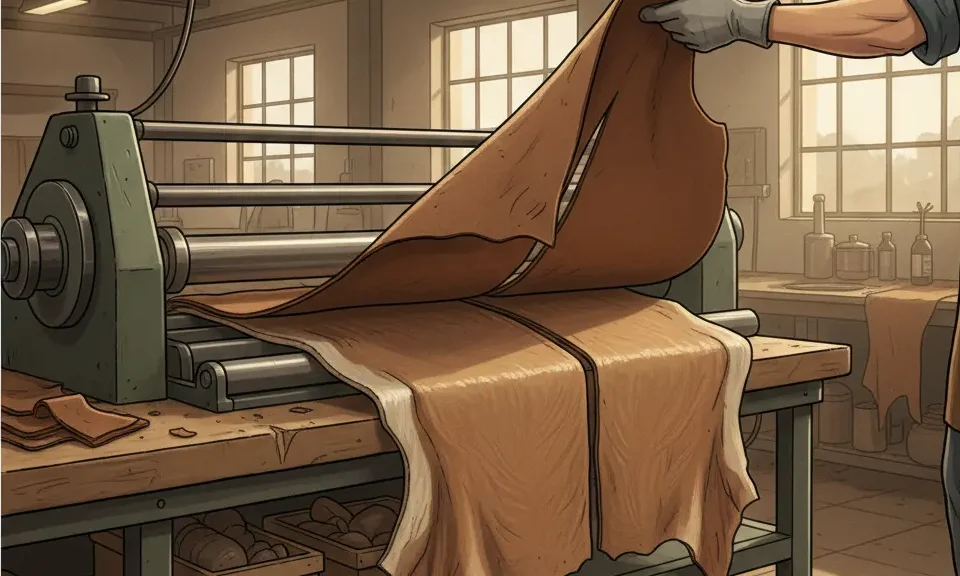
When a hide arrives at the tannery, it is a thick, multi-layered material. During processing, this hide is split horizontally into layers:
- The top layer (grain side) — This is the outermost part of the hide, directly beneath the hair. It has the tightest, strongest fibre structure. This layer is used to produce full grain leather and top grain leather — the two highest grades.
- The lower layers (split side) — Everything beneath the grain layer has a looser, weaker fibre structure. These inner layers are what genuine leather is typically made from.
Because the lower layers lack the natural grain surface that gives premium leather its strength and character, manufacturers apply several corrective processes:
- Heavy sanding and buffing to smooth out the rough, fibrous surface.
- Embossing to stamp an artificial grain pattern onto the surface, making it resemble higher-quality leather.
- Pigmented finish coats — thick layers of dye and sealant to create a uniform colour and hide the processed surface underneath.
The finished product can look passable on first inspection. The embossed pattern mimics the natural texture of real grain leather, and the thick finish gives it a polished appearance. But underneath that surface treatment, the material is structurally weaker than any grain-side leather.
Where Does Genuine Leather Sit in the Quality Hierarchy?
The leather industry follows a well-established quality hierarchy based on which part of the hide is used and how it is processed. Here is where genuine leather falls:
| Grade | Source | Quality | Typical Lifespan |
|---|---|---|---|
| Full Grain | Outermost layer, grain intact | Highest — strongest fibres, develops patina | 20–30+ years |
| Top Grain | Outermost layer, surface sanded | High — uniform finish, good durability | 5–15 years |
| Genuine Leather | Lower layers of the hide | Low — weak fibre structure, artificial finish | 2–5 years |
| Bonded Leather | Ground-up scraps glued together | Lowest — minimal real leather content | 1–2 years |
Genuine leather sits just one step above bonded leather — the very bottom of the real leather spectrum. It is significantly below the full grain leather bags and top grain products that define premium quality.
This does not mean genuine leather is fake. It is real animal hide. But it is the weakest, least durable real leather available, made from the parts of the hide that could not be used for higher-grade products.
Genuine Leather vs Full Grain Leather
This is the comparison that matters most, because these two grades sit at opposite ends of the quality spectrum — yet they both carry the word “leather.”
Fibre structure. Full grain leather uses the densest, tightest part of the hide. Genuine leather uses the looser inner layers. This single difference drives almost every other distinction between them.
Surface. Full grain leather has a natural, unprocessed surface — you can see real pores, grain patterns, and subtle markings that prove the hide is untouched. Genuine leather has an artificial surface — sanded smooth, embossed with a fake grain, and coated with thick pigment. It is designed to look like something it is not.
Durability. A full grain leather bag can last 20 to 30 years with basic care. A genuine leather bag typically begins to show serious wear — cracking, peeling, drying — within two to five years, sometimes sooner with heavy daily use.
Ageing. Full grain leather develops a rich patina that makes it more beautiful over time. Genuine leather does not age gracefully. The painted finish chips away, the embossed grain wears flat, and the weak material underneath has nothing to offer once the surface treatment fails.
Repairability. Full grain leather can be conditioned, restored, and professionally refinished. Genuine leather, once damaged, is very difficult to repair meaningfully. The finish coat cannot be replaced to factory quality, and the underlying material is too weak to recondition effectively.
Price. Genuine leather is significantly cheaper — and this is the main reason it dominates the budget leather market. But cheaper upfront does not mean better value. A full grain product that lasts 20 years costs far less per year of use than a genuine leather product you replace every three years.
How to Identify Genuine Leather Products
Knowing what to look for helps you avoid paying a premium-leather price for a genuine-leather product. Here are the key indicators:
Check the Label Carefully
Premium leather products are almost always labelled with their specific grade — “full grain leather,” “top grain leather,” or even “vegetable-tanned leather.” If a product says only “genuine leather” or just “real leather” without specifying the grade, it is very likely using lower-quality hide.
Some products take it a step further with vague terms like “100% leather” or “all leather.” These confirm the material is real but say nothing about quality. Treat unspecified labels as a yellow flag.
Examine the Surface
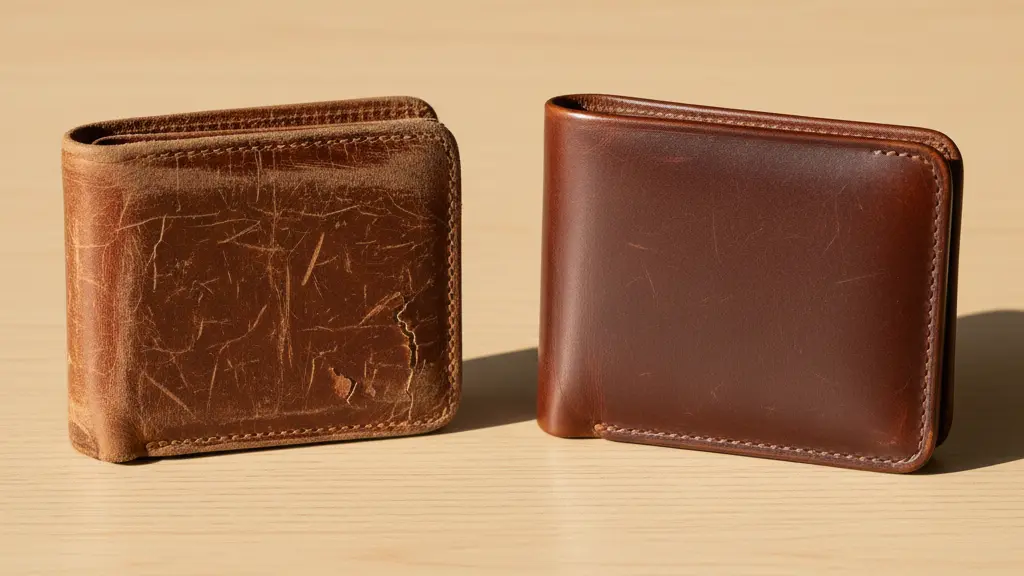
Look at the leather surface closely. Full grain leather shows natural, slightly irregular grain — visible pores, subtle variations in texture, and occasional faint markings. Every section of the hide looks slightly different.
Genuine leather with an embossed grain looks too uniform. The pattern repeats identically across the surface because it was stamped on mechanically. If the grain texture looks perfectly consistent with no natural variation, it is likely processed rather than natural.
Feel the Material
Full grain leather feels substantial. It has a firmness that comes from dense, tightly interlocked fibres. There is a natural warmth to the touch, and the surface has a slight texture you can feel under your fingertips.
Genuine leather often feels thinner, more plasticky, and less substantial. The thick finish coat can give it an almost rubbery feel rather than the organic warmth of unprocessed leather.
Smell It
Real leather — especially high-quality leather — has a distinctive, rich, earthy scent. It is warm and organic, with no chemical sharpness. Genuine leather may still have a leather smell, but it is often weaker and sometimes masked by the chemical finish applied to the surface. If it smells strongly of chemicals or plastic, proceed with caution.
Look at the Price
Quality leather costs money. If a leather bag or accessory seems remarkably cheap for its size and design, the leather grade is almost certainly the reason. This does not mean every expensive product is genuine quality — but consistently low pricing on leather goods is a reliable warning sign.
How Long Does Genuine Leather Last?
Under normal daily use, most genuine leather products last between two and five years before showing significant deterioration.
The most common failure modes are:
- Cracking — The thick finish coat becomes brittle over time and cracks, especially in areas that flex repeatedly (bag folds, wallet creases, belt bends).
- Peeling — The pigmented surface layer begins to chip away, revealing the rough, fibrous material underneath.
- Drying out — The loose fibre structure loses moisture faster than denser leathers, and conditioning has limited effect because the finish coat prevents deep absorption.
- Colour fading — Because the colour is painted on rather than dyed through the material, it fades unevenly with sun exposure and friction.
Compare this to full grain leather, which routinely lasts 20 to 30 years and actively improves in appearance over time. Or even top grain leather, which typically delivers 5 to 15 years of solid use.
If you are buying a product you expect to use daily — a work bag, a leather briefcase, a travel bag — genuine leather simply does not have the structural integrity to keep up.
Is Genuine Leather Worth Buying?
It depends entirely on your expectations.
Genuine leather makes sense if you:
- Need a low-cost, real-leather product for light or occasional use
- Are buying something fashion-forward with a short expected lifespan — a seasonal accessory or trend-driven piece
- Prefer real leather over synthetic alternatives but have a strict budget
- Understand the limitations and are comfortable replacing the item within a few years
Genuine leather is not the right choice if you:
- Want a bag or accessory that lasts more than a few years
- Expect the leather to develop character and look better with age
- Plan to use the product daily for work, travel, or everyday carry
- Value repairability — the ability to condition, restore, and refinish
- Are comparing cost per year of use rather than just upfront price
For anything you consider an investment — a bag you will carry to work every day, a wallet you will reach for thousands of times, a weekender bag for years of travel — full grain leather delivers dramatically better long-term value despite the higher initial cost.
At BagsinLeather, we chose to work exclusively with full grain leather for exactly this reason. Every piece in our handmade leather bags collection is built from the strongest, most beautiful grade of leather available — because we do not believe in selling products that let you down after a couple of years.
Frequently Asked Questions
Is genuine leather real leather?
Yes, genuine leather is real leather made from animal hide. However, the term is misleading because it refers to one of the lowest quality grades — made from the weaker inner layers of the hide after the top grain has been removed. It is real, but it is not high quality.
What is better — genuine leather or full grain leather?
Full grain leather is significantly better in every measurable way. It is stronger, more durable, develops a patina, breathes naturally, and lasts 20 to 30 years. Genuine leather is made from weaker hide layers, relies on artificial surface treatments, and typically lasts only two to five years under regular use.
Why is genuine leather so cheap?
Genuine leather uses the leftover lower layers of the hide — the parts that could not be used for full grain or top grain products. These inner layers have a weaker fibre structure and require heavy processing (sanding, embossing, thick finish coats) to look presentable. The raw material costs less, and the processing is faster and less skill-intensive, which keeps prices low.
Does genuine leather peel?
Yes, peeling is one of the most common problems with genuine leather. Because the colour and texture are applied as a surface coating rather than being inherent to the material, this coating gradually chips and peels away — especially in high-friction areas. Once the finish fails, the rough fibrous material underneath is exposed, and the product is difficult to repair.
How can you tell if something is genuine leather or faux leather?
Real leather — even genuine grade — has a natural, slightly earthy smell, feels warm to the touch, and absorbs a small drop of water. Faux leather tends to smell like chemicals or plastic, feels cooler and more uniform, and repels water on the surface. Real leather also shows slight variations in texture, while faux leather typically looks perfectly identical across its entire surface.
Know What You Are Buying
The word “genuine” sounds reassuring, but in the leather industry it signals the opposite of what most people expect. Genuine leather is the entry-level grade of real leather — functional for light use, but far too weak for products you want to rely on every day.
If longevity, natural beauty, and real craftsmanship matter to you, look beyond the label. Look for full grain leather — the highest grade, the strongest fibre structure, and the only material that actually gets better with time.
Related posts
Canvas vs. Leather Messenger Bag: Which Is Right for You?
Choosing between a canvas vs leather messenger bag comes down to a few honest trade-offs: weight, cost, durability, weather resistance,...
What Is Nubuck Leather? A Complete Guide
Nubuck leather is top-grain leather that has been sanded on its outer surface to create a soft, velvety nap — a material that looks and...
Fringe Crossbody Bag: The Complete Style Guide
A fringe crossbody bag is the piece that adds movement to an outfit — a hands-free bag trimmed with swaying leather or suede tassels th...

Leather Messenger Bag for Women: The Complete Guide
A leather messenger bag for women is the rare bag that carries a laptop to a meeting, a notebook to a café, and your everyday essential...

How to Choose a Leather Laptop Bag: A Buyer’s Guide
Knowing how to choose a leather laptop bag comes down to five decisions: the right bag type, the right size, the right leather grade, r...

Leather Camera Bag: The Complete Buyer’s Guide
A leather camera bag is where photography gear meets everyday style — a way to protect your camera and lens without carrying something ...