Free Shipping Over $100 · Satisfaction Guarantee · Handcrafted by Artisans


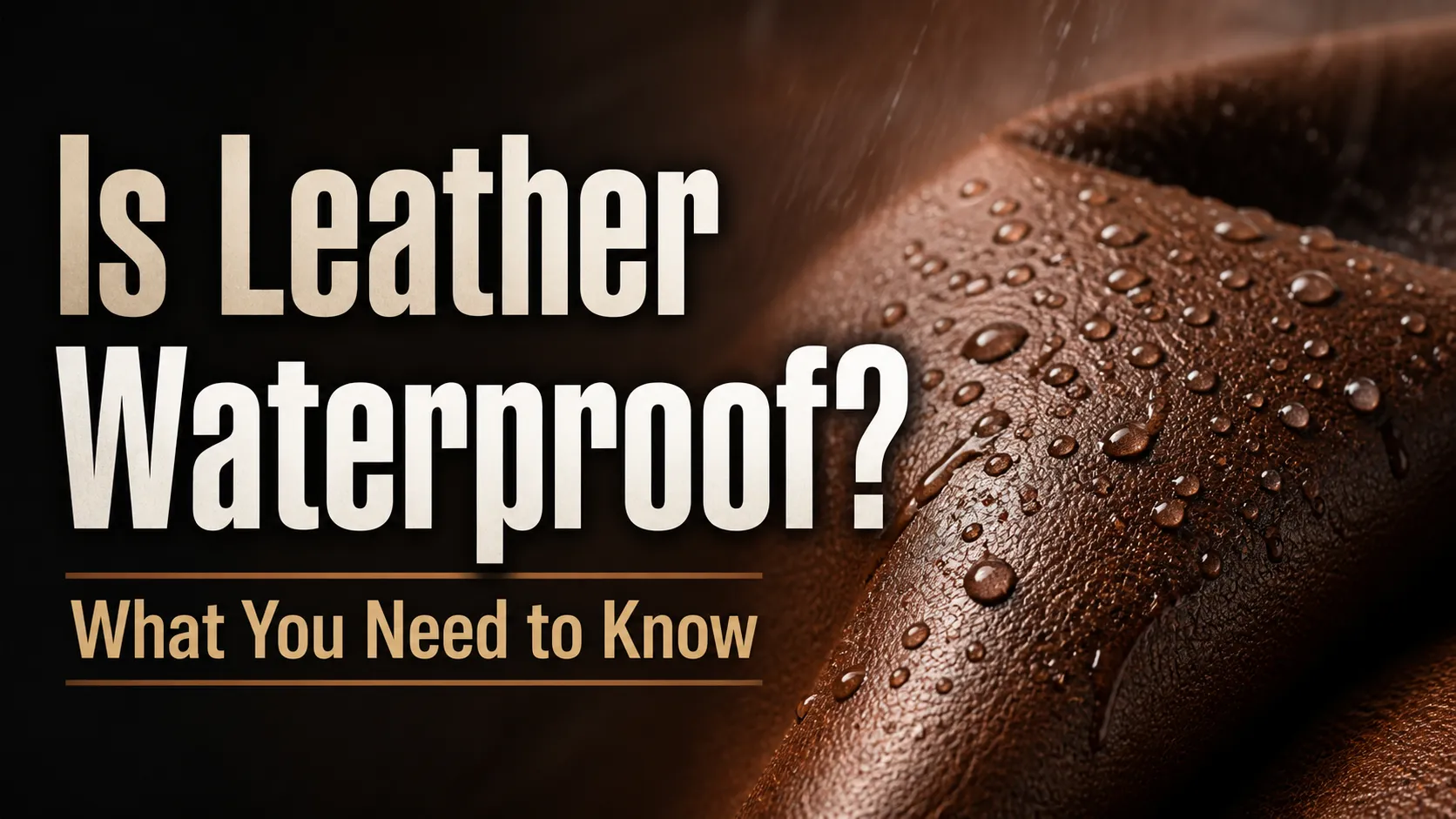
“Is leather waterproof?” is one of the most common questions leather buyers ask — and the answer is more nuanced than a simple yes or no. Understanding how leather and water actually interact helps you protect your investment and avoid the mistakes that lead to water damage.
The short answer: leather is water-resistant, not waterproof. It can handle light moisture — a drizzle, a splash, a damp surface — without issue. But it is not designed to be submerged or exposed to heavy, prolonged rain without protection.
This guide explains why, what happens when leather gets wet, how to protect it, and what to do if your leather bag gets caught in a downpour.
Why Leather Is Not Truly Waterproof
Leather is a natural, porous material. The tanning process stabilises the hide’s fibre structure and makes it resistant to decomposition, but it does not seal the surface completely. The natural pores, grain texture, and fibre gaps that make leather breathable also allow water to penetrate over time.
This porosity is actually one of leather’s greatest strengths. It allows the material to breathe, absorb natural oils, and develop the patina that makes full grain leather so desirable. But it also means that water — especially standing water or prolonged exposure — can soak through the surface and reach the inner fibres.
Different types of leather handle water differently:
- Full grain leather has the tightest natural grain, which provides the best inherent water resistance of any uncoated leather. Water beads on the surface initially and takes longer to absorb.
- Top grain leather has a sealed finish coat that repels surface moisture reasonably well, but the sanded grain underneath is more vulnerable once the finish is compromised.
- Nubuck and suede are the most water-sensitive, as their open, brushed surfaces absorb moisture almost instantly.
- Crazy horse leather has a wax coating that provides excellent water resistance — better than most other leather finishes.
What Happens When Leather Gets Wet
When water reaches leather fibres, several things occur:
Swelling. The collagen fibres absorb water and swell, which temporarily changes the leather’s shape and flexibility. This is why wet leather feels softer and more pliable.
Darkening. Wet areas appear darker because the water changes how light interacts with the surface. This discolouration is usually temporary — the leather returns to its normal colour as it dries.
Stiffening. As the leather dries, the water evaporates and takes some of the leather’s natural oils with it. Without those oils, the fibres become stiffer and less supple. This is why leather that has been wet and dried without conditioning often feels stiff and can crack over time.
Water marks. If only part of the leather gets wet, the boundary between the wet and dry areas can leave a visible tide mark as the leather dries unevenly. These water marks are cosmetic but can be stubborn if not treated promptly.
Mould risk. Leather that stays damp for extended periods — especially in warm, humid environments — can develop mould or mildew, which damages the fibres and produces unpleasant odours.
None of this means leather is fragile. A quality full grain leather bag can handle occasional exposure to rain and moisture with no lasting harm — provided you dry and condition it properly afterward.
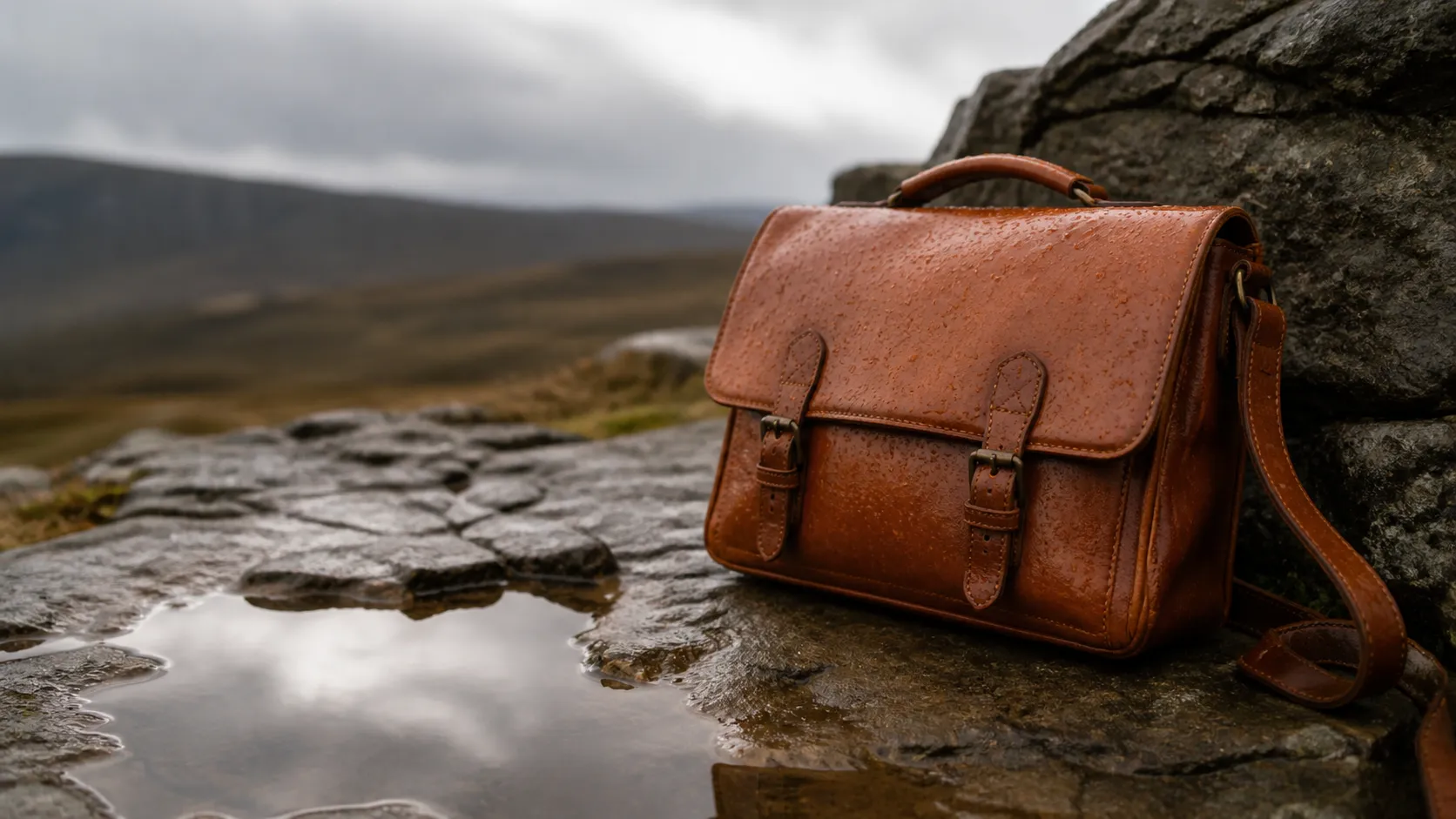
How to Protect Leather From Water
Prevention is always easier than repair. These steps significantly improve your leather’s ability to handle moisture.
Apply a Water-Repellent Protectant
A quality leather protectant spray or wax creates a barrier that causes water to bead on the surface rather than absorb. For full grain leather, beeswax-based products are excellent — they provide natural water resistance without clogging the pores or preventing the leather from breathing.
Apply the protectant evenly to clean, dry leather. Let it absorb or cure according to the product’s instructions. Reapply every few months or before anticipated exposure to wet conditions.
Condition Regularly
Well-conditioned leather is naturally more water-resistant than dry leather. The oils in a good conditioner fill the microscopic gaps between fibres, creating a denser surface that water penetrates more slowly. Regular conditioning — every three to six months — is one of the best things you can do for water protection.
Choose the Right Leather
If you live in a wet climate or plan to use your bag in all weather, material choice matters:
- Crazy horse leather offers the best rain resistance of any standard leather, thanks to its wax finish
- Full grain leather provides good natural resistance and improves with conditioning
- Oil-pull or oil-tanned leather has natural oils throughout the hide that repel moisture effectively
Avoid nubuck and suede for rain-prone use unless you are committed to regular waterproofing spray applications.
What to Do When Leather Gets Wet
If your leather bag gets caught in the rain or splashed, follow these steps:
Step 1: Blot Immediately
Use a clean, dry, absorbent cloth to blot excess water from the surface. Press gently — do not rub, which can push water deeper into the fibres and spread any dirt or contaminants.
Step 2: Stuff the Bag
If the bag is very wet, stuff it with clean, dry towels or acid-free tissue paper to absorb internal moisture and help the bag hold its shape as it dries.
Step 3: Air Dry at Room Temperature
Place the bag in a well-ventilated area and let it dry naturally. This may take several hours to a full day depending on how wet it got.
Critical: Never use a hair dryer, radiator, direct sunlight, or any heat source to speed drying. Heat causes the wet leather fibres to contract and harden, leading to cracking, warping, and irreversible damage.
Step 4: Condition Thoroughly
Once the leather is completely dry, apply a generous (but not excessive) layer of leather conditioner. The drying process strips natural oils, and the leather needs replenishment to regain its suppleness. Work the conditioner in with a soft cloth, let it absorb, and buff off the excess.
Step 5: Treat Water Marks if Needed
If tide marks remain after drying, dampen the entire affected panel evenly with a lightly wet cloth so the moisture level equalises across the surface. Let it dry naturally, then condition. The marks typically blend and disappear as the leather dries uniformly.
Can You Make Leather Fully Waterproof?
Technically, yes — but at a cost. Heavy wax treatments, silicone coatings, or synthetic sealants can make leather nearly waterproof. However, these treatments fundamentally change the leather’s character:
- The surface loses its natural breathability
- Patina development is slowed or stopped entirely
- The leather’s feel becomes more plasticky or waxy
- Conditioning becomes less effective since products cannot penetrate the sealant
For most leather bag owners, the better approach is water resistance rather than waterproofing. A quality protectant spray or beeswax treatment provides enough protection for everyday use — rain showers, splashes, damp surfaces — without sacrificing the qualities that make leather desirable in the first place.
If you need a bag that can withstand sustained heavy rain, consider pairing your leather bag with a rain cover, or carry a lighter bag on days when conditions are severe.
Frequently Asked Questions
Is full grain leather waterproof?
No, but it has the best natural water resistance of any uncoated leather grade. The tight, intact grain surface causes water to bead initially rather than absorb immediately. With conditioning and a protectant treatment, full grain leather handles light to moderate rain without issue. It should not be submerged or exposed to heavy, prolonged moisture.
Can rain ruin a leather bag?
Light rain will not ruin a quality leather bag if you dry it properly and condition it afterward. Heavy, prolonged rain can cause water marks, stiffening, and potential mould if the leather is not dried promptly. The key is to blot excess water immediately, air dry at room temperature, and condition once fully dry.
What is the best waterproofing for leather bags?
Beeswax-based protectants are the best option for most leather bags. They provide effective water resistance while preserving breathability, patina development, and the natural feel of the leather. Apply to clean, dry leather and reapply every few months or before anticipated wet weather.
Does water stain leather permanently?
Water marks on leather are usually not permanent. If treated promptly — by evening out the moisture across the surface and conditioning after drying — the marks blend and disappear. Severe or untreated water marks can be addressed by a professional leather care specialist.
How do you dry wet leather without damaging it?
Blot excess moisture with a clean cloth, stuff the bag to maintain its shape, and air dry at room temperature in a ventilated area. Never use heat — hair dryers, radiators, and direct sunlight cause cracking and warping. Once fully dry, condition the leather to restore lost oils and suppleness.
Respect the Material, and It Rewards You
Leather is not waterproof — and that is part of what makes it remarkable. Its porosity is what lets it breathe, develop a patina, and feel alive in your hands. The same properties that make it vulnerable to water are the properties that make it beautiful.
With basic precautions — a protectant treatment, regular conditioning, and knowing how to handle wet weather — your leather will serve you faithfully through decades of daily life, rain included.
Every bag in our collection is crafted from full grain leather built to age gracefully in every condition.
Related posts
Leather Messenger Bag: How to Choose the Right One for Work and Commuting
Knowing how to choose a leather messenger bag comes down to a few honest questions: will it protect your laptop, sit comfortably across...
Leather Duffle Bag: How to Choose the Right One for Travel, Gym, and Weekends
A leather duffle bag is one of the most stylish and durable ways to pack for a short trip, blending the roomy, soft-sided shape of a cl...
Leather Shoulder Bag: How to Choose the Right One for Everyday Use
A leather shoulder bag is one of the most versatile everyday bag styles you can own, carried on one shoulder with a short strap and sit...
Leather Backpack: How to Choose the Right One for Work, Travel, and Everyday Use
Knowing how to choose a leather backpack comes down to a few honest questions: will it fit your laptop, sit comfortably on your shoulde...
Satchel Bag: How to Choose a Leather Satchel That Lasts
A satchel bag is one of the most useful bags you can own, sitting neatly between a relaxed backpack and a formal briefcase — structured...
Leather Bag Men: Outfit Ideas and Styling Tips for Every Occasion
Finding the right leather bag men can confidently carry in any setting — from the boardroom to the weekend — is easier than most think....