Free Shipping Over $100 · Satisfaction Guarantee · Handcrafted by Artisans

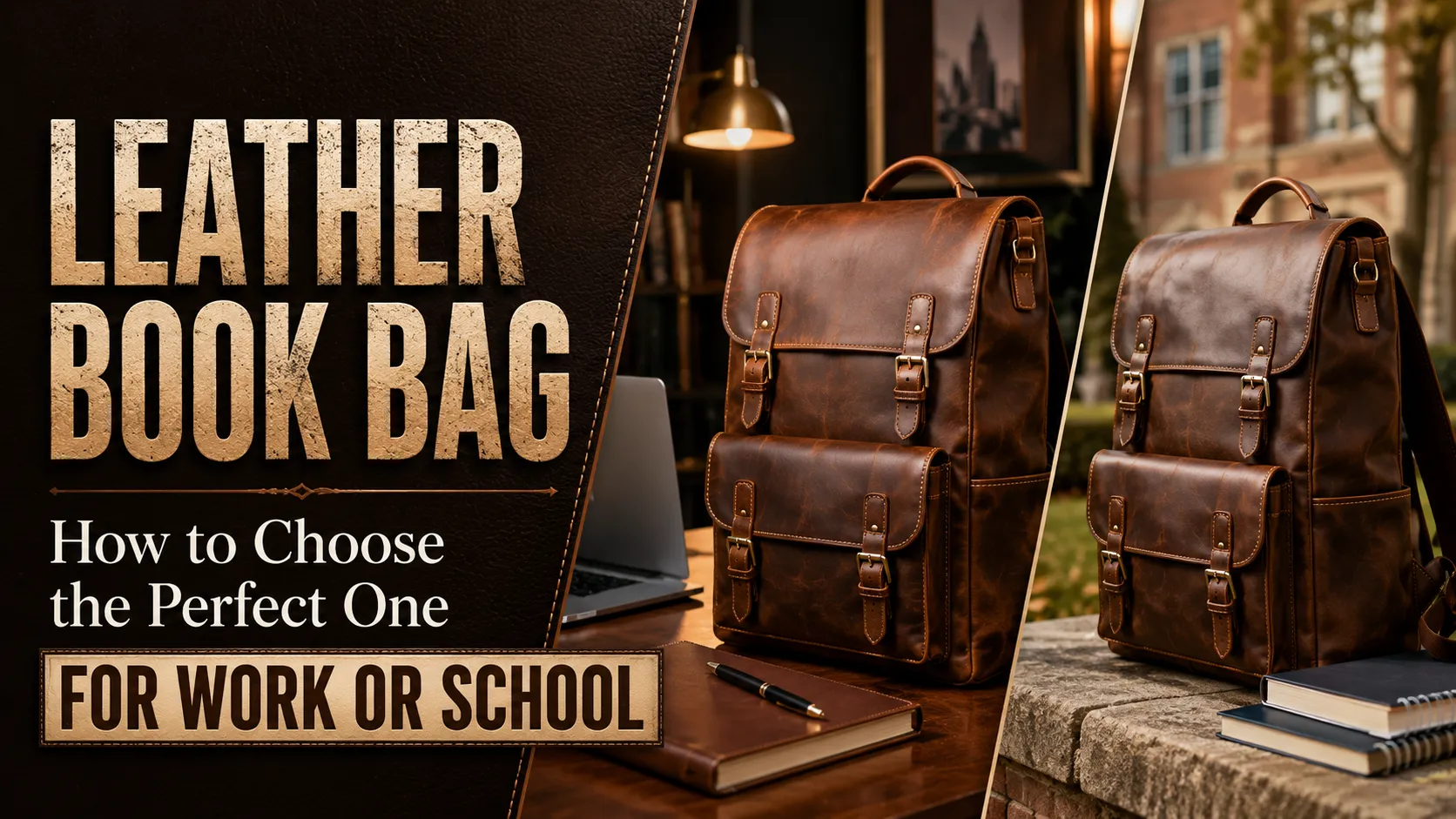
A leather book bag is more than a way to carry books — it is a statement of quality, durability, and timeless style that no fabric alternative can match. Whether you are heading to the office, commuting to campus, or simply want a bag that holds up to years of daily use, a well-made leather book bag outperforms and outlasts every synthetic option on the market.
But not every leather book bag is created equal. The leather grade, construction quality, size, and design all determine whether your bag will serve you for a decade or disappoint within a year. Choosing the right one means understanding what separates a quality leather book bag from a cheap imitation.
This guide covers everything you need to know — from the best leather types to look for, to sizing, styling, and care — so you invest in a leather book bag that grows with you.
What Makes a Great Leather Book Bag
A leather book bag needs to do three things well: carry weight comfortably, protect your contents, and look good doing it — day after day, year after year. Here is what separates a great one from an ordinary one.
The Leather
The grade of leather is the foundation. A leather book bag made from full grain leather uses the strongest, most durable part of the hide — with the natural grain left intact. It resists wear, handles the weight of books and devices without stretching, and develops a rich patina over time that makes the bag more beautiful with age.
Avoid book bags labelled simply genuine leather — this is one of the lowest grades, made from weaker inner hide layers that crack and peel within a few years. For a bag that carries heavy loads daily, full grain is the only grade that delivers long-term reliability.
The Construction
A leather book bag endures more stress than most bag types. The weight of books, laptops, and daily essentials puts constant strain on stitching, straps, and hardware.
Look for reinforced stitching at every stress point — where straps connect to the body, around the base, and at closure mechanisms. Hand-stitched or saddle-stitched seams are stronger than machine stitching because each stitch locks independently. Solid brass or stainless steel hardware — buckles, zippers, D-rings — outlasts plated or plastic alternatives.
The Structure
A good leather book bag holds its shape whether full or half-empty. Internal structure — a firm base, reinforced sides, or a padded frame — prevents the bag from collapsing under weight. This protects your books and devices while maintaining a clean silhouette.
Unstructured leather book bags exist and can work for lighter loads, but for daily use carrying textbooks, a laptop, or work documents, structured construction is always the better choice.
Types of Leather Book Bags
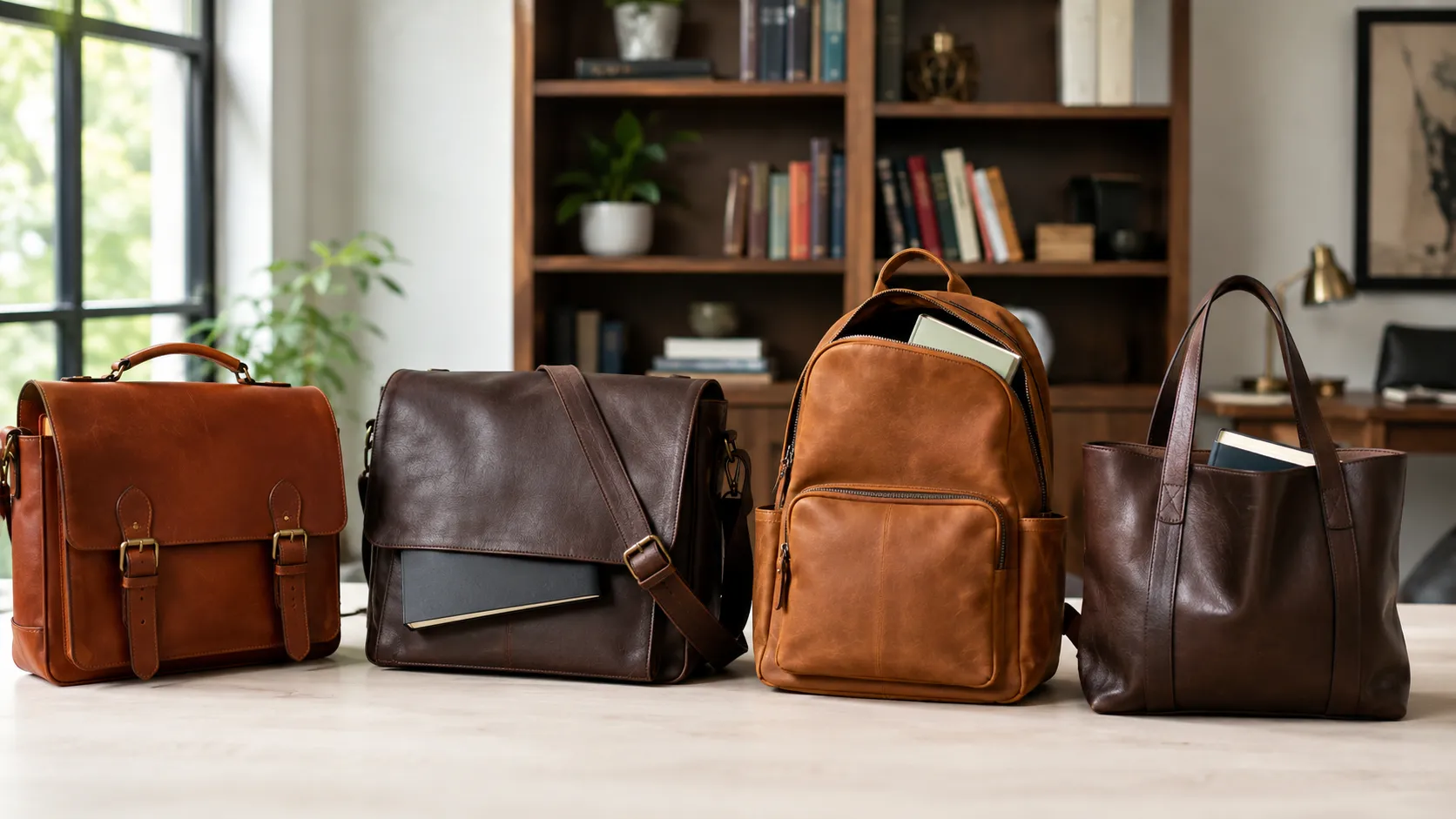
Leather book bags come in several silhouettes, each suited to different needs and settings.
The Leather Satchel
The classic book bag shape. A leather satchel features a structured rectangular body with a top handle and a shoulder strap, typically closed with buckle straps or a flap. It is the most traditional and professional-looking leather book bag — ideal for work, university, and formal settings.
Satchels hold books flat and upright, making them excellent for protecting documents, notebooks, and hardcovers. Most accommodate a 13–15 inch laptop in addition to books and daily essentials.
The Leather Messenger Bag
A leather messenger bag is a more relaxed alternative to the satchel. It features a wide, adjustable shoulder strap worn across the body and a flap closure. The messenger silhouette is slightly less formal but equally functional as a leather book bag.
Messengers work particularly well for commuters and cyclists because the cross-body strap keeps the bag secure during movement. They offer generous interior space and are easy to access without removing the bag from your shoulder.
The Leather Backpack
A leather backpack distributes weight evenly across both shoulders — the most ergonomic option for heavy book loads. Modern leather backpacks combine the durability and aesthetic of leather with the practical comfort of a two-strap design.
This style works well for students carrying textbooks, professionals with heavier daily kits, and anyone who walks or cycles significant distances with their bag. A leather backpack as your book bag adds polish that fabric alternatives cannot match.
The Leather Tote
A leather tote bag offers open-top access and generous capacity. While less structured than a satchel, a quality leather tote functions well as a book bag for those who prefer a more relaxed carry style. It fits books, folders, a laptop, and everyday items with room to spare.
What Size Leather Book Bag Do You Need?
Choosing the right size prevents you from carrying a bag that is too bulky or too cramped.
Assess Your Daily Load
Lay out everything you carry on a typical day:
- Students: Textbooks, notebooks, laptop or tablet, pens, water bottle, charger, wallet, phone
- Professionals: Laptop, documents or folders, notebook, charger, wallet, phone, headphones
Count the number and size of books you carry daily. A standard textbook is roughly 25 × 18 cm (10 × 7 inches). If you carry two or more textbooks alongside a laptop, you need a medium to large bag.
Size Guide
| Size | Dimensions (approx.) | Best For |
|---|---|---|
| Small | 30 × 22 cm | Light carry — tablet, one book, essentials |
| Medium | 38 × 28 cm | Everyday — laptop, 1–2 books, daily items |
| Large | 42 × 32 cm | Heavy carry — multiple books, laptop, documents |
For most people using a leather book bag daily — whether for work or school — a medium-sized bag hits the sweet spot between capacity and portability.
Laptop Compatibility
If you carry a laptop, check that the bag’s main compartment fits your device with a little room to spare. Many quality leather book bags include a dedicated padded laptop sleeve — look for one that accommodates 13-inch or 15-inch screens depending on your device. Our leather laptop bags are specifically designed for this.
Leather Book Bag vs Canvas or Nylon: Why Leather Wins
Fabric book bags — canvas, nylon, polyester — are cheaper upfront. But when you compare the full picture, a leather book bag delivers dramatically better value.
| Factor | Leather Book Bag | Canvas / Nylon |
|---|---|---|
| Durability | 15–30 years with care | 1–5 years before wear |
| Appearance over time | Develops patina, looks better | Fades, frays, stains permanently |
| Weight capacity | Handles heavy loads without stretching | Stretches and sags under weight |
| Repairability | Can be reconditioned and restored | Difficult to repair meaningfully |
| Professional appearance | Polished, timeless | Casual, ages poorly |
| Water resistance | Moderate — improves with treatment | Varies — some treated, most not |
| Cost per year | ~$15/year (at $200 over 15 years) | ~$20/year (at $40 over 2 years) |
The cost-per-year calculation tells the real story. A leather book bag that lasts 15 years at $200 costs roughly $13 per year. A canvas bag that lasts 2 years at $40 costs $20 per year — and you go through the hassle of replacing it repeatedly.
How to Style a Leather Book Bag
A leather book bag is one of the easiest accessories to style across different settings.
For work and professional settings. A structured leather satchel or briefcase-style book bag in cognac or dark brown pairs perfectly with business casual — tailored trousers, a button-down shirt, and clean shoes. The leather book bag adds authority without the stiffness of a hard-sided briefcase.
For university and school. A leather messenger or backpack in a relaxed warm tone works with everyday campus wear — jeans, casual shirts, sneakers. The leather elevates the look beyond the standard fabric backpack while remaining practical and comfortable.
For everyday use. A leather tote or crossbody functions as a lighter book bag for casual days when you carry fewer items. A cognac or tan leather book bag works with virtually any outfit, any season.
How to Care for Your Leather Book Bag
A leather book bag takes daily wear — set it down on floors, carry heavy weight, handle it constantly. Regular care keeps it looking sharp.
Wipe down weekly. A quick wipe with a soft, dry cloth removes surface dust and prevents dirt from settling into the grain. This simple habit makes the biggest difference.
Condition every 3–4 months. Daily-use bags lose moisture faster. Apply a quality leather conditioner with a soft cloth, let it absorb, and buff off the excess. Regular conditioning keeps the leather supple and prevents cracking.
Protect the base. The bottom of a book bag touches floors, desks, and surfaces constantly. Consider applying extra conditioner or a protectant to the base. Some owners add small metal feet to protect against surface contact — a worthwhile modification for daily use.
Handle water promptly. If your leather book bag gets caught in rain, blot it dry immediately and let it air dry at room temperature. Condition once dry. For wet climates, a beeswax protectant spray adds rain resistance.
Store properly. When not in use, stuff the bag with tissue paper and store in a breathable dust bag away from direct sunlight and heat.
Frequently Asked Questions
Is a leather book bag worth it?
Yes. A quality full grain leather book bag lasts 15 to 30 years with basic care — far outlasting any canvas or nylon alternative. It handles heavy daily loads without stretching, develops character over time, and can be reconditioned if damaged. The upfront cost is higher, but the cost per year of use is lower than repeatedly replacing cheaper bags.
What is the best leather for a book bag?
Full grain leather is the best choice. It is the strongest, most durable grade — made from the outermost layer of the hide with the natural grain intact. It resists tearing, supports heavy weight, and develops a rich patina with use. Vegetable tanned full grain leather is the premium option for long-term book bags.
Can a leather book bag hold a laptop?
Yes. Most medium and large leather book bags comfortably hold a 13 to 15 inch laptop alongside books and daily essentials. Many include a dedicated padded laptop compartment for added protection. Check the interior dimensions against your device size before purchasing.
How heavy is a leather book bag?
A leather book bag typically weighs between 1 and 2 kilograms (2–4 pounds) empty, depending on size and leather thickness. This is heavier than a fabric bag, but the weight is distributed naturally and the bag’s structure prevents the load from shifting during carry. The durability trade-off is well worth the slight extra weight.
How do you break in a new leather book bag?
Simply use it. New full grain leather is firm and will feel stiff initially, but it softens and moulds to your carry habits within a few weeks of daily use. You can accelerate the process by applying a light coat of leather conditioner, which softens the fibres. Avoid force-bending or over-conditioning — let the leather break in naturally.
A Bag That Keeps Up With You
A leather book bag is an investment in something that works as hard as you do — and looks better for it. While fabric bags wear out, fade, and stretch, a quality leather book bag develops character. The patina deepens. The leather softens to your grip. The bag becomes unmistakably yours.
Every bag in our collection is crafted from full grain leather — strong enough for daily book loads, beautiful enough to carry anywhere.
Related posts
Leather Messenger Bag: How to Choose the Right One for Work and Commuting
Knowing how to choose a leather messenger bag comes down to a few honest questions: will it protect your laptop, sit comfortably across...
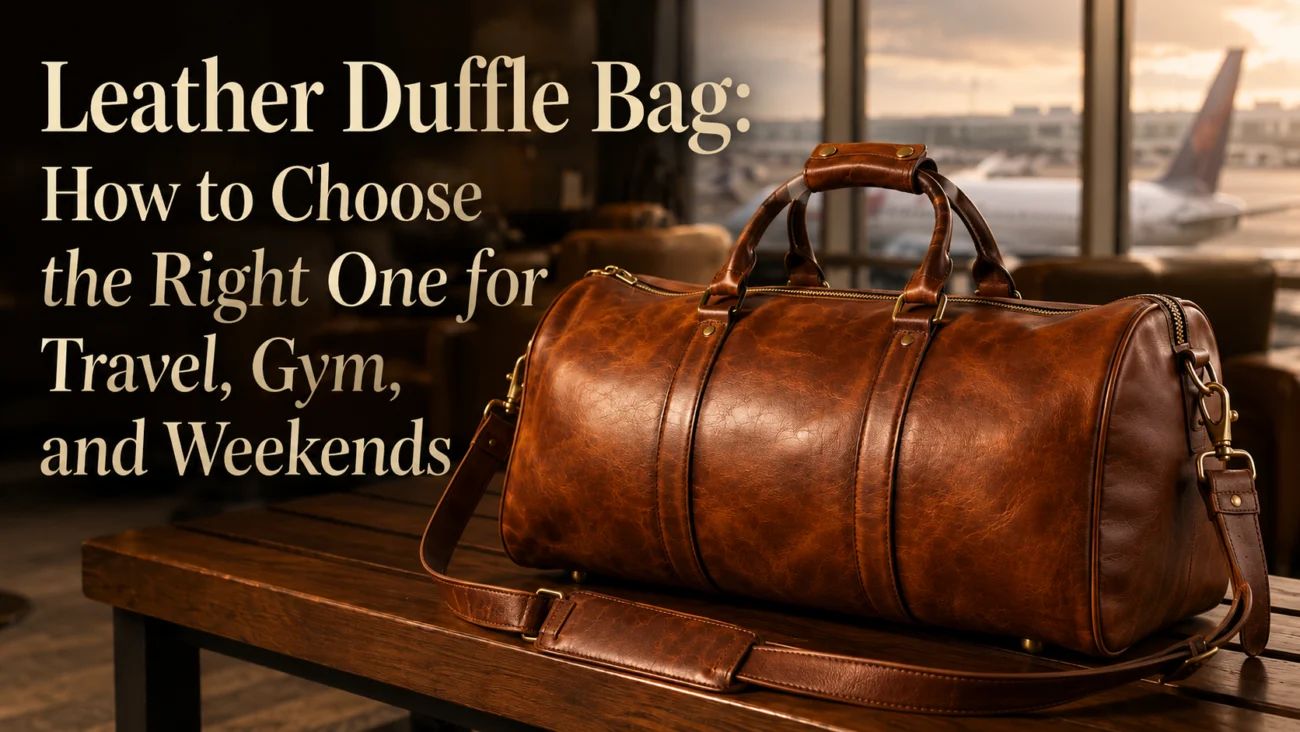
Leather Duffle Bag: How to Choose the Right One for Travel, Gym, and Weekends
A leather duffle bag is one of the most stylish and durable ways to pack for a short trip, blending the roomy, soft-sided shape of a cl...
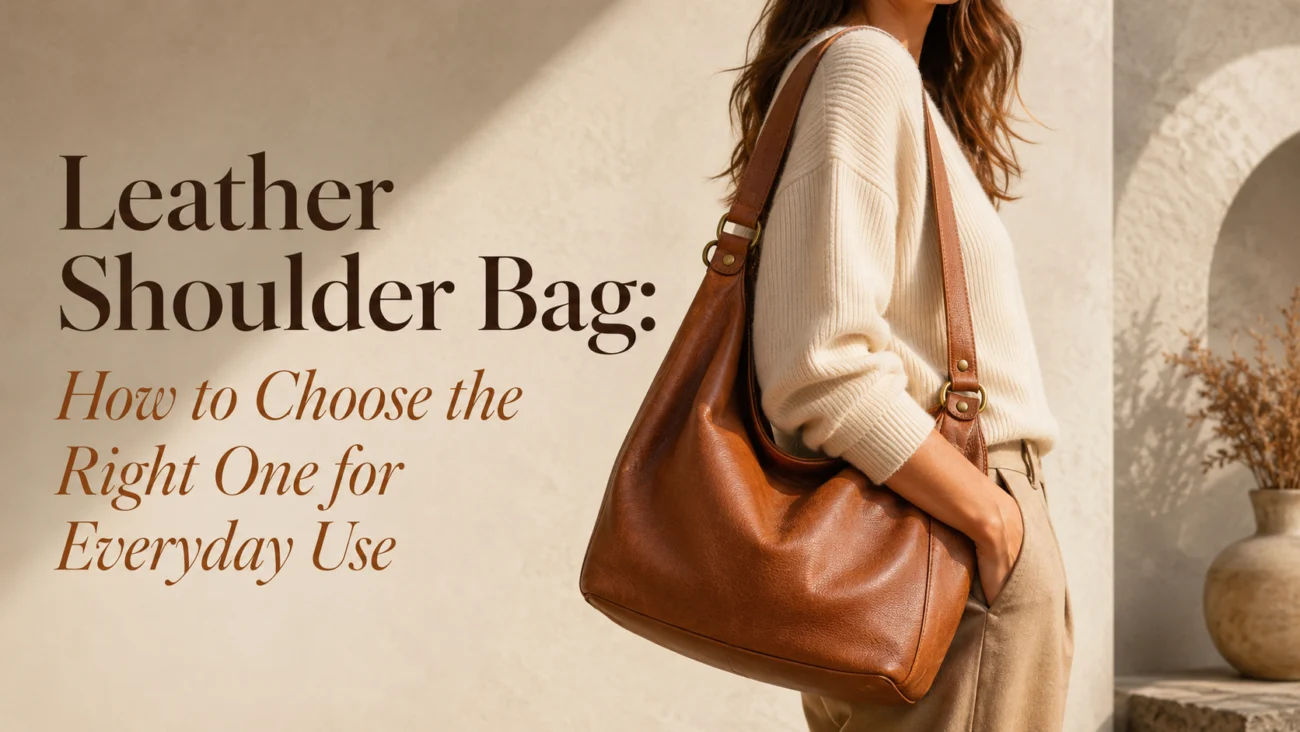
Leather Shoulder Bag: How to Choose the Right One for Everyday Use
A leather shoulder bag is one of the most versatile everyday bag styles you can own, carried on one shoulder with a short strap and sit...
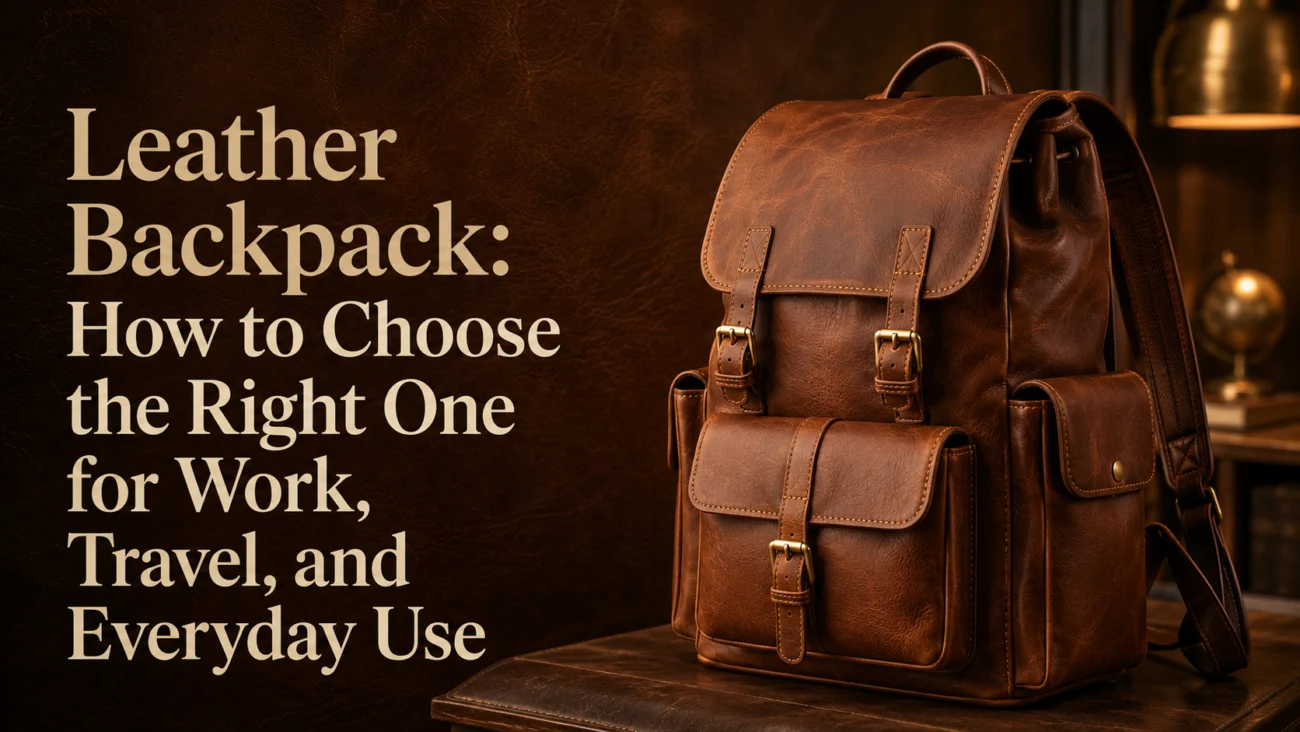
Leather Backpack: How to Choose the Right One for Work, Travel, and Everyday Use
Knowing how to choose a leather backpack comes down to a few honest questions: will it fit your laptop, sit comfortably on your shoulde...
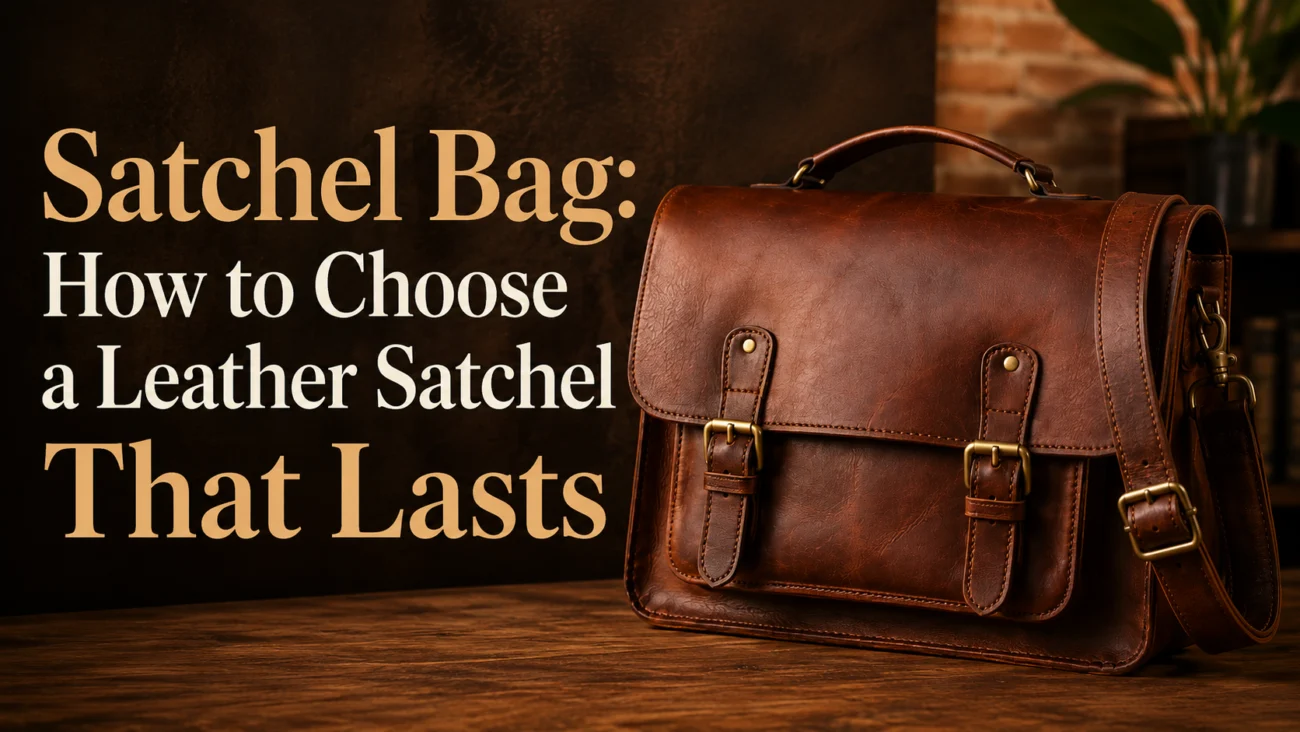
Satchel Bag: How to Choose a Leather Satchel That Lasts
A satchel bag is one of the most useful bags you can own, sitting neatly between a relaxed backpack and a formal briefcase — structured...
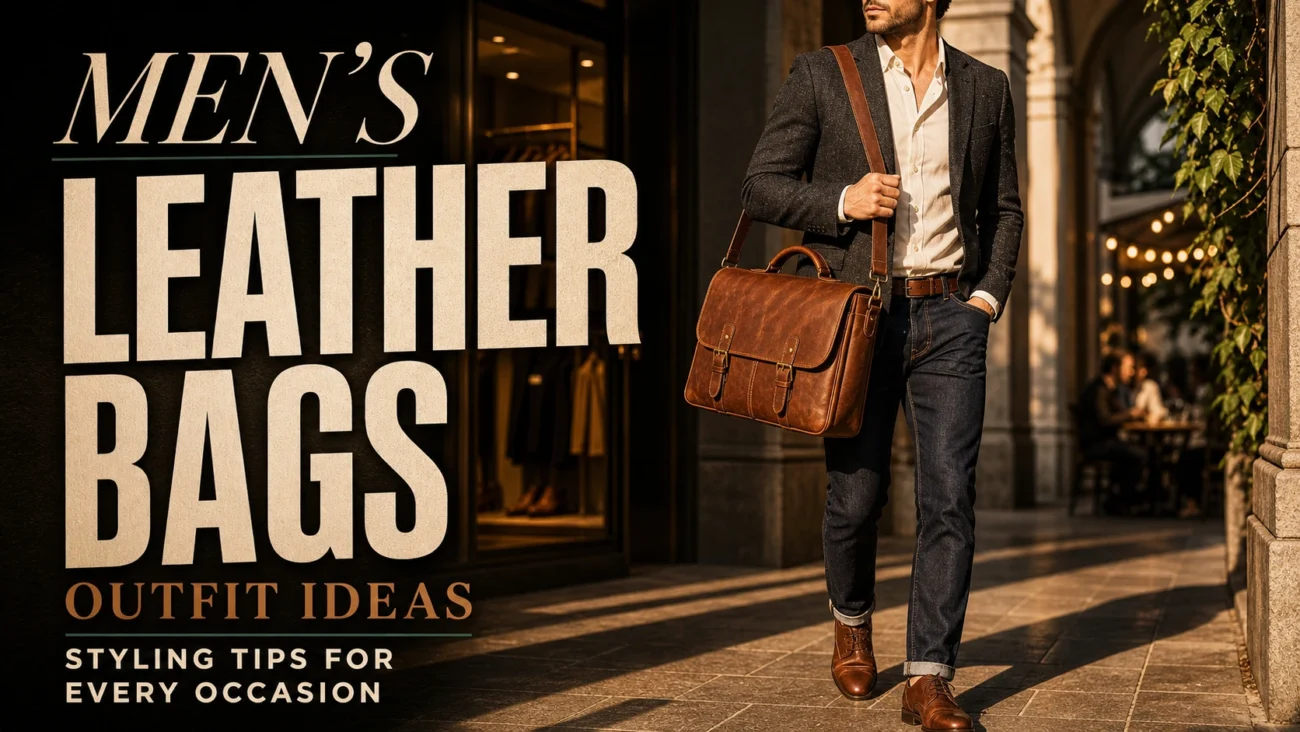
Leather Bag Men: Outfit Ideas and Styling Tips for Every Occasion
Finding the right leather bag men can confidently carry in any setting — from the boardroom to the weekend — is easier than most think....