Free Shipping Over $100 · Satisfaction Guarantee · Handcrafted by Artisans


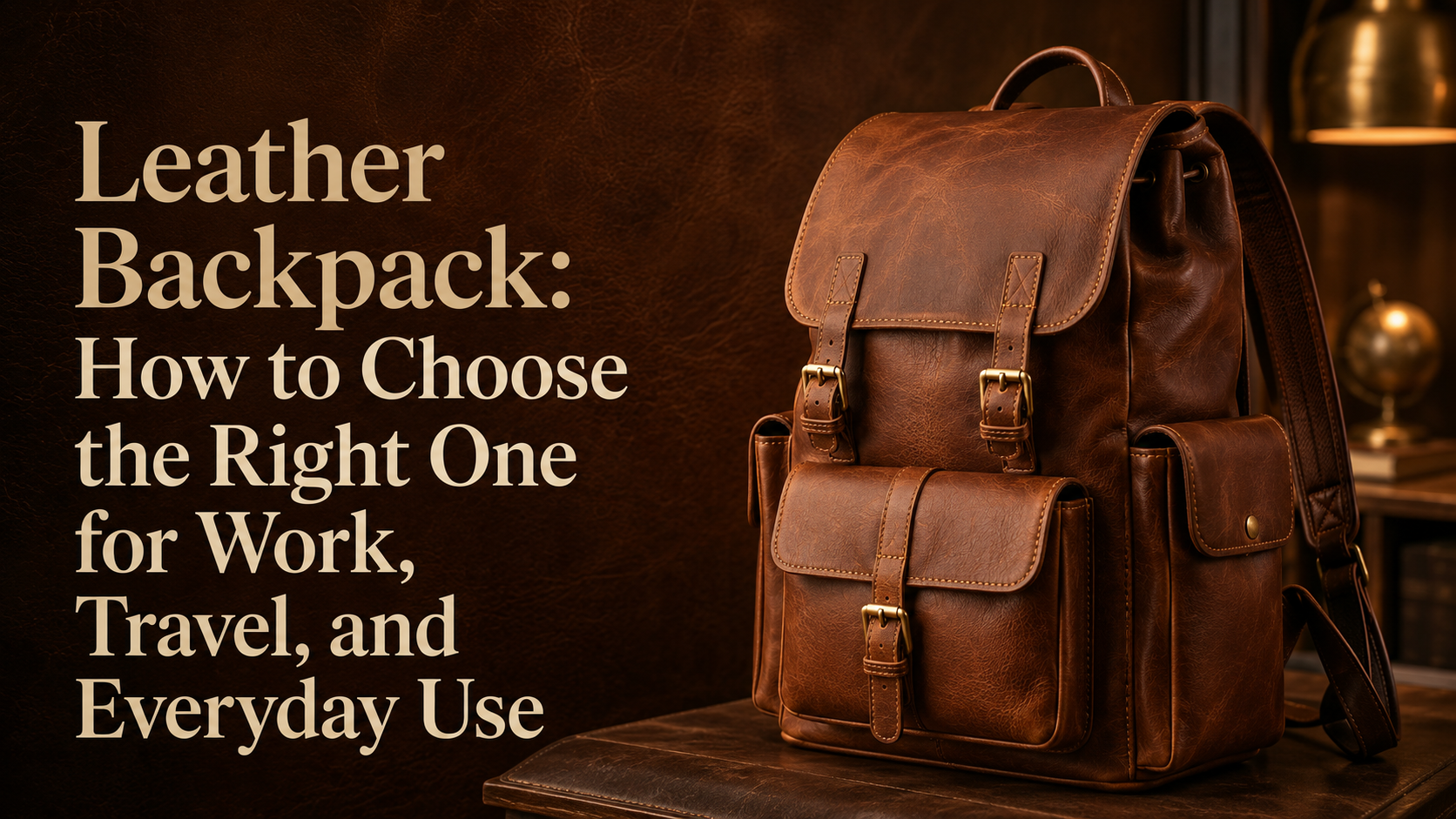
Knowing how to choose a leather backpack comes down to a few honest questions: will it fit your laptop, sit comfortably on your shoulders, survive years of daily carry, and still look good doing it? A leather backpack is one of the most versatile bags you can own — polished enough for the office, tough enough for travel, and roomy enough for a college commute. But not every backpack is built the same, and the wrong one can be heavy, poorly organized, or made from a grade of leather that cracks within a year. This guide walks you through everything that actually matters before you buy.
Is a Leather Backpack Worth It?
A leather backpack is worth it if you want a single polished bag for work, commuting, college, or light travel that improves with age instead of falling apart. Full-grain leather develops a rich patina over 15 to 25 years, so a good backpack often outlives a dozen nylon ones.
That said, honesty matters more than hype. Leather is heavier than canvas or nylon, it needs occasional care, and it is not built for monsoon rain. If you hike long distances daily or need the lightest possible travel bag, a technical pack may suit you better.
For most people who value style, durability, and a bag that looks better with every scuff, the trade-off is easy. You carry a little more weight in exchange for a bag that lasts decades and never looks cheap.
What Makes a Leather Backpack Different
A leather backpack differs from an ordinary backpack in three ways: material, longevity, and how it ages. Where synthetic packs are designed to be replaced, a well-made leather bag is designed to be kept.
Nylon and canvas win on weight and rain resistance, and they cost less upfront. Leather wins on structure, repairability, and character — a leather bag holds its shape, takes a scratch as patina rather than damage, and can be conditioned back to life years later.
The gap really shows over time. A quality leather bag ages into something uniquely yours, while synthetic fabric simply wears out. If you want to understand what separates a bag worth keeping from a disposable one, our guide on the signs of a quality leather bag breaks it down.
Full-Grain vs Top-Grain vs Genuine Leather
The single most important choice is the grade of leather, because it decides how long your backpack lasts. The word “leather” on a label tells you almost nothing on its own.
Full-grain is the strongest, most durable part of the hide with its natural surface intact, so it resists tearing and ages beautifully. Top-grain is lightly sanded for a smoother, more uniform look — lighter and cleaner, but less durable at stress points. “Genuine leather” sounds premium but is actually one of the lowest grades, and it should not be treated as a mark of quality.
| Leather Grade | Typical Lifespan | Look & Feel | Best For |
|---|---|---|---|
| Full-grain | 15–25+ years | Natural grain, develops patina | A backpack you keep for decades |
| Top-grain | 10–15 years | Smooth, uniform, corrected | Lighter, more formal finish |
| Genuine | 5–10 years | Coated, plasticky over time | Budget bags, short-term use |
For everyday carry, choose full-grain. To see exactly why the grade names matter, read our deep dives on leather types and full grain vs top grain leather. Every backpack in our full-grain leather collection starts from that top layer of the hide.
What Size Leather Backpack Do You Need?
Size is where most people get it wrong, buying either far more room than they use or a bag too small for a laptop. Start from your real daily carry, not the biggest bag on the shelf.
A small backpack (around 8–12 liters) suits errands, minimal commutes, and a tablet. A medium backpack (12–18 liters) is the everyday sweet spot for work and college, holding a laptop, charger, notebook, and lunch. A large or structured backpack (18 liters and up) is for travel and heavier days.
Match the bag to how far you actually walk. An oversized backpack packed full gets heavy fast, so if you cover long distances on foot, size down and pack smarter.
Laptop Fit: 13, 14, 15, and 16-Inch Devices
Your laptop dictates the backpack. A dedicated, padded sleeve sized to your device is non-negotiable — a laptop rattling around a main compartment is a cracked screen waiting to happen.
Check the stated sleeve size against your laptop’s real dimensions, not just its screen size, since thin-bezel machines run smaller and older ones run larger. A 14-inch full-grain backpack comfortably fits most 13 to 14-inch laptops with a slim charger. If you carry a 15 or 16-inch machine, size up to a bag built for it, and browse purpose-made options in our leather laptop bag collection.
Comfort: Straps, Back Panel, and Weight Distribution
Comfort is a feature, not an afterthought, and it depends on how a backpack spreads weight across your body. Because leather adds weight, the carrying system matters even more than it does on a nylon pack.
Look for wide, padded, adjustable shoulder straps. The American Academy of Pediatrics notes that broad, padded straps help distribute weight more evenly and reduce strain on the shoulders and neck. The American Academy of Orthopaedic Surgeons similarly recommends wide padded straps, a padded back, and even weight distribution.
A structured back panel keeps the bag upright and stops contents from digging in. Padding there adds real comfort on longer carries. When you try a backpack on, load it the way you actually pack it and check how it sits — the weight should ride high and close to your back, not sag toward your hips.
Hardware, Stitching, and Organization
Hardware and stitching are where quality hides in plain sight, so inspect them before anything else. These are the parts that fail first on a cheap bag.
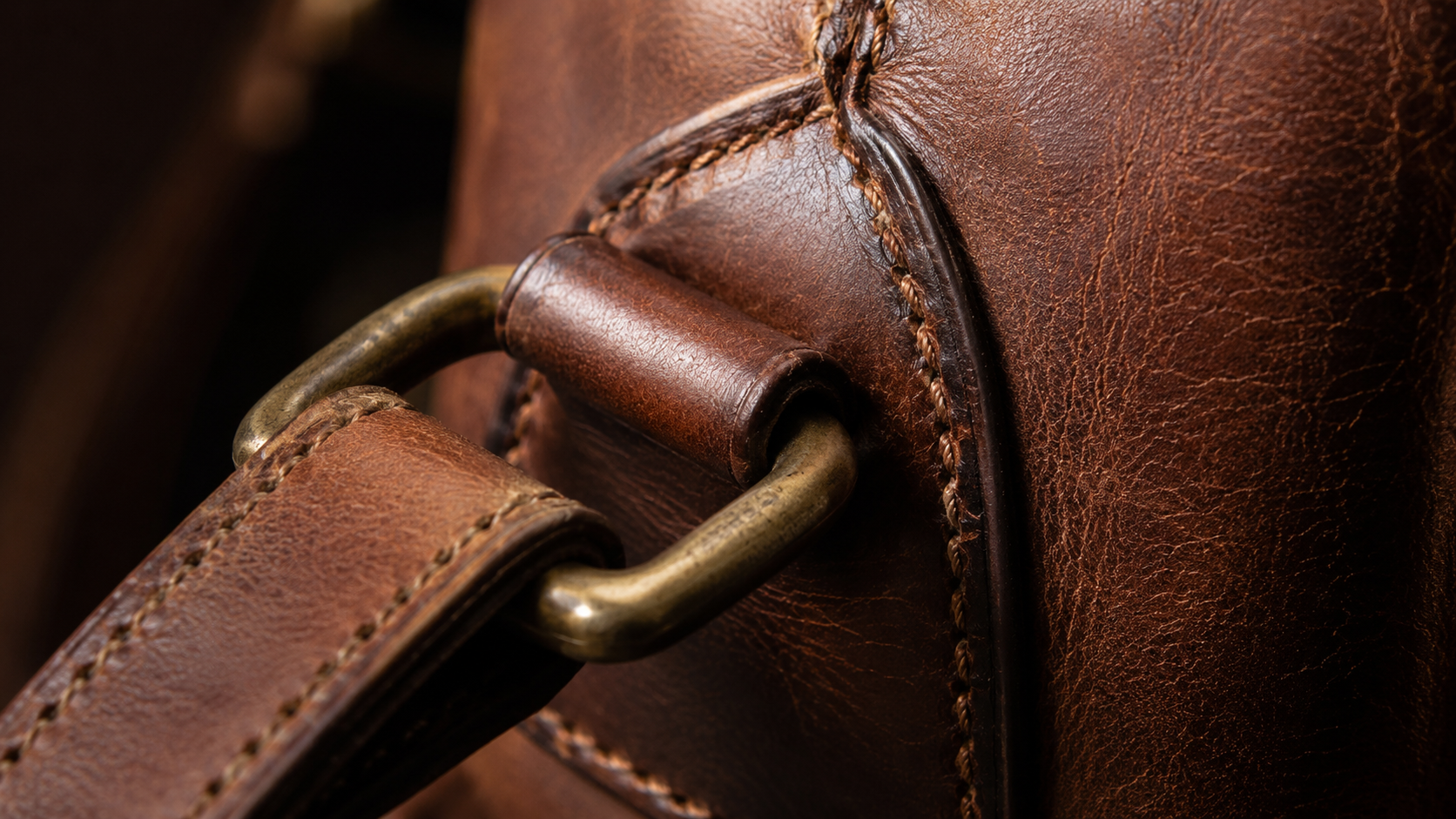
Choose solid brass or antique-brass zippers and buckles rather than thin plated hardware that flakes and rusts. Run your eye along the seams: you want tight, even, double stitching at the straps, base, and handle, because those stress points carry the load. Loose threads or single stitching at a strap root is a bag that will tear.
Inside, organization should match your life. A padded laptop sleeve, a couple of zip pockets for valuables, open slots for a water bottle or notebook, and a key clip cover most needs without turning the bag into a heavy grid of compartments. Full-grain backpacks like those in our everyday leather backpack collection balance clean lines with genuinely useful pockets.
Best Colors for a Leather Backpack
Color decides how versatile your backpack is, so choose one that works across your wardrobe and setting. The classics stay classic for a reason.
Black reads sharpest in formal and corporate rooms. Brown, cognac, and tan are the most flexible for business-casual and weekend wear, and they show patina most beautifully over time. Darker browns and espresso hide scuffs well, while lighter tans develop the richest character. If you want something distinctive, deep green or oxblood stands out without shouting.
For a full breakdown of how shade affects styling and aging, see our guide to choosing a leather bag color. For a first backpack that has to do everything, a mid-brown or cognac full-grain is the safest, most versatile pick.
Choosing by Use Case: Work, Travel, College, and Daily Carry
The right backpack depends on what you carry it for, so match the bag to the job. The same 18-liter bag that is perfect for travel can be overkill for quick errands.
For work, a slim leather laptop backpack in a professional color keeps you polished at the desk and on the commute. For travel, a structured backpack with secure zippers and luggage-strap compatibility earns its keep — our leather travel bag guide covers what to look for. For college, comfort and a reinforced base matter most, which we cover in our roundup of leather bags for college.
| Use Case | Best Backpack Type | What to Check First |
|---|---|---|
| Work commute | Slim leather laptop backpack | Laptop sleeve, straps, professional color |
| College | Medium leather backpack | Capacity, comfort, reinforced base |
| Travel | Structured leather backpack | Weight, zipper security, luggage compatibility |
| Daily errands | Small leather backpack | Easy-access pockets, lighter build |
| Business casual | Minimal full-grain backpack | Clean shape, black/cognac/dark brown color |
Men vs Women: Fit Over Stereotypes
There is no real “men’s” or “women’s” leather when it comes to quality — a full-grain backpack is a full-grain backpack. What actually differs is fit, proportion, and styling preference.
Focus on strap length and adjustability, the backpack’s overall scale against your frame, and a color and silhouette you will wear often. A smaller-framed carrier may prefer a compact or mini backpack, while someone carrying a 16-inch laptop needs a larger structured bag regardless of gender.
Shop by size, capacity, and use case rather than a label. Our broader buyer’s guide to leather bags applies the same logic across every style.
Leather Backpack vs Messenger, Tote, and Briefcase
A backpack is not always the answer, so it helps to know when another style fits better. The choice comes down to load, comfort, and formality.
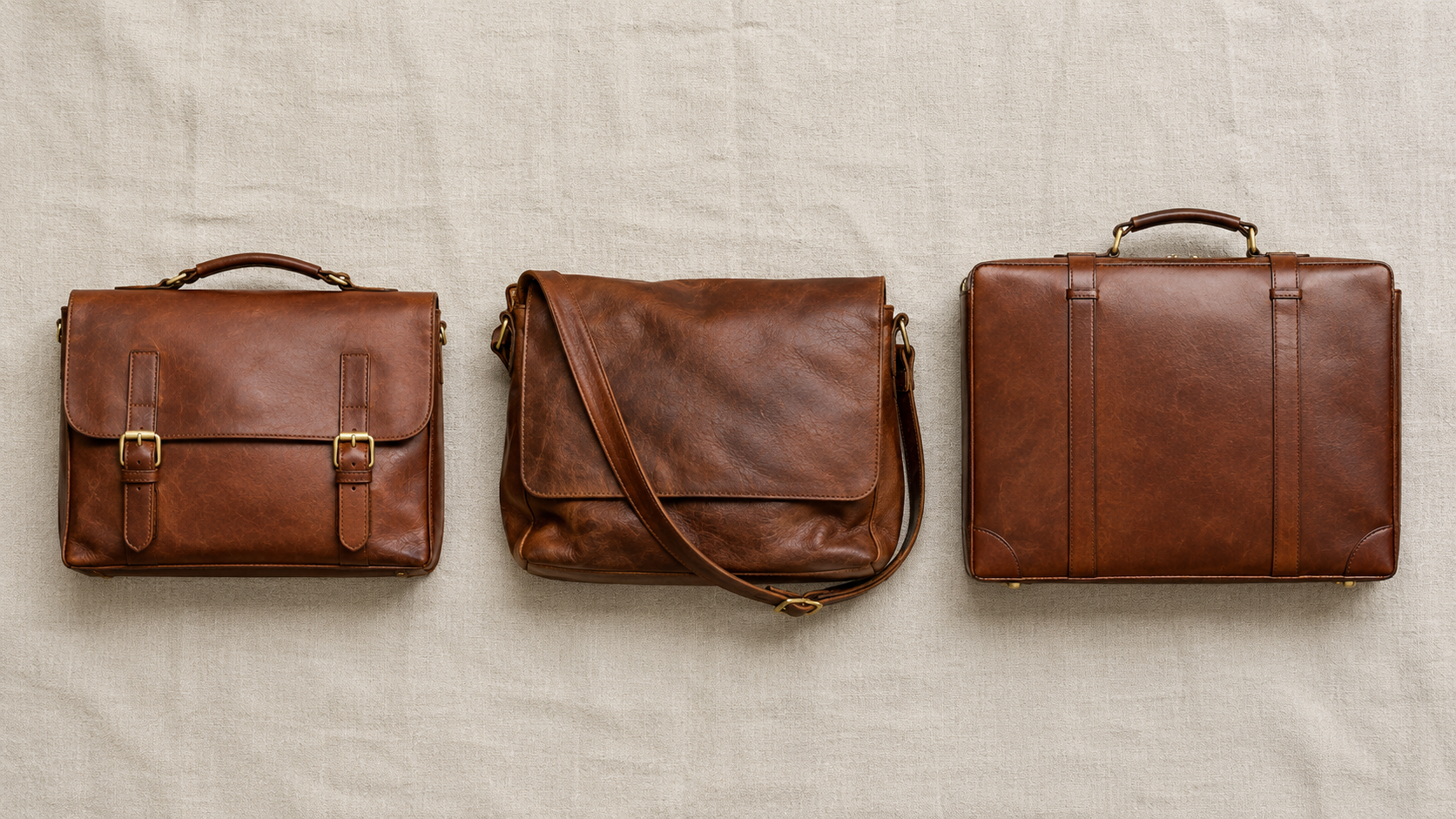
A backpack spreads weight across both shoulders, making it the most comfortable option for heavy or all-day loads. A messenger bag or briefcase reads more formal and offers faster access, but hangs on one shoulder — see our messenger bag vs briefcase comparison if that is your lane. A leather tote suits lighter, grab-and-go days.
If your carry is heavy, daily, and includes a laptop, the backpack usually wins on comfort. If you prioritize a formal look and light loads, consider one of the alternatives.
How to Care for a Leather Backpack
Caring for a leather backpack is simple and it directly extends the bag’s life. A few minutes now and then keeps full-grain looking its best for decades.
Wipe it down regularly with a soft, dry or slightly damp cloth, and give it a deeper clean a couple of times a year — our guide to cleaning leather covers the method. Condition it every few months to keep the leather supple and prevent cracking, which we detail in how to condition leather.
Store it somewhere cool and dry, ideally stuffed lightly to hold its shape. Leather is not waterproof; it is only water-resistant when treated or waxed, so if it gets caught in the rain, wipe off the moisture, let it air dry naturally away from heat, then re-condition.
Frequently Asked Questions
Are leather backpacks worth it?
Yes, if you want a durable, polished bag that ages well. A full-grain leather backpack can last for many years with proper care and often outlasts several synthetic packs. The trade-offs are extra weight and occasional conditioning. For style, longevity, and everyday versatility, most buyers find the investment pays off over time.
How long does a leather backpack last?
It depends almost entirely on the grade. Full-grain leather backpacks commonly last 15 to 25 years or more with regular care, top-grain lasts around 10 to 15 years, and genuine leather typically 5 to 10. Conditioning, sensible storage, and drying it properly after rain make the biggest difference to its lifespan.
Are leather backpacks waterproof?
No. Leather is water-resistant at best, and only when it has been treated or waxed. Light rain is fine, but it should never be treated as waterproof. If it gets wet, wipe off the moisture, let it air dry naturally away from direct heat, then apply a leather conditioner to restore it.
What size leather backpack should I buy?
Match the size to your daily carry. Around 8–12 liters suits errands and a tablet, 12–18 liters is ideal for work and college with a laptop, and 18 liters or more works for travel. Always confirm the padded laptop sleeve fits your device’s real dimensions before you buy.
Is full-grain or genuine leather better for a backpack?
Full-grain is far better. It keeps the hide’s natural surface intact, making it the strongest and longest-lasting option, and it develops a beautiful patina. “Genuine leather” is one of the lowest grades despite its premium-sounding name, so it is best avoided for a bag you plan to keep.
Your Leather Backpack Buying Checklist
Choosing a leather backpack comes down to matching quality and size to how you actually live. Confirm the grade is full-grain, the laptop sleeve fits your device, the straps are wide and padded, the hardware is solid brass, and the stitching is tight and doubled at every stress point. Pick a versatile color you will reach for daily, and size the bag to your real carry rather than the largest option available.
Get those right and you end up with a backpack that looks better every year and lasts for decades — the opposite of a disposable pack. When you are ready to see full-grain options built to that standard, explore our handcrafted collection.
Related posts
Leather Messenger Bag: How to Choose the Right One for Work and Commuting
Knowing how to choose a leather messenger bag comes down to a few honest questions: will it protect your laptop, sit comfortably across...
Leather Duffle Bag: How to Choose the Right One for Travel, Gym, and Weekends
A leather duffle bag is one of the most stylish and durable ways to pack for a short trip, blending the roomy, soft-sided shape of a cl...
Leather Shoulder Bag: How to Choose the Right One for Everyday Use
A leather shoulder bag is one of the most versatile everyday bag styles you can own, carried on one shoulder with a short strap and sit...
Leather Backpack: How to Choose the Right One for Work, Travel, and Everyday Use
Knowing how to choose a leather backpack comes down to a few honest questions: will it fit your laptop, sit comfortably on your shoulde...
Satchel Bag: How to Choose a Leather Satchel That Lasts
A satchel bag is one of the most useful bags you can own, sitting neatly between a relaxed backpack and a formal briefcase — structured...
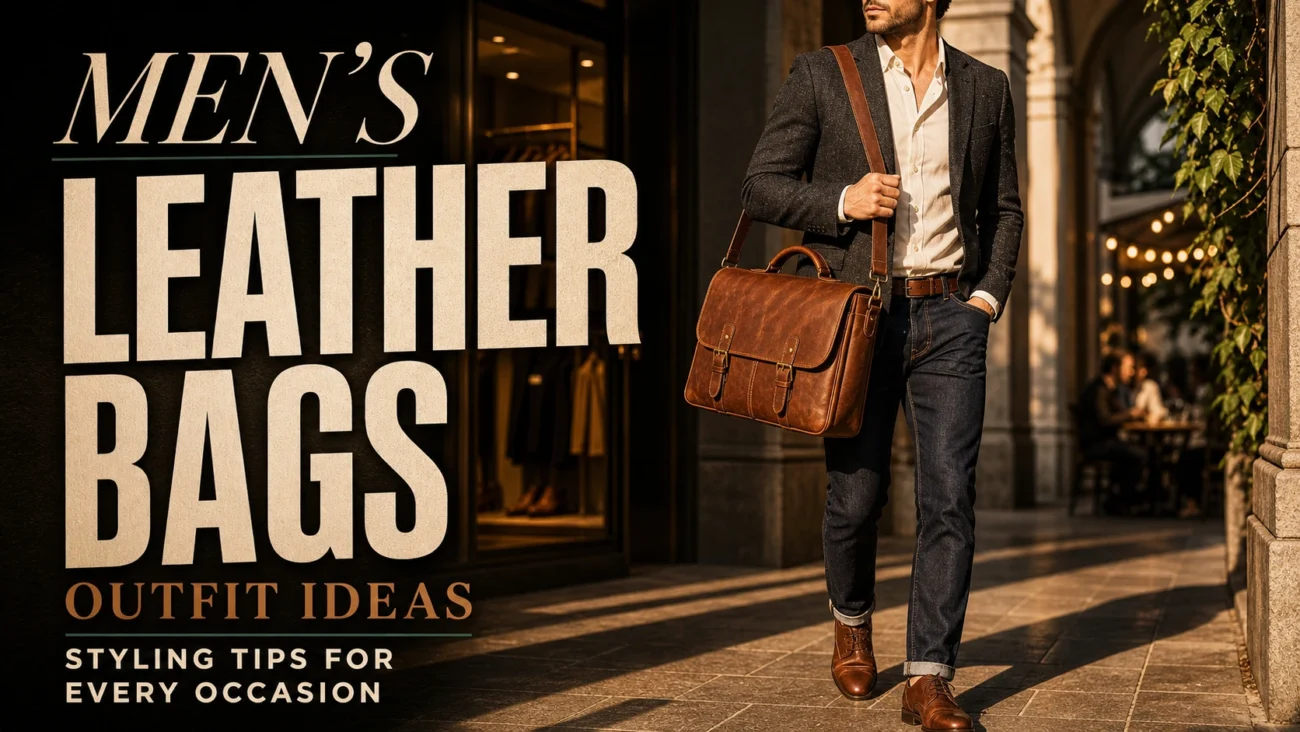
Leather Bag Men: Outfit Ideas and Styling Tips for Every Occasion
Finding the right leather bag men can confidently carry in any setting — from the boardroom to the weekend — is easier than most think....