Free Shipping Over $100 · Satisfaction Guarantee · Handcrafted by Artisans


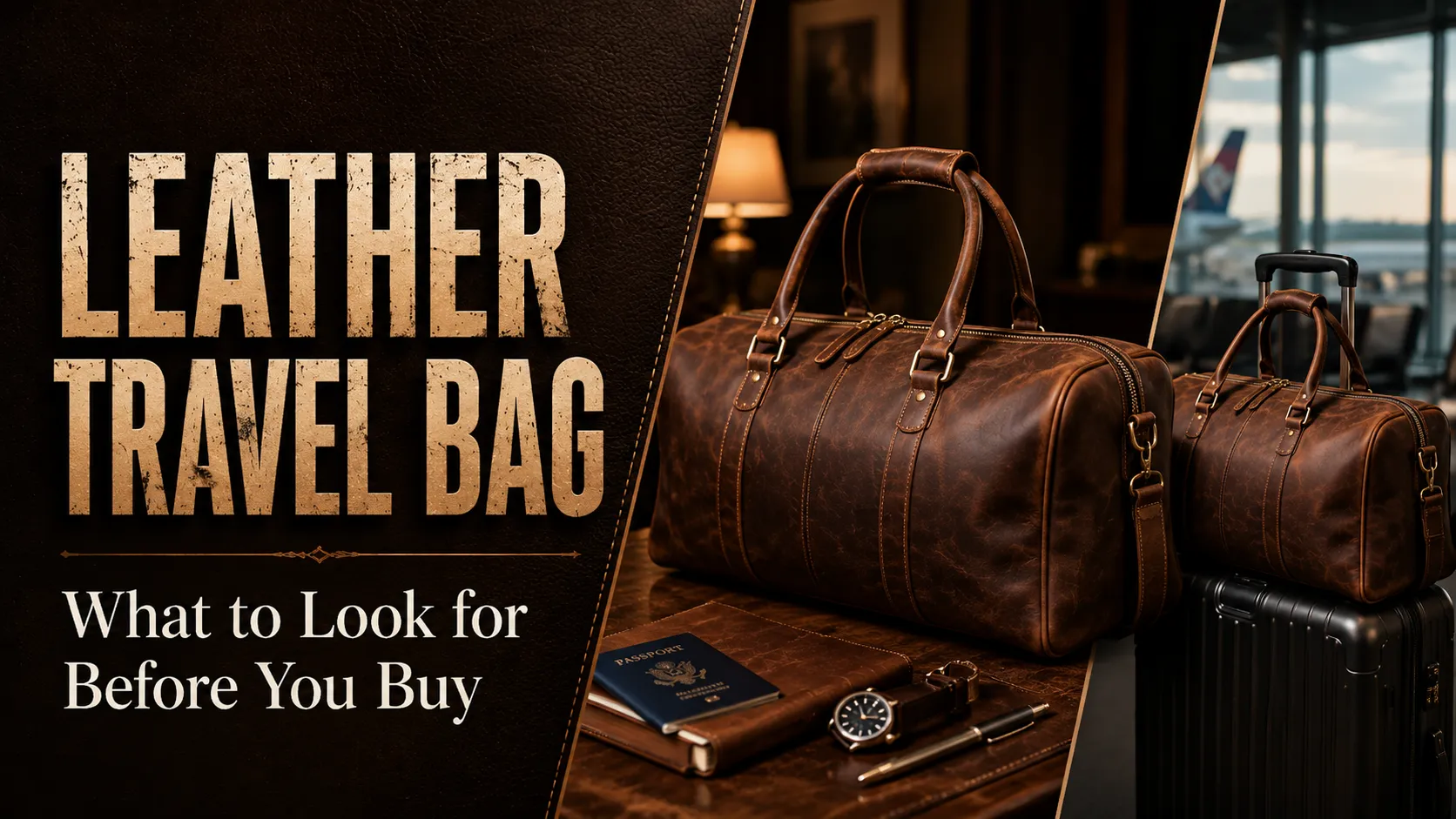
A leather travel bag is one of the smartest investments a frequent traveller can make. While nylon duffles and polyester carry-ons dominate airport terminals, none of them match the durability, visual impact, and long-term value of a well-made leather travel bag. A quality one handles years of flights, road trips, and weekend getaways — and looks better at year ten than it did at year one.
But choosing the right leather travel bag means looking beyond aesthetics. Size, weight, leather grade, construction, and practical features like compartments and carry-on compliance all matter. Get the balance right and you have a bag that serves you for decades. Get it wrong and you are hauling dead weight through every airport.
This guide covers what to look for — so your next leather travel bag is the last one you will ever need to buy.
Why Choose a Leather Travel Bag Over Fabric
Most travellers default to nylon or polyester because it is lightweight and cheap. But the advantages of a leather travel bag go far beyond appearance.
Durability. Full grain leather resists tearing, abrasion, and the rough handling that travel bags endure. A quality leather travel bag lasts 15 to 30 years — far beyond the 3 to 5 year lifespan of most fabric alternatives.
Character. Leather develops a patina over time. Every trip adds subtle marks and tonal shifts that make the bag uniquely yours. Fabric bags show wear as damage — fraying, fading, staining. Leather shows wear as character.
Repairability. Leather can be conditioned, restored, and professionally refinished. A damaged fabric bag typically goes to the bin.
Security. Leather is harder to cut or slash than nylon, offering a subtle security advantage in crowded travel environments.
Style. A leather travel bag looks polished at check-in, at the hotel, and at a business dinner. It transitions seamlessly between transit and destination in a way no fabric bag manages.
Types of Leather Travel Bags
Leather Duffle Bag
The leather duffle bag is the classic travel silhouette — a cylindrical or barrel-shaped bag with a top zip opening, dual handles, and an optional shoulder strap. It offers generous, undivided interior space that accommodates clothing, shoes, and toiletries for two to four day trips.
Duffles are ideal for weekend getaways, gym-to-travel transitions, and road trips. Their relaxed shape makes them easy to pack and versatile in what they carry.
Leather Weekender Bag
A leather weekender bag is a more structured version of the duffle, typically with a wider opening, internal organisers, and a flatter base that sits upright. It is designed specifically for one to three night trips and often includes a luggage sleeve that slides over a rolling suitcase handle.
The weekender is the traveller’s sweet spot — large enough for a short trip, compact enough to serve as a carry-on personal item.
Leather Backpack
A leather backpack works well as a travel bag for those who prioritise hands-free mobility. It distributes weight across both shoulders, making it comfortable for walking-heavy travel — city exploration, train travel, and hiking between destinations.
Leather Travel Tote
A leather travel tote or large tote bag offers open-top accessibility and generous capacity. It works as a carry-on personal item, a day bag at the destination, or a supplement to a larger suitcase. For a deeper look at tote styling, see our leather bag styling guide.
What to Look for in a Leather Travel Bag
Size and Airline Compliance
Most airlines allow carry-on bags up to 56 × 36 × 23 cm (22 × 14 × 9 inches). If you plan to use your leather travel bag as a carry-on, verify the dimensions before buying. A leather duffle or weekender that exceeds carry-on limits will need to be checked — and checked bags take more punishment.
For a personal item (the smaller bag that goes under the seat), aim for roughly 43 × 33 × 20 cm or smaller. A compact leather messenger bag or crossbody works perfectly as a travel companion alongside a larger bag.
Leather Quality
For a bag that faces the rigours of travel, full grain leather is essential. Lower grades like genuine leather lack the fibre density to withstand repeated packing, carrying, and handling. Full grain’s tight, unaltered grain surface provides the strength and water resistance that travel demands.
Hardware and Zippers
Travel bags take more mechanical stress than everyday bags. Insist on solid metal hardware — brass or stainless steel buckles, rivets, and D-rings. Zippers should be heavy-duty and operate smoothly across the full length. A jammed zipper at the airport is more than an inconvenience.
Handles and Straps
Dual handles should be wide, padded, or rolled for comfortable grip when the bag is heavy. If the bag has a shoulder strap, look for a wide, adjustable design with a padded shoulder pad. Reinforced stitching where handles and straps attach to the body is critical — this is where most bag failures occur.
Interior Organisation
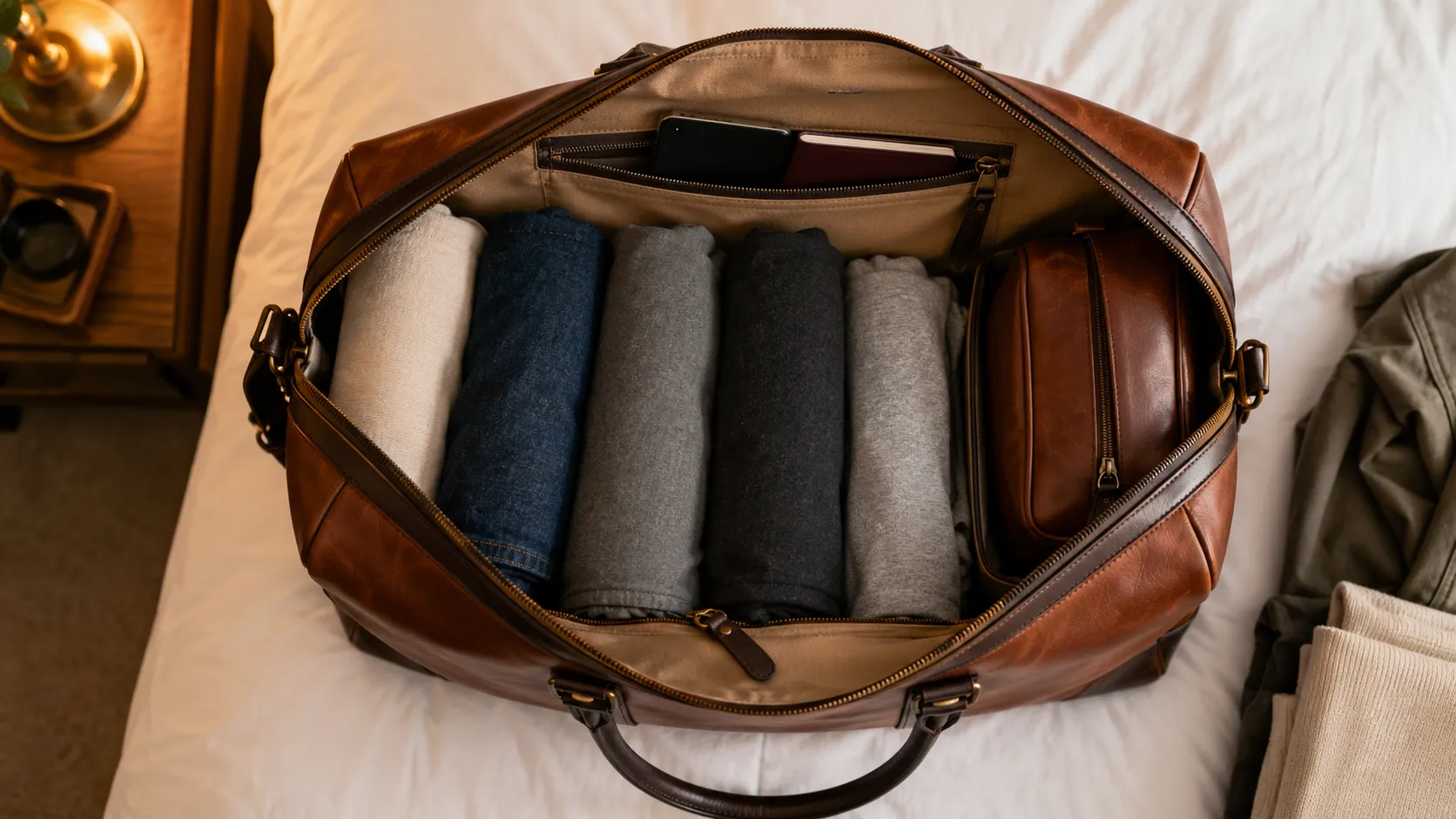
A single open cavity works for a duffle, but pockets and compartments add significant practicality for travel. Look for interior zip pockets (for valuables), slip pockets (for quick-access items), and a dedicated shoe compartment or toiletry bag pocket if available.
How to Care for a Leather Travel Bag
Travel bags face harsher conditions than everyday bags — airport floors, overhead bins, car boots, and weather exposure. Extra care extends their lifespan significantly.
Condition before every trip. A quick conditioning session before you travel ensures the leather is supple and protected. A well-conditioned bag handles moisture and friction far better than a dry one.
Clean after every trip. Wipe the exterior with a soft damp cloth to remove dust, dirt, and any residue picked up during travel. Let it air out overnight before storing. For deeper cleaning, refer to our leather cleaning guide.
Store properly between trips. Stuff the bag with tissue paper to hold its shape, place it in a breathable dust bag, and store in a cool, dry place away from direct sunlight.
Frequently Asked Questions
Is a leather travel bag worth the investment?
Yes. A full grain leather travel bag lasts 15 to 30 years — far beyond the 3 to 5 year lifespan of most nylon or polyester alternatives. It develops character with use, can be repaired and reconditioned, and maintains a polished appearance at every destination.
Can a leather bag be used as a carry-on?
Most leather duffle bags and weekenders fit within standard airline carry-on dimensions (56 × 36 × 23 cm). Always check the specific measurements of the bag against your airline’s requirements before travelling.
How heavy is a leather travel bag?
A leather travel bag typically weighs 1.5 to 3 kg (3–6 lbs) empty, depending on size and leather thickness. This is heavier than a nylon bag, but the durability and structure mean the bag holds its shape under load rather than sagging.
How do you protect a leather travel bag from rain?
Apply a beeswax-based leather protectant spray before travelling. This creates a barrier that causes water to bead on the surface. If the bag gets wet, blot immediately, air dry at room temperature, and condition once dry.
Travel With Something That Lasts
A leather travel bag is not luggage you replace — it is luggage that grows with you. Every trip adds patina, every journey deepens its character. When the material is exceptional and the craftsmanship is genuine, the bag becomes part of the adventure.
Related posts

Leather Messenger Bag for Women: The Complete Guide
A leather messenger bag for women is the rare bag that carries a laptop to a meeting, a notebook to a café, and your everyday essential...

How to Choose a Leather Laptop Bag: A Buyer’s Guide
Knowing how to choose a leather laptop bag comes down to five decisions: the right bag type, the right size, the right leather grade, r...

Leather Camera Bag: The Complete Buyer’s Guide
A leather camera bag is where photography gear meets everyday style — a way to protect your camera and lens without carrying something ...

Leather Saddle Bag: The Complete Guide
A leather saddle bag is the curved-flap crossbody handbag that has quietly become a modern classic — named for its horseback origins, b...

Leather Hobo Bag: The Complete Guide
A leather hobo bag is the soft, slouchy shoulder bag that never really goes away — the one that molds to your body, swallows your daily...

Oxblood Leather: What Color It Is and How to Style It
Oxblood leather is a deep, dark red leather with rich brown and subtle purple undertones — one of the most versatile and quietly luxuri...