Free Shipping Over $100 · Satisfaction Guarantee · Handcrafted by Artisans

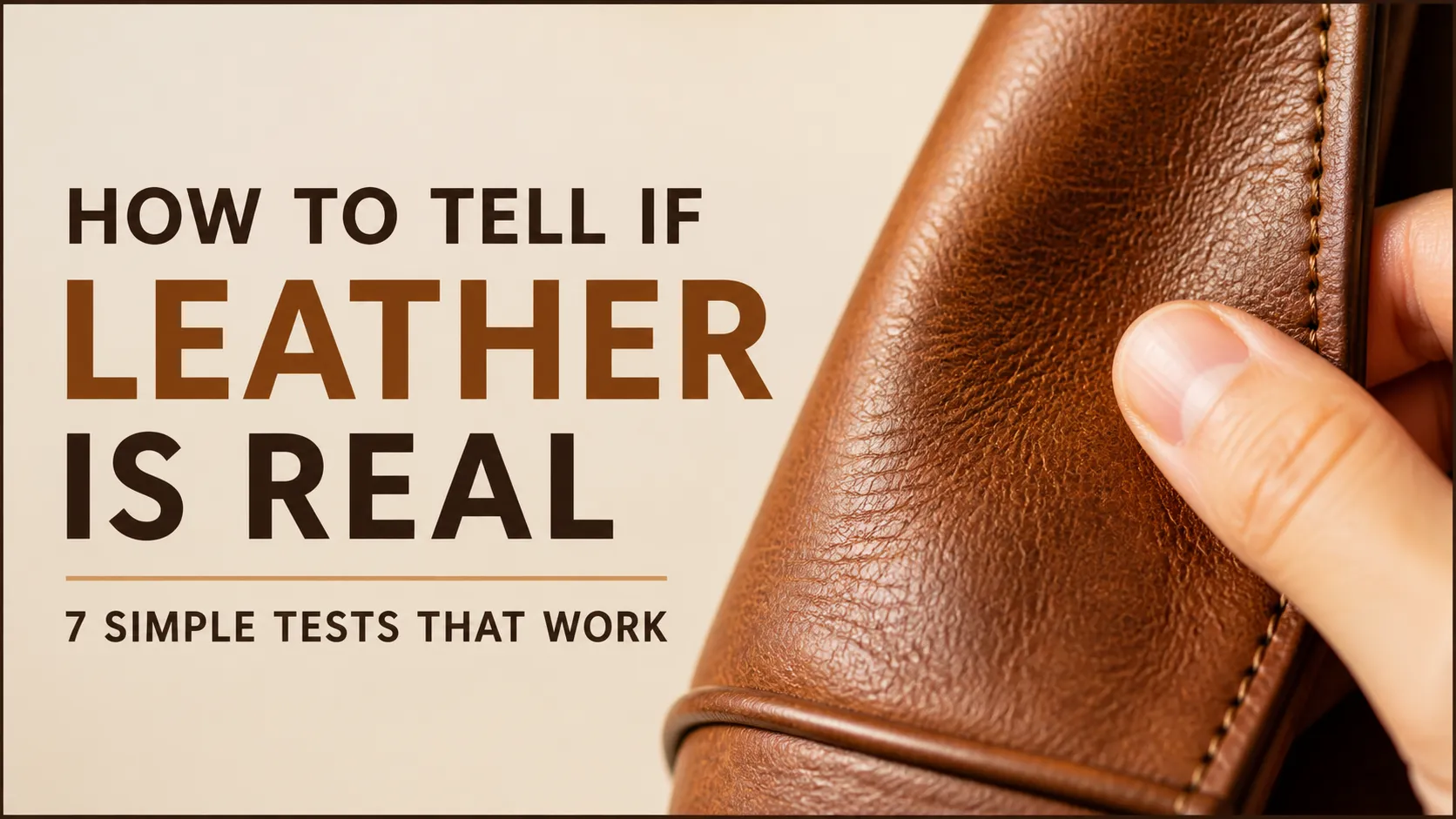
Knowing how to tell if leather is real is one of the most practical skills you can have as a buyer. With synthetic materials getting more convincing every year and marketing labels getting vaguer, it is increasingly difficult to know whether the bag, wallet, or jacket you are considering is genuine leather or a clever imitation.
The good news is that real leather has properties that no synthetic can fully replicate. With a few simple tests — most of which you can do in a shop or at home in seconds — you can confidently distinguish real leather from fake before you spend your money.
This guide gives you seven reliable methods to identify real leather, explains why each one works, and shows you what to watch out for when shopping for leather bags and accessories.
Why It Matters
The difference between real and fake leather is not just academic — it directly affects how long your purchase will last and how much value you get for your money.
Real leather — particularly full grain leather — is a natural material with a dense fibre structure that resists tearing, moisture, and everyday wear. A well-made full grain leather bag can last 20 to 30 years and actually improves in appearance over time as it develops a patina.
Faux leather is a synthetic material — typically polyurethane (PU) or polyvinyl chloride (PVC) applied over a fabric base. It can look convincing initially, but it lacks the structural integrity of real leather. Most synthetic leather products begin to crack, peel, and deteriorate within two to five years. They cannot be conditioned, repaired, or restored.
Even within real leather, quality varies enormously. A product labelled genuine leather is technically real but sits near the bottom of the quality hierarchy — far below full grain and top grain. Understanding these grades of leather helps you evaluate not just whether leather is real, but whether it is good.
The 7 Tests to Identify Real Leather
1. The Touch Test
This is the fastest and most intuitive check. Pick up the item and feel it.
Real leather feels warm to the touch. It has a subtle texture under your fingertips — you can feel the grain, slight irregularities, and natural variations in the surface. When you press your thumb into real leather, it gives slightly and you may see faint wrinkle lines radiate outward from the pressure point, similar to pressing your own skin.
Fake leather feels cooler, smoother, and more uniform. It has a plasticky or rubbery quality that lacks the organic warmth of real hide. When pressed, it resists evenly without the natural wrinkling effect. It often feels thinner and less substantial in your hands.
2. The Smell Test
Leather has one of the most distinctive and difficult-to-replicate scents of any material.
Real leather smells warm, rich, and earthy — a deep, organic scent with natural depth. This is the classic “leather smell” that most people instinctively recognise. High-quality vegetable tanned leather has the strongest, most pleasant version of this scent.
Fake leather smells like chemicals, plastic, or synthetic glue. Some higher-end synthetics have a very faint neutral smell, but they never produce the warm, layered scent of genuine hide. If you hold the material to your nose and detect anything sharp, chemical, or plasticky, it is almost certainly synthetic.
3. The Surface Test
Look closely at the surface of the leather — ideally under good lighting.
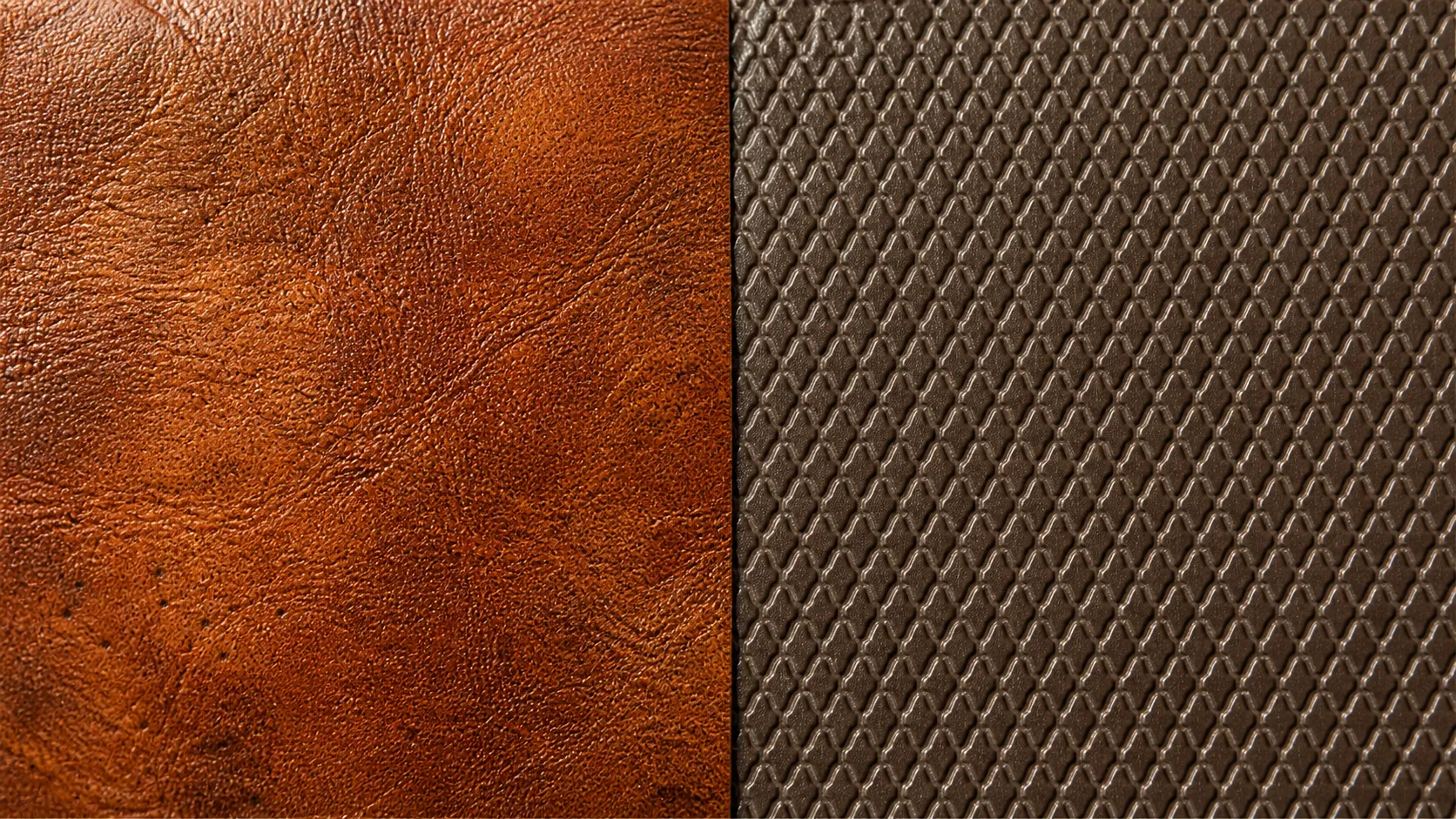
Real leather shows natural imperfections. You will see subtle grain variations, tiny pores, occasional faint scars, and slight differences in texture from one area to another. No two sections of real leather look perfectly identical because every hide is unique.
Fake leather looks too perfect. The grain pattern — if present — repeats identically across the surface with mechanical precision. This is because synthetic leather is stamped with an artificial pattern. If the texture is completely uniform with no variation at all, it is a strong indicator of synthetic material.
4. The Water Test
This test works best on unfinished or lightly finished leather — less reliably on heavily coated surfaces.
Real leather absorbs a small drop of water. Place a single drop on the surface and watch for a few seconds. If the water darkens the area slightly and begins to absorb into the material, the leather is real. The absorption happens because leather is a porous, natural material with an open fibre structure.
Fake leather repels water. The drop sits on the surface as a bead and does not absorb, because the synthetic coating creates an impermeable barrier. Simply wipe the drop away and the surface looks unchanged.
Note: heavily finished or coated real leather (like patent leather or some top grain products) may also resist water absorption. Use this test alongside the others rather than in isolation.
5. The Edge Test
Examine the cut edges of the material — the sides of straps, the top edge of a pocket, or the rim of a wallet.
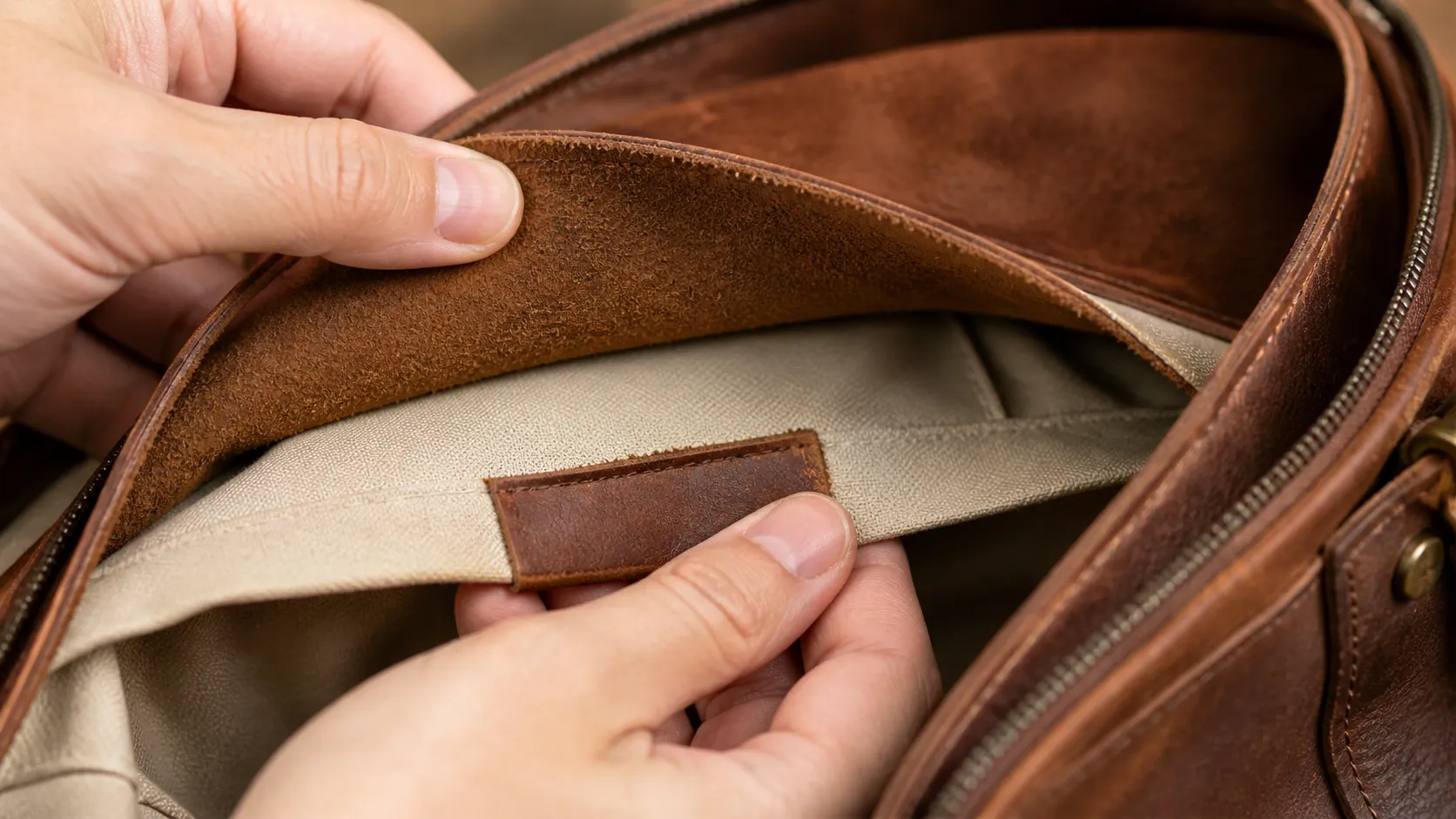
Real leather has rough, fibrous edges when unfinished. You can see the natural layers of the hide and the slightly fuzzy texture of the exposed fibres. On quality products, these edges will be burnished (heated and polished to a smooth, sealed finish) or painted — but even finished edges show the layered, organic structure of real hide.
Fake leather has clean, uniform, often fabric-like edges. Because synthetic leather is a coating applied to a textile base, the cut edge reveals the underlying fabric — woven threads or mesh — rather than the dense, fibrous cross-section of genuine hide.
6. The Bend Test
Gently bend or fold the material and watch how it responds.
Real leather wrinkles naturally when bent, producing fine creases that look organic and irregular — much like the lines on your knuckles when you make a fist. The surface changes subtly at the fold point, and these wrinkles fade gradually when the leather is straightened back out.
Fake leather either stays rigidly smooth when bent (cheap synthetics) or produces creases that look sharp, artificial, and do not settle back naturally. Over time, repeated bending in the same spot causes fake leather to crack along the fold — one of the most common failure points for synthetic products.
7. The Label and Price Test
This is not a physical test, but it is one of the most reliable red flags.
Labelling. Quality leather products are almost always labelled with their specific grade — “full grain leather,” “top grain leather,” or “vegetable tanned leather.” Vague labels like “man-made materials,” “leather-like,” “PU leather,” or simply “material: other” confirm the product is synthetic. The label “genuine leather” confirms it is real but indicates one of the lowest quality grades.
Price. Real leather — especially full grain — costs significantly more to produce than synthetics. If a bag, wallet, or jacket is priced dramatically below what similar-sized real leather products sell for, it is likely synthetic or made from the lowest-quality leather grades. A quality leather briefcase or leather tote made from full grain leather will typically start at $150 or more. Anything far below that range warrants scrutiny.
Quick Reference: Real Leather vs Fake Leather
| Test | Real Leather | Fake Leather |
|---|---|---|
| Touch | Warm, textured, gives under pressure | Cool, smooth, plasticky, rigid |
| Smell | Rich, warm, earthy | Chemical, plastic, or neutral |
| Surface | Natural grain variations, visible pores | Uniform, repeating artificial pattern |
| Water | Absorbs a drop (darkens slightly) | Repels water (beads on surface) |
| Edges | Fibrous, layered cross-section | Fabric/textile base visible |
| Bend | Natural wrinkles, recovers gradually | Sharp creases or stays rigid |
| Label/Price | Specifies grade, priced accordingly | Vague labelling, unusually cheap |
What About “Vegan Leather” and “PU Leather”?
These terms have become increasingly common in marketing, so it helps to understand what they actually mean.
PU (Polyurethane) Leather is a synthetic material — a polymer coating applied to a fabric base. It is the most common type of fake leather used in fashion accessories and furniture. Higher-quality PU can look convincing at first glance, but it lacks the durability, breathability, and ageing characteristics of real leather.
Vegan Leather is a marketing term that covers any non-animal leather alternative. Most “vegan leather” is simply PU or PVC synthetic, rebranded with an ethical-sounding name. Newer plant-based options — made from pineapple leaves, mushroom mycelium, cactus, or apple waste — are entering the market, but they remain expensive and relatively uncommon.
Neither PU nor vegan leather develops a patina, can be conditioned effectively, or lasts as long as real leather. If longevity and ageing character are important to you, these alternatives will not deliver the same long-term experience as a quality full grain leather bag.
When Real Leather Is Not Enough: Check the Grade
Confirming that leather is real is only half the equation. The grade matters just as much.
A product made from bonded leather — ground-up scraps glued together — is technically “real leather,” but it will peel and crack within a year or two. Genuine leather is real but comes from the weakest layers of the hide and typically lasts only two to five years.
For any leather product you plan to use regularly, look for full grain leather — the highest grade, made from the outermost layer of the hide with the natural grain intact. It is the strongest, most durable, and the only grade that develops a beautiful patina over time.
If the product does not specify “full grain” or “top grain,” ask the seller directly. A reputable brand will always tell you exactly what grade of leather they use. If they cannot or will not answer, that tells you something too.
For a deeper understanding of how leather grades compare, our complete guide to leather types breaks down every grade from full grain to bonded.
Frequently Asked Questions
How can you tell if leather is real or fake?
The most reliable methods are touch, smell, and surface inspection. Real leather feels warm with natural texture variations, smells earthy and rich, and shows visible pores and slight grain irregularities. Fake leather feels cooler and plasticky, smells chemical or neutral, and has a perfectly uniform surface pattern. Checking the label, edges, water absorption, and price also helps confirm authenticity.
Does real leather absorb water?
Yes. Real leather is a porous natural material and will absorb a small drop of water, causing the surface to darken slightly at the contact point. Fake leather repels water — the drop sits on the surface as a bead without absorbing. Note that heavily coated or finished real leather may also resist absorption, so this test works best alongside other checks.
Is genuine leather real leather?
Yes, genuine leather is real leather — it comes from animal hide. However, “genuine leather” refers to one of the lowest quality grades, made from the weaker inner layers of the hide. It is far below full grain and top grain leather in terms of durability, strength, and longevity. The label confirms the material is real but says nothing about quality.
Can fake leather look like real leather?
High-quality synthetic leather can closely mimic the appearance of real leather at first glance. However, synthetics cannot replicate the natural scent, warmth, grain variation, and ageing characteristics of genuine hide. Under close inspection — especially the surface texture, cut edges, and bend behaviour — the differences become clear.
How long does fake leather last compared to real leather?
Most faux leather products last two to five years before cracking and peeling. Quality full grain leather products, by contrast, routinely last 20 to 30 years with basic care and actually improve in appearance as they age. The long-term cost of repeatedly replacing synthetic products often exceeds the one-time investment in quality real leather.
Buy With Confidence
Once you know how to tell if leather is real, you can shop with clarity instead of guesswork. Touch it, smell it, inspect the surface, check the edges, and read the label. These simple checks take seconds but save you from years of disappointment.
And when you are ready to invest in leather that is not just real but exceptional — full grain, vegetable tanned, handcrafted — you will know exactly what you are looking at and why it is worth every penny.
Related posts

Leather Messenger Bag for Women: The Complete Guide
A leather messenger bag for women is the rare bag that carries a laptop to a meeting, a notebook to a café, and your everyday essential...

How to Choose a Leather Laptop Bag: A Buyer’s Guide
Knowing how to choose a leather laptop bag comes down to five decisions: the right bag type, the right size, the right leather grade, r...

Leather Camera Bag: The Complete Buyer’s Guide
A leather camera bag is where photography gear meets everyday style — a way to protect your camera and lens without carrying something ...

Leather Saddle Bag: The Complete Guide
A leather saddle bag is the curved-flap crossbody handbag that has quietly become a modern classic — named for its horseback origins, b...

Leather Hobo Bag: The Complete Guide
A leather hobo bag is the soft, slouchy shoulder bag that never really goes away — the one that molds to your body, swallows your daily...

Oxblood Leather: What Color It Is and How to Style It
Oxblood leather is a deep, dark red leather with rich brown and subtle purple undertones — one of the most versatile and quietly luxuri...