Free Shipping Over $100 · Satisfaction Guarantee · Handcrafted by Artisans

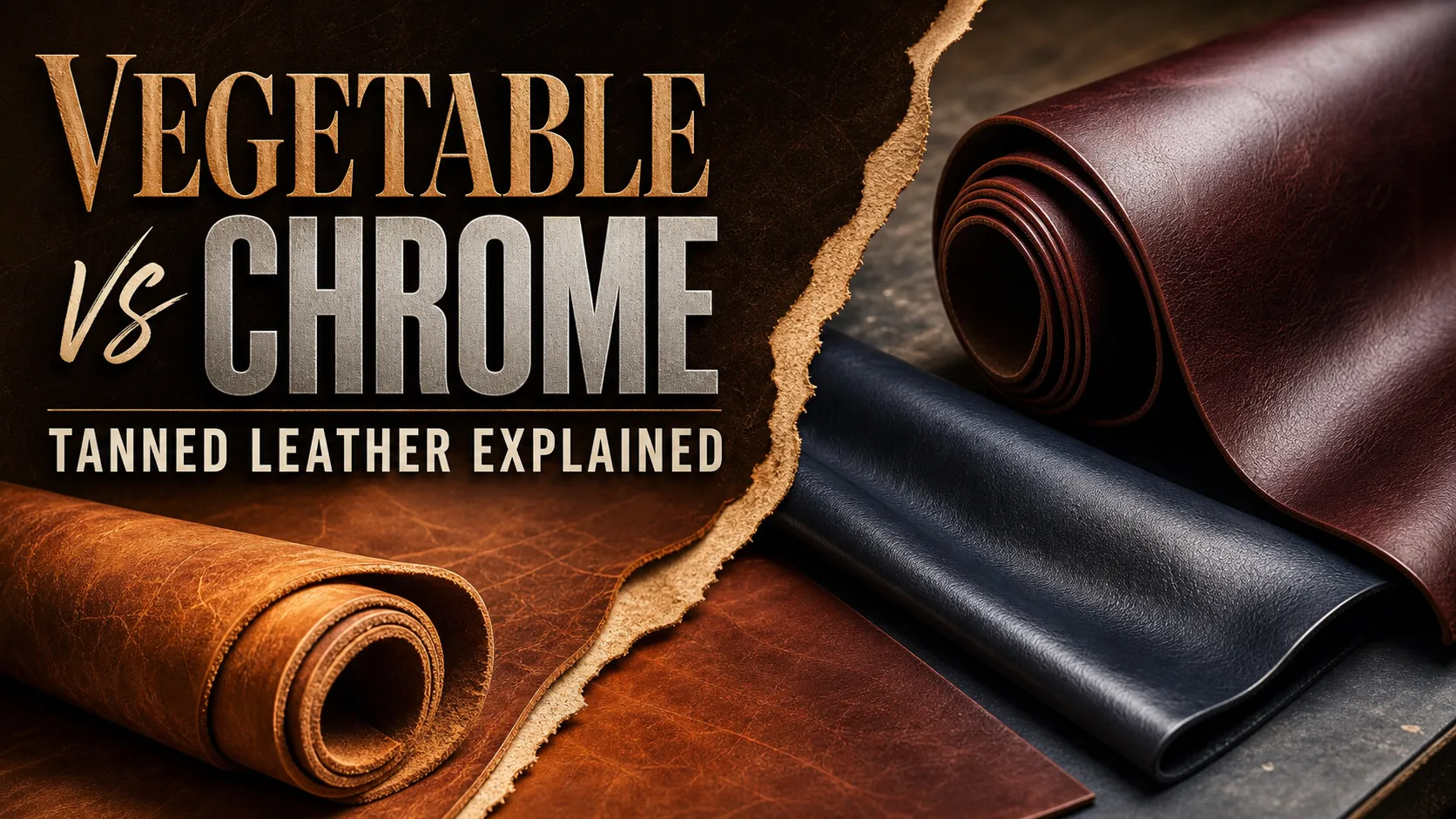
Every leather product you have ever touched began as a raw animal hide — and the process that turned it into usable leather is called tanning. How that hide is tanned determines almost everything about the finished material: its colour, its feel, its strength, how it ages, and how long it lasts.
The two dominant tanning methods in the leather industry are vegetable tanning and chrome tanning. Between them, they account for nearly all the leather produced worldwide. But they produce very different results, and understanding the difference between vegetable tanned vs chrome tanned leather is essential if you want to know what you are actually buying when you invest in a leather bag or accessory.
This guide explains how each method works, what it produces, and why it matters for the leather products you choose.
What Is Leather Tanning?
Before comparing the two methods, it helps to understand what tanning actually does.
A raw animal hide is an organic material. Left untreated, it will decompose, stiffen, and rot — just like any other biological tissue. Tanning is the chemical process that stabilises the hide’s protein structure (primarily collagen) so that it becomes resistant to decomposition, flexible when dry, and durable enough to last for decades.
The term “tanning” comes from tannin — the natural plant compound used in the oldest tanning method known to humanity. For thousands of years, tannin-based (vegetable) tanning was the only option. Chrome tanning, by contrast, was not developed until the mid-1800s. Today, chrome tanning dominates global production by volume, but vegetable tanning remains the preferred method for premium leather goods.
The tanning method you choose directly affects the type and grade of leather that results — and, by extension, the quality and character of the final product.
How Is Vegetable Tanned Leather Made?
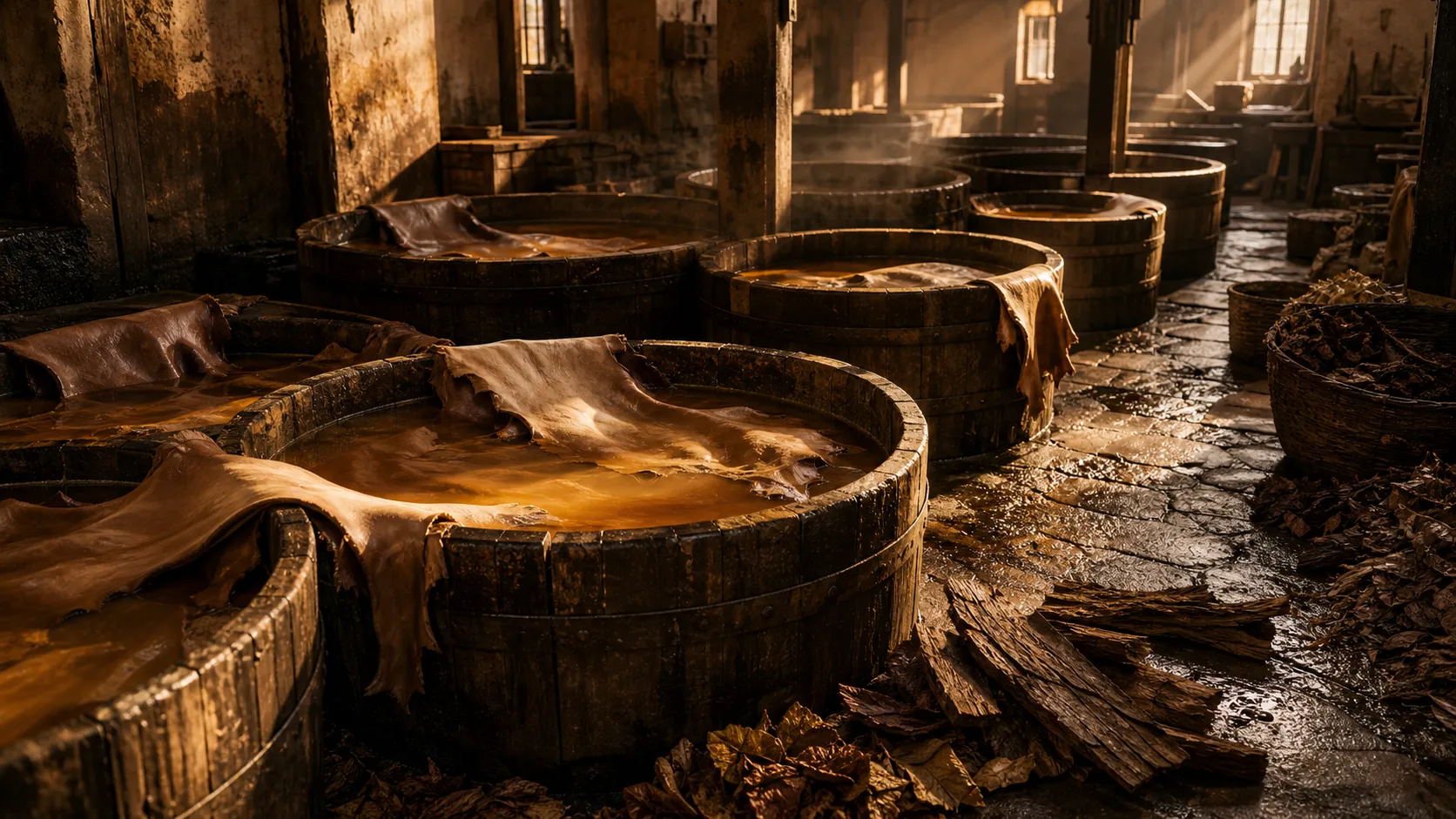
Vegetable tanning is the traditional method — practised for over 5,000 years and fundamentally unchanged in its core principles. It uses natural tannins extracted from organic sources: tree bark (oak, chestnut, mimosa), wood, leaves, fruits, and plant roots.
The process is slow and labour-intensive:
- Preparation. The raw hide is cleaned, soaked, and de-haired. Any remaining flesh and fat is removed. The hide is then split into layers — the top grain layer used for full grain leather and the lower layers for lesser grades.
- Tanning. The prepared hide is immersed in a series of vats or drums containing progressively concentrated tannin solutions. The tannins gradually penetrate the hide’s fibre structure, bonding with the collagen to stabilise it. This process takes weeks to months — compared to hours for chrome tanning.
- Drying and finishing. Once tanned, the leather is slowly dried, then finished with oils, waxes, or light surface treatments. Vegetable tanned leather typically receives minimal finishing, which preserves the natural grain and allows the leather to breathe and develop a patina.
The result is a firm, substantial leather with a warm, natural tone — usually ranging from pale honey and natural tan to rich caramel and saddle brown. Vegetable tanned leather has a distinctive earthy smell that is immediately recognisable to anyone familiar with quality leather.
Because each hide spends weeks absorbing natural tannins, the process demands more time, more space, and more skill than chrome tanning. This is a significant reason why vegetable tanned leather costs more — and why it is reserved for products where quality and longevity matter most.
What Is Chrome Tanned Leather?
Chrome tanning is the modern, industrial method developed in 1858. It uses chromium salts — specifically chromium(III) sulphate — as the tanning agent instead of natural plant compounds.
The process is dramatically faster:
- Preparation. The hide goes through similar cleaning and de-hairing steps as vegetable tanning.
- Tanning. The prepared hide is placed in a rotating drum with a chromium salt solution. The chromium compounds penetrate the hide rapidly, stabilising the collagen in a matter of hours — typically 24 to 48 hours, compared to weeks or months for vegetable tanning.
- Finishing. After tanning, the leather is typically dyed (chrome tanned leather accepts dyes very readily, which is why it comes in a much wider range of colours), then finished with various coatings depending on the intended use.
Chrome tanned leather accounts for roughly 80 to 90 percent of the world’s leather production. Its speed, cost efficiency, and colour versatility make it the default choice for mass-market leather goods — from car seats and garment leather to most mid-range bags and shoes.
Fresh out of the tanning drum, chrome tanned leather has a characteristic blue-grey tone (known in the industry as “wet blue”) before it is dyed to its final colour. The finished product is softer, thinner, and more pliable than vegetable tanned leather, with a more uniform appearance.
Vegetable Tanned vs Chrome Tanned: Key Differences
Here is a direct comparison across every factor that matters.
| Feature | Vegetable Tanned | Chrome Tanned |
|---|---|---|
| Tanning agent | Natural plant tannins (bark, leaves, roots) | Chromium(III) sulphate salts |
| Tanning time | 1–3 months | 24–48 hours |
| Global production share | ~10–15% | ~80–90% |
| Initial colour | Natural tan, honey, caramel | “Wet blue” (dyed to final colour) |
| Colour range | Limited natural tones | Wide range — any colour |
| Feel | Firm, substantial, structured | Soft, pliable, supple |
| Thickness | Thicker, holds shape well | Thinner, drapes more easily |
| Patina | Develops a rich, deep patina over time | Minimal to no patina development |
| Ageing | Gets better — darkens and gains character | Stays largely the same |
| Durability | Extremely high — built for decades | Good, but lower long-term resilience |
| Water resistance | Moderate — absorbs initially, improves with conditioning | Better initial water resistance |
| Repairability | Excellent — responds well to conditioning and restoration | Limited — harder to recondition |
| Environmental impact | Biodegradable, uses renewable resources | Chemical processing, heavier industrial waste |
| Smell | Rich, warm, earthy leather scent | Milder or slightly chemical |
| Cost | Higher (due to time and skill required) | Lower (due to speed and efficiency) |
| Best for | Premium bags, belts, wallets, long-term goods | Fashion items, garments, mass-market goods |
Why Vegetable Tanned Leather Is Preferred for Premium Goods
If chrome tanning is faster, cheaper, and produces softer leather, why do premium brands overwhelmingly choose vegetable tanning for their best products? The reasons come down to character, longevity, and craftsmanship.
Patina Development
This is the single biggest differentiator. Vegetable tanned leather changes over time. It absorbs oils from your hands, reacts to sunlight and air, and gradually deepens in colour and warmth. A vegetable tanned leather bag that starts as a light honey tone will mature into a rich, dark amber over months and years of use. This patina is unique to your specific product — no two pieces age the same way.
Chrome tanned leather does not develop a meaningful patina. It looks essentially the same on day one as it does on day one thousand. For some products, that consistency is acceptable. But for a leather bag or accessory meant to last a lifetime, the evolving character of vegetable tanned leather is a significant part of its value.
Structure and Form
Vegetable tanned leather is firmer and holds its shape better than chrome tanned alternatives. This makes it the preferred material for structured bags — briefcases, satchels, and work bags — that need to maintain a clean silhouette over years of daily use. Chrome tanned leather’s softness and drape work well for garments and unstructured accessories, but it lacks the body to hold a bag’s shape long term.
Longevity and Repairability
Vegetable tanned leather’s dense, tannin-saturated fibre structure gives it exceptional long-term durability. It responds beautifully to conditioning — a good leather balm penetrates the natural fibres, restoring moisture and flexibility. Scratches on vegetable tanned leather can often be rubbed out or blended into the developing patina.
Chrome tanned leather is harder to recondition because its fibre structure is different at a molecular level. Damage tends to be more permanent, and the leather does not absorb care products as effectively.
Environmental Considerations
Vegetable tanning uses organic, renewable, and biodegradable materials. The tannins come from trees and plants. The waste products are largely natural. At the end of a vegetable tanned product’s life, the leather itself is biodegradable.
Chrome tanning involves industrial chemicals. While modern tanneries have improved waste management significantly, the process still generates chromium-containing effluent that requires careful treatment. Chrome tanned leather is not readily biodegradable. For environmentally conscious buyers, vegetable tanning aligns more closely with sustainability values.
How to Identify Vegetable Tanned Leather
Not all products clearly state their tanning method, so knowing how to identify vegetable tanned leather by sight and touch is useful.
- Colour. Vegetable tanned leather tends toward warm, natural tones — honey, tan, cognac, saddle brown. If the leather is an unusual or very vivid colour (bright red, electric blue, neon green), it is almost certainly chrome tanned, since vegetable tanning does not easily produce those shades.
- Feel. Pick it up. Vegetable tanned leather feels firm, substantial, and slightly stiff when new. It has a density you can sense immediately. Chrome tanned leather feels softer, thinner, and more immediately pliable.
- Smell. Vegetable tanned leather has a rich, warm, earthy scent — the classic “leather smell” that most people associate with quality. Chrome tanned leather has a milder, sometimes slightly chemical or neutral smell.
- Edges. Look at the cut edges. Vegetable tanned leather shows a warm brown or caramel tone through the cross-section — the colour is consistent throughout the material because the tannins penetrate fully. Chrome tanned leather often shows a bluish or greyish core.
- Price. Vegetable tanned leather products are typically priced higher than chrome tanned equivalents of the same size and design. The time-intensive process and higher raw material costs are reflected in the retail price.
How to Care for Vegetable Tanned Leather
Vegetable tanned leather is remarkably durable but benefits from regular, simple care to age beautifully.
Breaking It In
New vegetable tanned leather feels stiff — that is normal. The fibres are dense and tightly packed. With use, the leather gradually softens and moulds to your habits. Carry your bag regularly, handle it with clean hands, and let it break in naturally. Resist the temptation to force-soften it with excessive conditioner early on.
Cleaning
Wipe down your vegetable tanned leather with a soft, dry cloth regularly to prevent dust and dirt from settling into the grain. For marks or light stains, a slightly damp cloth with gentle circular motions usually does the job. Avoid soaking the leather or using harsh chemicals — they can strip the natural tannins and damage the surface.
Conditioning
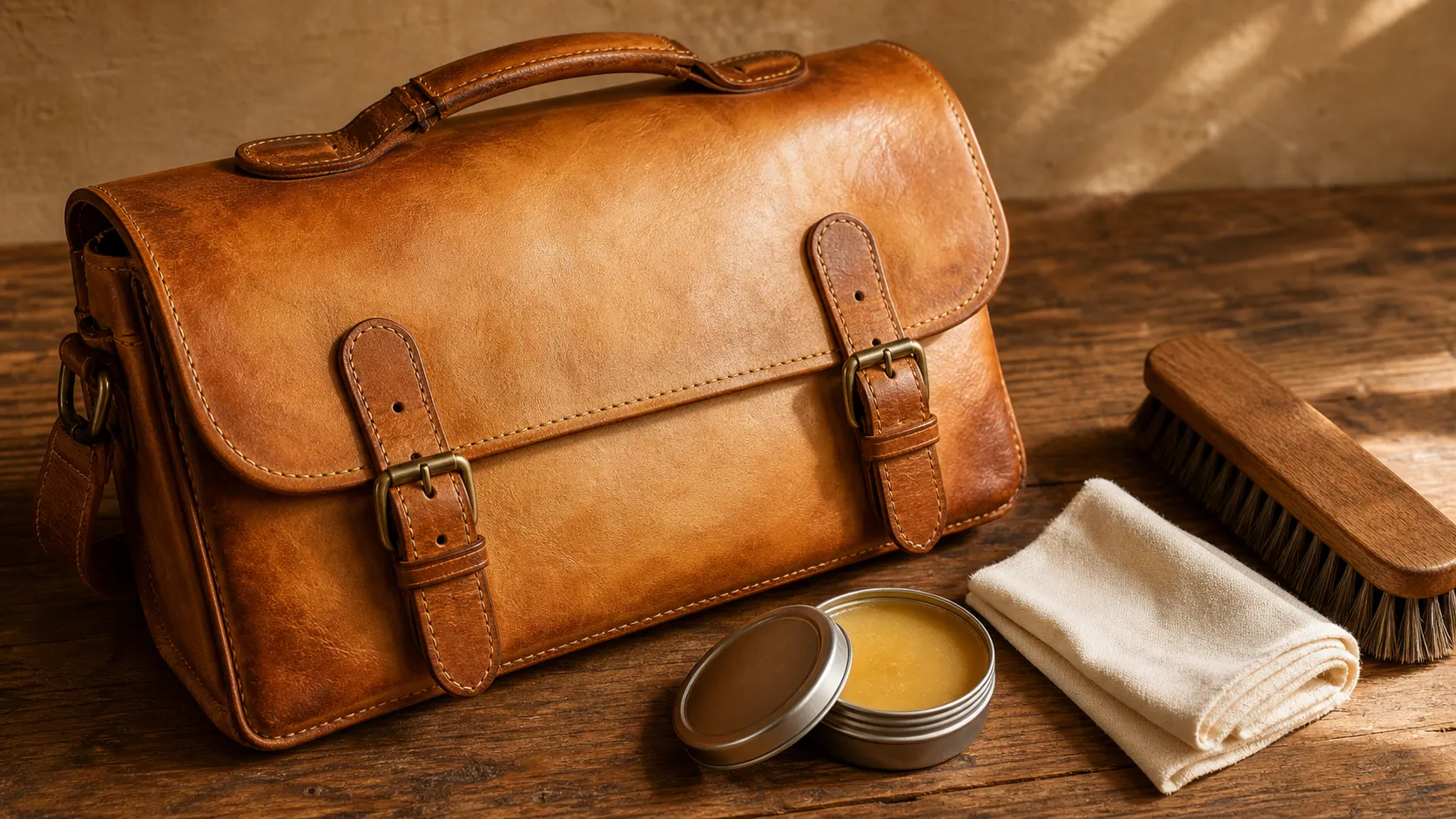
Apply a quality leather conditioner or balm every three to six months — more frequently in hot, dry climates. Work a thin layer into the surface with a soft cloth using circular motions, let it absorb for ten to fifteen minutes, then buff off the excess. Conditioning keeps the fibres supple, prevents cracking, and enriches the developing patina.
Choose a conditioner made from natural ingredients — beeswax and natural oil-based balms work particularly well with vegetable tanned leather. Avoid silicone-based products, which can seal the surface and prevent the leather from breathing.
Handling Water
Vegetable tanned leather absorbs water more readily than chrome tanned leather, especially when new. If your bag gets wet, blot the moisture gently with a clean cloth — do not rub. Let it air dry at room temperature, away from direct heat or sunlight. Once dry, apply conditioner to restore any lost moisture.
Over time, as the leather absorbs oils and develops its patina, its natural water resistance improves significantly.
Storage
Store vegetable tanned leather bags stuffed with acid-free tissue paper in a breathable dust bag. Keep them in a cool, dry place away from direct sunlight and heat sources. Never store leather in plastic — it traps moisture and can cause mould.
Frequently Asked Questions
What is the difference between vegetable tanned and chrome tanned leather?
Vegetable tanned leather uses natural plant tannins and takes weeks to months to produce. It is firm, develops a rich patina over time, and is highly durable. Chrome tanned leather uses chromium salts and takes only hours. It is softer, accepts a wider range of colours, but does not develop patina and has a shorter functional lifespan.
Is vegetable tanned leather better than chrome tanned?
For long-term use products like bags, belts, and wallets — yes. Vegetable tanned leather is more durable, develops character over time, responds well to care, and is more environmentally sustainable. Chrome tanned leather is better suited for products where softness, colour variety, and lower cost are priorities, such as garments and fashion accessories.
Does vegetable tanned leather crack?
Vegetable tanned leather can dry out and stiffen if neglected for extended periods, especially in very hot or dry environments. Regular conditioning — every three to six months — keeps the fibres supple and prevents cracking. Well-maintained vegetable tanned leather remains flexible and strong for decades.
Why is vegetable tanned leather more expensive?
The process takes weeks to months instead of hours, requires more physical space (large soaking vats), uses natural materials that cost more than industrial chemicals, and demands skilled oversight throughout. These factors make vegetable tanned leather significantly more expensive to produce — but the resulting quality and longevity justify the premium.
How long does vegetable tanned leather last?
With proper care, vegetable tanned leather can last 20 to 50 years or more. Its dense fibre structure resists wear and tearing, and it actually improves with age as the patina deepens. Many heritage leather goods — saddles, belts, bags — made from vegetable tanned leather are still in use after several decades.
The Tanning Method Tells the Story
The choice between vegetable tanned and chrome tanned leather is ultimately a choice about values — what you prioritise in the leather products you invest in.
Chrome tanning delivers speed, softness, and colour variety at a lower price. It serves the mass market well and produces functional leather for a wide range of uses.
Vegetable tanning delivers character, longevity, and a material that evolves with you. It takes longer, costs more, and demands more care — but it rewards you with a product that genuinely gets better with every year of use. That is why every handmade leather bag in our collection uses vegetable tanned, full grain leather — because we believe the best bags are the ones that tell your story.
Related posts
Leather Messenger Bag: How to Choose the Right One for Work and Commuting
Knowing how to choose a leather messenger bag comes down to a few honest questions: will it protect your laptop, sit comfortably across...
Leather Duffle Bag: How to Choose the Right One for Travel, Gym, and Weekends
A leather duffle bag is one of the most stylish and durable ways to pack for a short trip, blending the roomy, soft-sided shape of a cl...
Leather Shoulder Bag: How to Choose the Right One for Everyday Use
A leather shoulder bag is one of the most versatile everyday bag styles you can own, carried on one shoulder with a short strap and sit...
Leather Backpack: How to Choose the Right One for Work, Travel, and Everyday Use
Knowing how to choose a leather backpack comes down to a few honest questions: will it fit your laptop, sit comfortably on your shoulde...
Satchel Bag: How to Choose a Leather Satchel That Lasts
A satchel bag is one of the most useful bags you can own, sitting neatly between a relaxed backpack and a formal briefcase — structured...
Leather Bag Men: Outfit Ideas and Styling Tips for Every Occasion
Finding the right leather bag men can confidently carry in any setting — from the boardroom to the weekend — is easier than most think....