Free Shipping Over $100 · Satisfaction Guarantee · Handcrafted by Artisans

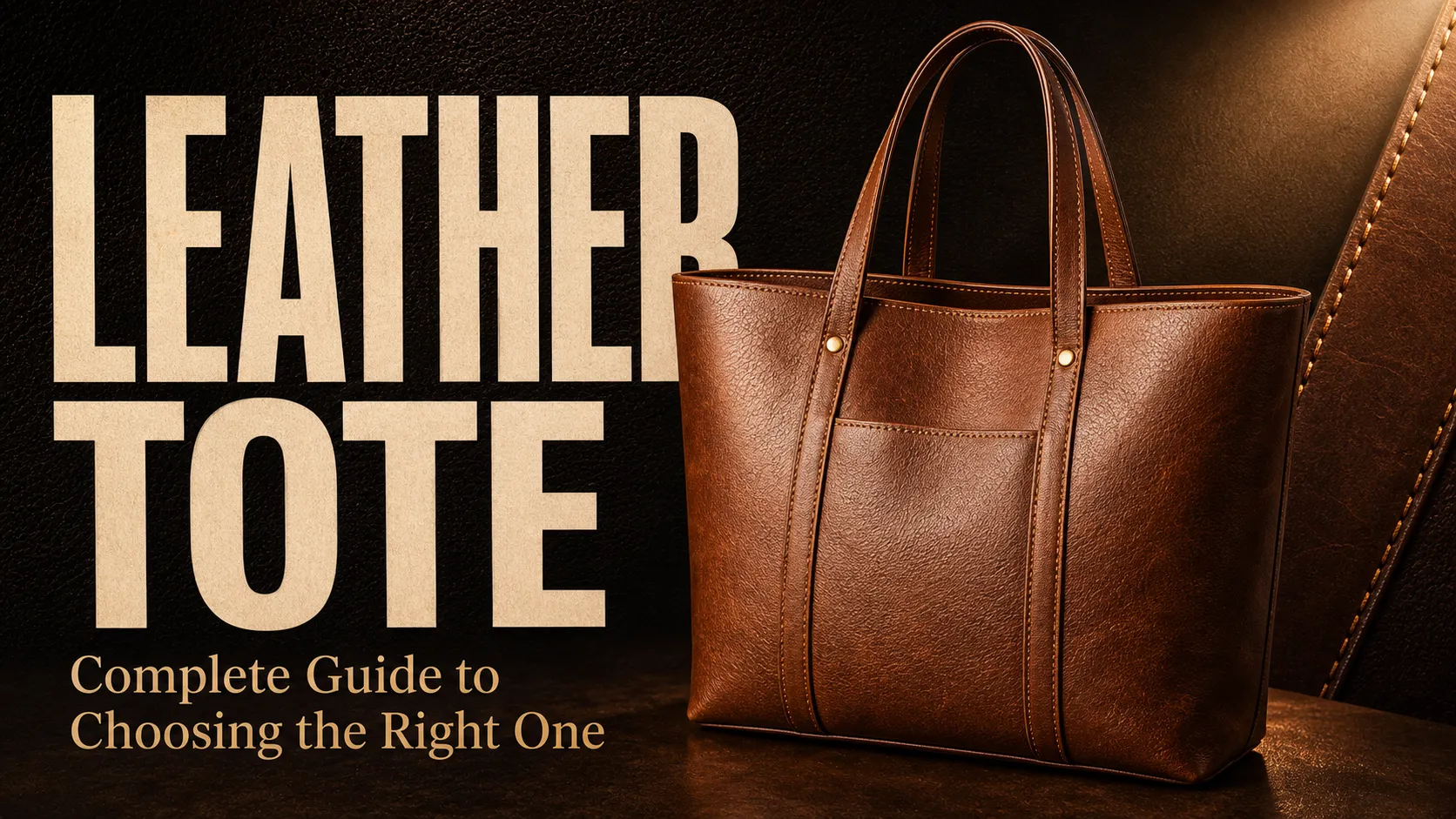
A leather tote is one of the most versatile bags you can own — spacious enough for work, structured enough for daily errands, and built to look better with every year of use. But not every leather tote is created equal. The difference between one that lasts a season and one that lasts a decade comes down to leather quality, construction, and the small details most people overlook.
This guide covers everything you need to know before buying a leather tote: what separates a great one from a mediocre one, how to spot cheap imitations, which size and color to pick, and how to keep yours looking sharp for years.
What Is a Leather Tote?
A tote is an open-top bag with two parallel handles designed to be carried by hand or over the shoulder. The name comes from the word “tote,” meaning simply “to carry.” It is one of the oldest and most practical bag designs still in use today.
A leather tote bag takes that simple design and elevates it. Instead of canvas or nylon, the body is crafted from leather — and when that leather is full-grain, the bag becomes an investment piece that actually improves with age.
Unlike structured bags like briefcases or satchels, a tote in leather offers an open interior with generous space. Most designs are intentionally minimalist — no excessive buckles, no complicated closures. Just a clean, wide opening that lets you drop things in and pull them out without fumbling.
That simplicity is exactly what makes the leather tote so enduring. It works for the office, the weekend, the airport, and everything in between. No other bag shape transitions between settings as easily.
Why Choose a Leather Tote Over Canvas or Synthetic?
You can buy a tote in almost any material. Canvas totes are cheap and lightweight. Nylon totes are water-resistant. So why spend more on leather?
Three reasons: durability, appearance, and long-term value.
A canvas tote starts to fray and stain within months of regular use. A nylon tote looks fine at first but never develops character — it simply fades and wears down. A full-grain leather tote, on the other hand, develops a rich patina over time. The color deepens. The leather softens. It looks better at year three than it did on day one.
Then there is the durability factor. Full-grain leather is the strongest grade of leather available. According to Leather Naturally, a sustainability initiative backed by the global leather industry, properly maintained leather goods can last decades — far outlasting synthetic alternatives.
When you break it down by cost per year, a quality leather tote at $250 that lasts 15 years costs around $17 per year. A $30 canvas tote replaced every six months costs $60 per year. The leather wins — and it looks better while doing it.
Types of Leather Totes
Not all leather totes look or function the same. Here are the most common styles and what each one is best suited for.
The Classic Open-Top Tote
This is the original tote design — a large leather tote bag with an open top, two handles, and a roomy interior. No zippers, no flaps, no fuss. You drop your things in and go.
Best for: everyday errands, casual outings, light shopping, farmers markets.
The Zippered Tote
A leather tote bag with zipper adds security without sacrificing the tote’s signature simplicity. A full-length zipper across the top keeps your belongings enclosed — especially useful in crowded spaces, public transit, or during travel.
Best for: commuting, travel, anyone who carries valuables and wants peace of mind.
The Structured Work Tote
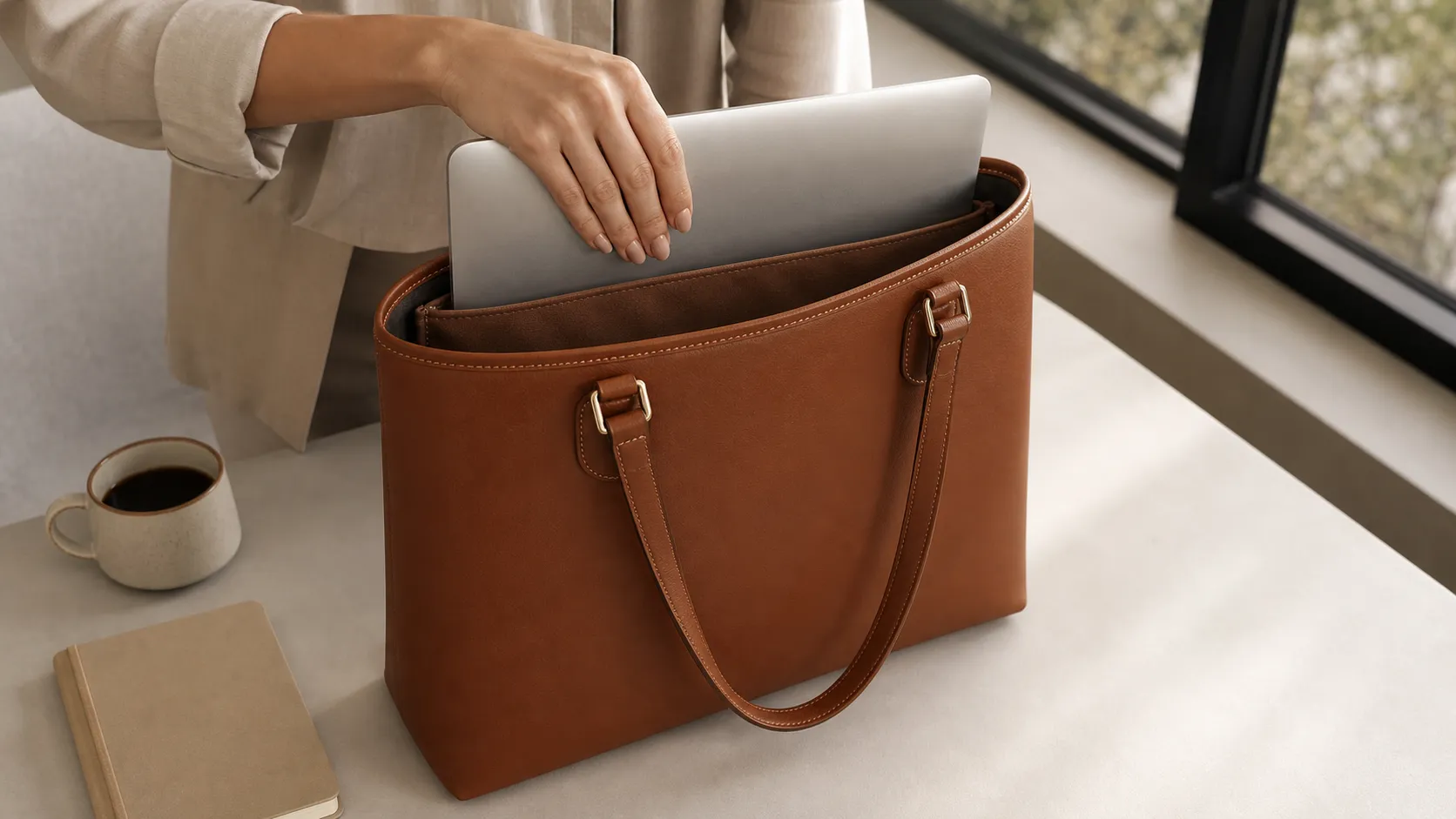
A leather work tote is engineered for the office. It is stiffer than a casual tote, holds its shape on its own, and typically includes interior pockets or compartments for a laptop, phone, wallet, and documents.
Best for: professionals, daily office commutes, client meetings, conference days.
The Oversized Weekender Tote
A large leather bag built for carrying more than just daily essentials. These totes are wider, taller, and deeper — big enough for a change of clothes, a pair of shoes, or a full day’s worth of supplies.
Best for: weekend getaways, gym sessions, overnight travel, day trips.
The Crossbody Convertible Tote
Some leather totes come with a detachable shoulder strap that converts them into a crossbody bag. This gives you two carry options in one — handles for a polished look, crossbody strap for hands-free convenience.
Best for: people who want versatility without owning multiple bags.
What to Look for in a Quality Leather Tote
The market is flooded with bags marketed as “leather” that are anything but. Here is how to spot a quality leather tote and avoid wasting money on something that will not last.
Leather Grade Matters Most
The single most important factor is the leather grade. Genuine leather sounds premium, but it is actually the lowest usable grade — made from the inner splits of the hide and coated with a plastic finish to look smooth. It cracks and peels within a year.
Full-grain leather is the top layer of the hide with the natural grain left completely intact. It is the strongest, most durable grade of leather that exists. If you are spending money on a leather tote, make sure it is full-grain — anything less is a compromise. For a deeper breakdown, our guide on how to choose a leather bag walks through every quality indicator worth checking.
Stitching and Construction
Check the stitching closely. Quality leather totes use reinforced stitching at stress points — where the handles meet the body, along the bottom seam, and around hardware attachment points. Look for tight, even stitches with no loose threads.
Hand-stitched bags use a saddle stitch technique where two needles pass through the same hole from opposite sides. If one stitch breaks, the rest hold firm. Machine lock-stitching, by contrast, can unravel from a single broken point.
Hardware
Zippers, clasps, rivets, and buckles should be solid metal — brass, copper, or zinc alloy. Avoid bags with plastic hardware or lightweight stamped metal that bends under pressure. Hardware is often the first thing to fail on a cheaply made bag.
Lining
A quality leather tote will have a fabric lining — usually cotton canvas or suede. The lining protects the interior leather surface, adds structure, and prevents items from scratching the inside of the bag.
Unlined leather totes are not necessarily bad, but they should be made from leather thick enough to hold up without a liner.
Handle Attachment
The handles are the highest-stress component on any tote. On a well-made bag, the handles are riveted and stitched to the body — not just glued. The best designs run the handle straps all the way down the sides and across the bottom, distributing weight evenly across the entire bag.
Brown Leather Tote vs. Black: Which Color Should You Pick?
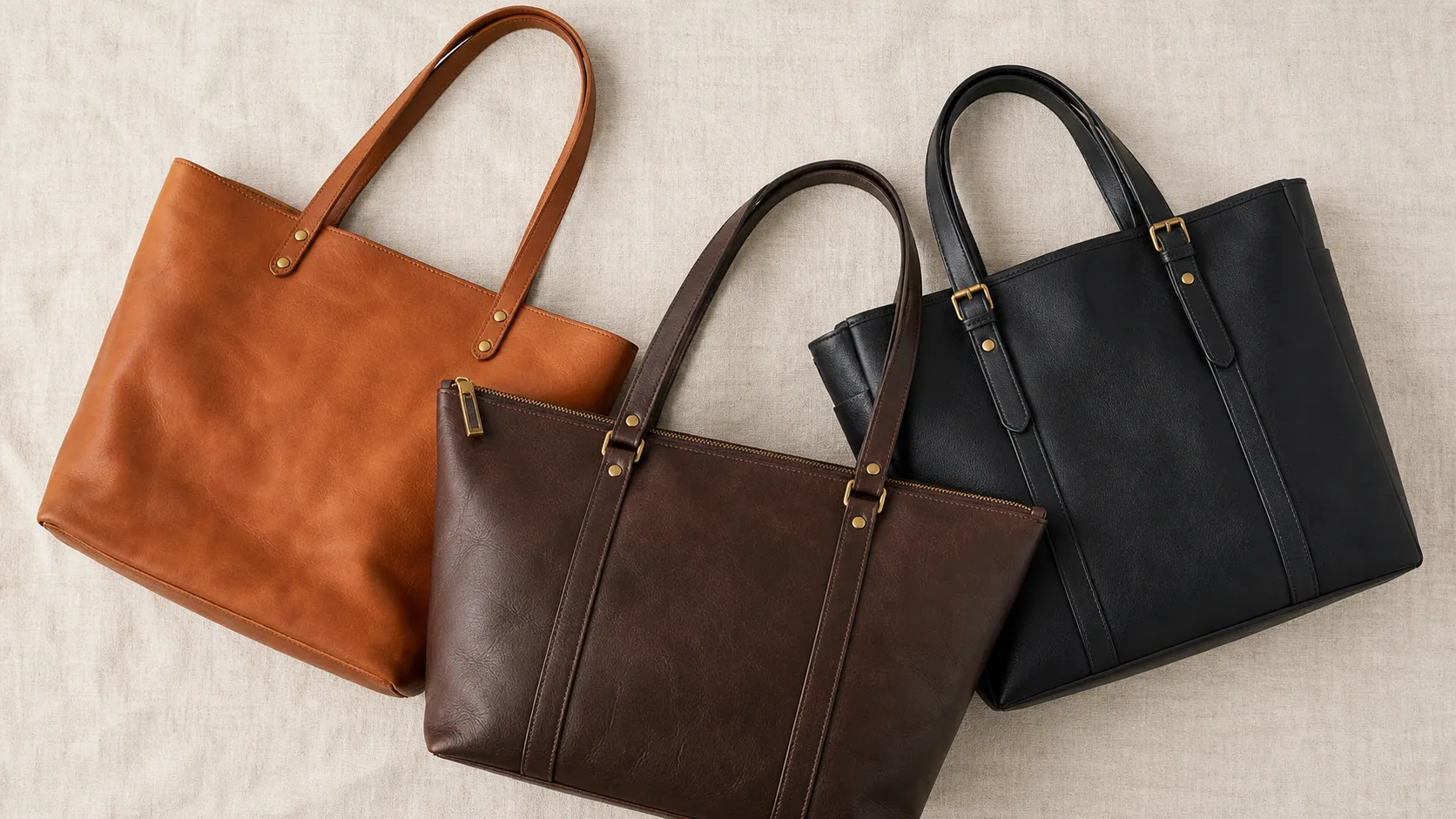
After leather quality, color is the biggest decision. Most people narrow it down to brown or black — and either is a strong choice, depending on your wardrobe and lifestyle.
Brown Leather Tote
A brown leather tote bag is the classic choice. Brown leather shows off the natural grain and character of the hide more visibly than darker colors. It develops a more dramatic patina over time, with color variations that make each bag unique to its owner.
Brown pairs beautifully with earth tones, denim, olive, cream, and burgundy. It reads as warm, approachable, and slightly casual — making it ideal for creative workplaces, weekend outings, and travel.
Black Leather Tote
A black leather tote bag is the more formal option. It pairs with virtually any outfit and looks at home in corporate settings, evening events, and minimalist wardrobes. Black leather also hides scuffs and minor scratches better than lighter shades.
The trade-off: black leather develops patina more slowly and less visibly than brown. If you want a bag that ages dramatically and tells a visual story, brown is the better pick. If you want something consistently polished and low-maintenance, go with black.
The Verdict
If this is your first leather tote and you want maximum versatility, start with a medium brown — something in the cognac or saddle range. It works with the widest range of outfits and shows off the leather’s natural beauty most effectively. Add a black one later if your wardrobe demands it.
The Leather Tote for Work: What Makes a Great Office Bag
A leather tote bag for work needs to do more than look professional. It needs to be functional enough to carry your daily essentials without turning into a bottomless pit where things vanish.
Laptop Compartment
If you carry a laptop — and most people do — look for a tote with a dedicated padded laptop sleeve. The sleeve should fit your device snugly (13-inch or 15-inch) and sit against the back panel of the bag for balance and protection.
If the tote does not have a built-in sleeve, make sure it is wide and tall enough to fit a separate laptop case inside.
Interior Organization
A great leather work tote includes at least one or two interior pockets for your phone, keys, pens, and wallet. Without pockets, small items sink to the bottom and you end up digging for your keys every time you leave the office.
Slip pockets on the interior walls are the most practical — they keep essentials accessible without adding bulk.
Closure Type
For the office, an open-top tote can be risky — papers slide out, your phone is exposed, and the bag offers no security in shared workspaces. Look for a leather tote with either a magnetic snap closure or a full-length zipper. Both keep your belongings enclosed without slowing you down.
Structured Base
Work totes should stand upright on their own. A reinforced or structured base — usually achieved with a stiff bottom panel or metal feet — keeps the bag from collapsing and tipping when you set it down beside your desk or in a meeting room.
At Bags In Leather, our leather tote bags are built with these details in mind — designed for real daily use, not just the showroom.
How to Style a Leather Tote for Any Occasion
One of the biggest advantages of owning a leather tote is how easily it moves between settings. Here is how to style a leather bag across three common scenarios.
For the Office
Pair a structured brown or black leather tote with tailored trousers, a button-down shirt, and loafers or flats. The tote replaces a traditional briefcase with a softer, less rigid silhouette — professional without looking stiff.
Keep the bag’s contents organized with a small pouch for cables and chargers. A clean, uncluttered tote looks more polished and intentional.
For the Weekend
Switch to a softer, unstructured leather tote in warm tan or cognac. Pair it with jeans, a relaxed sweater, and boots or sneakers. This style of tote works effortlessly for farmers markets, brunch, bookstores, and casual day trips.
A bandana or silk scarf tied loosely around one handle adds a simple personal touch without overthinking it.
For Travel
Choose a large leather tote bag that fits under an airplane seat or doubles as a personal item. Look for one with a zipper closure and an exterior slip pocket for boarding passes and your phone.
A well-chosen leather tote can replace a carry-on for short trips. For longer journeys, pair it with a leather weekender bag to cover everything you need without checking luggage.
How to Care for Your Leather Tote
A full-grain leather tote is low-maintenance compared to most materials, but a few simple habits will keep it looking great for decades.
Clean It Regularly
Wipe the surface with a dry, soft cloth every week or two to remove dust and surface grime. For deeper cleaning, use a slightly damp cloth with a small amount of leather-safe soap. Never soak the leather or use harsh household chemicals.
For a detailed step-by-step process, our guide on how to care for leather bags covers everything from routine cleaning to deep conditioning.
Condition Every 3–6 Months
Leather is skin — and like skin, it needs moisture to stay supple. Apply a thin layer of leather conditioner with a soft cloth, working it into the surface in circular motions. Let it absorb for 15–20 minutes, then buff off any excess with a clean cloth.
Conditioning prevents the leather from drying out, cracking, or becoming stiff over time. It also deepens the color and accelerates the patina.
Store It Properly
When your leather tote is not in use, stuff it with tissue paper or a soft cloth to help it hold its shape. Store it in the dust bag it came with — not in a plastic bag, which traps moisture and can cause mildew. Keep it in a cool, dry place out of direct sunlight.
Handle Stains Quickly
Blot — never rub — any spills immediately with a clean cloth. For oil-based stains, sprinkle a small amount of cornstarch on the spot and let it sit overnight to absorb the oil. Brush it off gently in the morning.
For water stains, let the bag dry naturally at room temperature. Avoid using a hair dryer or placing it near a heater — heat damages leather fibers and causes warping.
Frequently Asked Questions
Is a leather tote good for everyday use?
A full-grain leather tote is one of the best bags for daily use. The leather is naturally strong, scratch-resistant, and becomes more supple with regular handling. Unlike canvas or synthetic bags that wear out quickly, a quality leather tote handles daily weight, weather, and wear without losing its shape or structure. Most full-grain leather totes last 15–20 years or more with basic care.
What is the best leather for a tote bag?
Full-grain leather is the best choice. It is the highest grade available — made from the outermost layer of the hide with the natural grain left intact. Full-grain leather is the strongest, most durable option and develops a beautiful patina over time. Avoid bags labeled “genuine leather” or “bonded leather,” which are lower-quality grades that crack and peel within months.
How big should a leather tote be for work?
A leather tote for work should measure at least 14 inches wide and 11 inches tall to comfortably fit a 13-inch laptop, documents, a water bottle, and personal items. If you carry a 15-inch laptop, look for a tote that is at least 16 inches wide. A depth of 5–6 inches keeps the bag functional without becoming too bulky to carry comfortably.
Can you use a leather tote as a travel bag?
Absolutely. A large leather tote makes an excellent personal item for flights — it fits under most airline seats and carries everything you need during the journey: laptop, charger, snacks, a book, and travel documents. For overnight trips, a leather tote can even serve as your only bag if you pack light and roll your clothes efficiently.
The Bag That Goes Everywhere You Do
A leather tote is not a trend — it is a foundational piece. The kind of bag that works with your life, not against it. Whether you are heading to the office, catching a flight, or spending the day out, the right leather tote carries everything you need and looks better doing it than anything else you own.
The key is choosing one made from full-grain leather, with solid hardware, reinforced stitching, and a design that fits your daily needs. Skip the synthetic shortcuts and the misleading labels. Invest in something built to last — and built to age beautifully.
Related posts

Leather Messenger Bag for Women: The Complete Guide
A leather messenger bag for women is the rare bag that carries a laptop to a meeting, a notebook to a café, and your everyday essential...

How to Choose a Leather Laptop Bag: A Buyer’s Guide
Knowing how to choose a leather laptop bag comes down to five decisions: the right bag type, the right size, the right leather grade, r...

Leather Camera Bag: The Complete Buyer’s Guide
A leather camera bag is where photography gear meets everyday style — a way to protect your camera and lens without carrying something ...

Leather Saddle Bag: The Complete Guide
A leather saddle bag is the curved-flap crossbody handbag that has quietly become a modern classic — named for its horseback origins, b...

Leather Hobo Bag: The Complete Guide
A leather hobo bag is the soft, slouchy shoulder bag that never really goes away — the one that molds to your body, swallows your daily...

Oxblood Leather: What Color It Is and How to Style It
Oxblood leather is a deep, dark red leather with rich brown and subtle purple undertones — one of the most versatile and quietly luxuri...