Free Shipping Over $100 · Satisfaction Guarantee · Handcrafted by Artisans


Choosing between a canvas vs leather messenger bag comes down to a few honest trade-offs: weight, cost, durability, weather resistance, and the look you want. Neither is simply “better” — canvas wins on price and lightness, leather wins on longevity and polish, and the right pick depends on how you carry and where you are headed. This guide compares the two across every factor that matters, then helps you decide. By the end, you will know exactly which material fits your life and your budget.
Quick Comparison
Here is the short version before we dig into the details.
| Factor | Canvas | Leather |
|---|---|---|
| Lifespan | 4–7 years typical | 15–20+ years, often decades |
| Weight | Light | Heavier |
| Price | ~$45–200 | ~$200–400+ |
| Style | Casual, rugged, vintage | Polished, professional, timeless |
| Weather | Good (great if waxed) | Water-resistant if treated, never waterproof |
| Maintenance | Easy — spot clean | Needs periodic conditioning |
| Ages by | Fraying over time | Developing a rich patina |
Both canvas and leather are proven bag materials with long histories. The question is not which is objectively best, but which set of trade-offs suits you.
Durability and Lifespan
This is where leather pulls ahead. High-quality full-grain leather is dense and tightly grained, resisting tears and abrasion, and it routinely lasts 15 to 20 years or more — often becoming a bag you hand down. Its secret is that wear turns into character: scuffs blend into a patina rather than looking like damage. Our guide to full grain vs. top grain leather explains why the grade matters so much for longevity.
Canvas is genuinely tough for everyday use, shrugging off scuffs and rough handling, but it has a shorter horizon — typically four to seven years of heavy use before the woven fibers start to fray, especially at stress points and seams. Waxed canvas lasts longer and resists the elements better than standard cotton canvas. Still, for sheer lifespan, leather is the clear winner.
Weight and Comfort
Canvas takes this one easily. It is significantly lighter than leather, which makes a real difference on a long commute, a bike ride, or a full day of walking. Load a canvas bag and a leather bag with the same gear, and the canvas version is noticeably easier on your shoulder.
Leather is a dense material, and that heft adds up — a large leather messenger bag has real presence and weight before you put anything in it. If minimizing what you carry matters, canvas has a built-in advantage. If you do not mind a little weight for the payoff in looks and longevity, leather is worth it.
Style and Professionalism
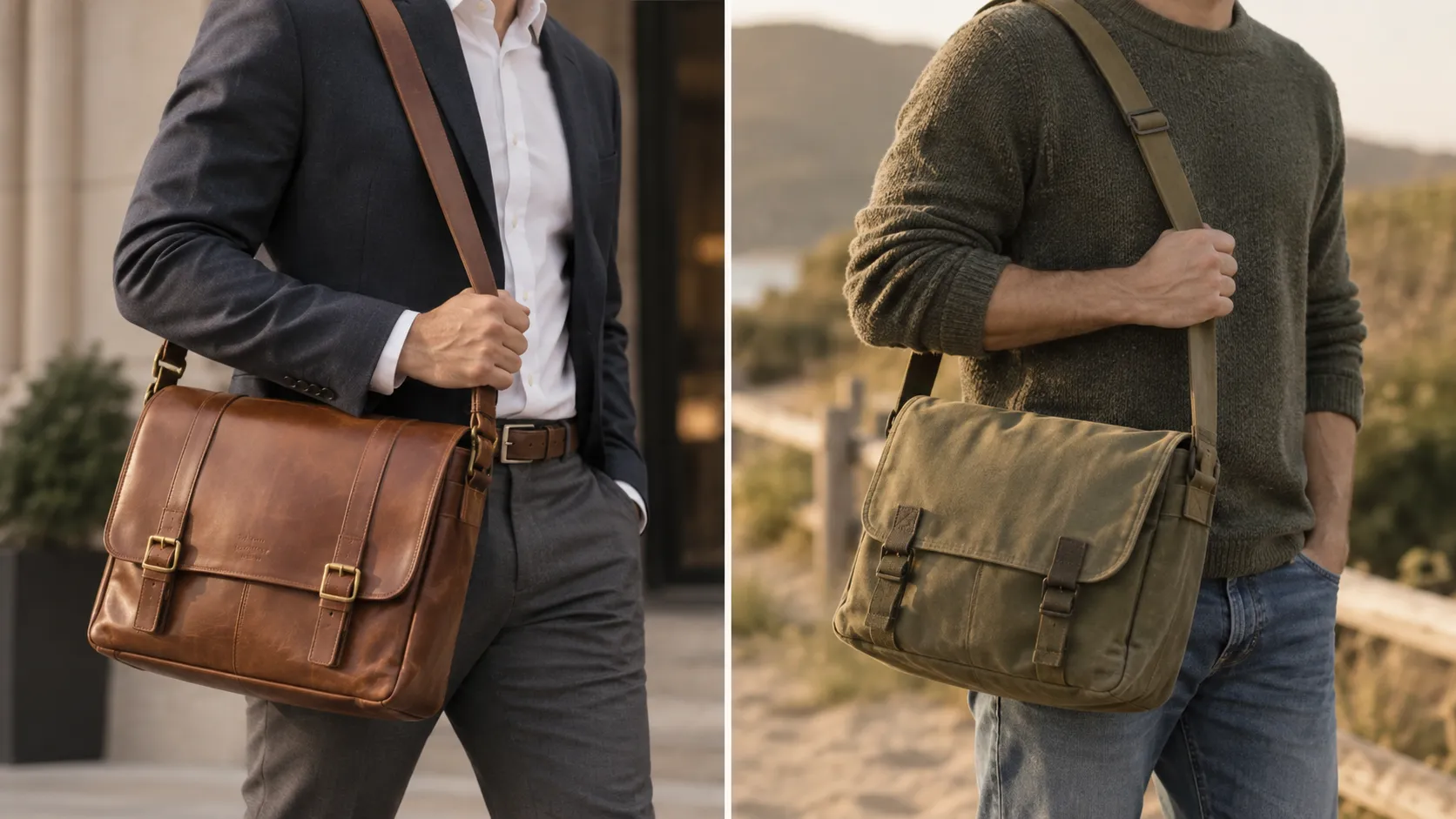
The two materials send different signals. Leather reads polished, timeless, and professional — it fits seamlessly into corporate settings, client meetings, and dressed-up looks. It is the material you reach for when you want the bag to elevate the outfit. For a fuller breakdown of choosing a leather bag for work, see our guide on how to choose a leather messenger bag.
Canvas leans casual, rugged, and vintage. It comes in more colors and patterns and suits creative studios, campuses, and weekend use better than a boardroom. If you are weighing formality more broadly, our messenger bag vs. briefcase comparison covers that end of the spectrum. In short: leather for polish, canvas for relaxed.
Weather Resistance
Here is an honest point that surprises people: for rain, waxed canvas often beats untreated leather. A well-waxed canvas bag sheds water and handles wet weather well straight out of the box, which is why it is popular for rugged, outdoor-leaning use.
Leather is not inherently waterproof — no leather is. Treated with a protectant it becomes water-resistant and copes with light rain, but it should not be soaked, and standard cotton canvas absorbs water readily unless it is waxed. Our guide on whether leather is waterproof explains that distinction in detail. The takeaway: waxed canvas is the most weather-ready option, treated leather is fine in light rain, and neither should be left out in a downpour.
That said, weather resistance is manageable on either bag. A quality protectant spray meaningfully improves a leather bag’s tolerance for damp, and re-waxing does the same for canvas. If you commute in a rainy climate and want zero worry, lean toward waxed canvas or keep a light rain cover handy. If you mostly move between car, office, and home, a treated leather bag will cope with the occasional shower without trouble — the weather factor only becomes decisive if you are regularly caught out in serious rain.
Price and Value
Canvas is cheaper up front — often meaningfully so, with quality canvas bags running well below comparable leather. If budget is the deciding factor, canvas gives you a lot of bag for the money.
Leather costs more initially, but the value math changes over time. Spread a quality leather bag’s price across 15 to 20 years and the cost per year can undercut replacing a canvas bag every few years. You are paying more once instead of less repeatedly. Whether that trade is worth it depends on your budget today and how long you want the bag to last — a genuine quality leather bag is an investment that pays off over the long run.
Maintenance
Canvas is the low-effort choice. Most canvas bags can be spot-cleaned or even machine-washed depending on construction, and they need almost no routine care beyond that. Waxed canvas occasionally needs re-waxing to keep its water resistance, but that is simple.
Leather asks for a little more. It should be wiped down, kept out of prolonged wet, and conditioned a few times a year to stay supple and avoid cracking — our leather conditioning guide covers the routine. It is not difficult, but it is not zero, either. If you want a bag you can neglect, canvas is more forgiving; if you do not mind a few minutes of care for a bag that lasts decades, leather rewards it.
Pros and Cons at a Glance
If you prefer the trade-offs laid out plainly, here they are.
Canvas — pros: lightweight, affordable, casual and versatile, easy to clean, and (when waxed) genuinely weather-ready. Canvas — cons: shorter lifespan, frays over time, absorbs water unless treated, and looks too casual for formal settings.
Leather — pros: exceptional longevity, a polished and professional look, a beautiful patina that improves with age, and strong structure that protects your gear. Leather — cons: heavier, more expensive up front, needs occasional conditioning, and is never fully waterproof.
Seen side by side, the canvas vs leather messenger bag choice is really a choice between low-cost, low-commitment convenience and long-term investment. Both are legitimate; they simply serve different priorities.
What About Nylon?
Canvas and leather are not the only options — technical nylon is the third contender, and it is worth a mention. Ballistic or Cordura nylon offers top-tier water resistance with no treatment, weighs very little, and needs almost no maintenance, which makes it excellent for cycling, travel, and hard commuting.
What nylon lacks is character. It reads sporty and technical rather than polished or rugged-handsome, and it will never develop the patina of leather or the lived-in charm of waxed canvas. If pure weatherproof function is your goal, nylon competes; if you care how the bag looks and ages, canvas and leather remain the more characterful picks.
How to Make Either Bag Last Longer
Whichever way the canvas vs leather messenger bag decision goes, a little care extends its life dramatically.
For canvas, spot-clean spills before they set, let the bag air-dry fully to avoid mildew, and re-wax a waxed-canvas bag once or twice a year to keep its water resistance. Avoid overloading it, since heavy weight strains the woven seams that tend to fail first.
For leather, wipe it down regularly, keep it out of prolonged wet, and condition it a few times a year to prevent drying and cracking. Store it stuffed loosely and away from direct heat so it holds its shape. Do that, and a leather bag easily outlives several canvas ones — which is a big part of its long-term value.
The point is that neither material is truly “buy it and forget it.” Both last longer when you match a few minutes of upkeep to how the material actually behaves.
Which Should You Choose?
There is no universal winner in the canvas vs leather messenger bag debate — only the right fit for you. Use this quick logic:
- Choose leather if you want a professional look, maximum longevity, and a bag that ages beautifully, and you do not mind extra weight, cost, or occasional care.
- Choose canvas if you want something light, affordable, casual, and low-maintenance, and you are comfortable replacing it sooner.
- Consider waxed canvas if weather resistance is your top priority and you like a rugged, outdoorsy look.
For many people who carry a bag to work or want one piece that lasts for years and looks the part, leather is the stronger long-term choice. If your life is casual, budget-conscious, or hard on gear, canvas makes complete sense. And if you carry a laptop, either way check the fit and padding — our guide for a women’s leather messenger bag covers sizing considerations that apply to any material.
Frequently Asked Questions
Which is better, a canvas or leather messenger bag?
Neither is universally better — it depends on your priorities. Leather is more durable, more professional, and ages into a patina, but it costs more and weighs more. Canvas is lighter, cheaper, and more casual, but it wears out sooner. Choose leather for longevity and polish, canvas for affordability and easy, lightweight everyday use.
Which is more durable, canvas or leather?
Leather is more durable overall. High-quality full-grain leather lasts 15 to 20 years or more, while standard canvas typically lasts four to seven years of heavy use before fraying. Waxed canvas narrows the gap and resists weather better, but for sheer lifespan under regular use, leather is the more durable material.
What are the downsides of canvas bags?
Canvas bags wear out faster than leather, fraying at seams and stress points over a few years of heavy use. Untreated canvas also absorbs water and stains easily, and the material reads more casual, so it is less suited to formal or professional settings. Waxing improves durability and weather resistance but adds upkeep.
Is waxed canvas better than leather for rain?
Often, yes — for rain specifically. Well-waxed canvas sheds water straight away and handles wet weather better than untreated leather, which is not inherently waterproof. Treated leather resists light rain but should not be soaked. If weather resistance is your top concern, waxed canvas is usually the more practical choice.
What is the best material for a messenger bag?
It depends on your needs. Full-grain leather is best for longevity and a professional look, waxed canvas or nylon for lightweight weather resistance, and standard canvas for budget-friendly casual use. Match the material to how you carry: office and long-term value favor leather, while commuting, cycling, and casual use often favor canvas.
The Bottom Line
The canvas vs leather messenger bag debate really comes down to what you value most. Canvas is lighter, cheaper, and more casual, and waxed canvas handles rain well — a great fit for budget-conscious, everyday, or outdoor-leaning use. Leather costs more and needs a little care, but it looks polished, ages into a beautiful patina, and lasts for decades, making it the stronger choice for work and long-term value. Decide which trade-offs matter most to you — longevity and polish, or lightness and low cost — and the right answer becomes clear.
If longevity and a timeless, professional look win out for you, explore our handcrafted collection of full-grain leather messenger bags — built to last for years and look better with age.
Related posts
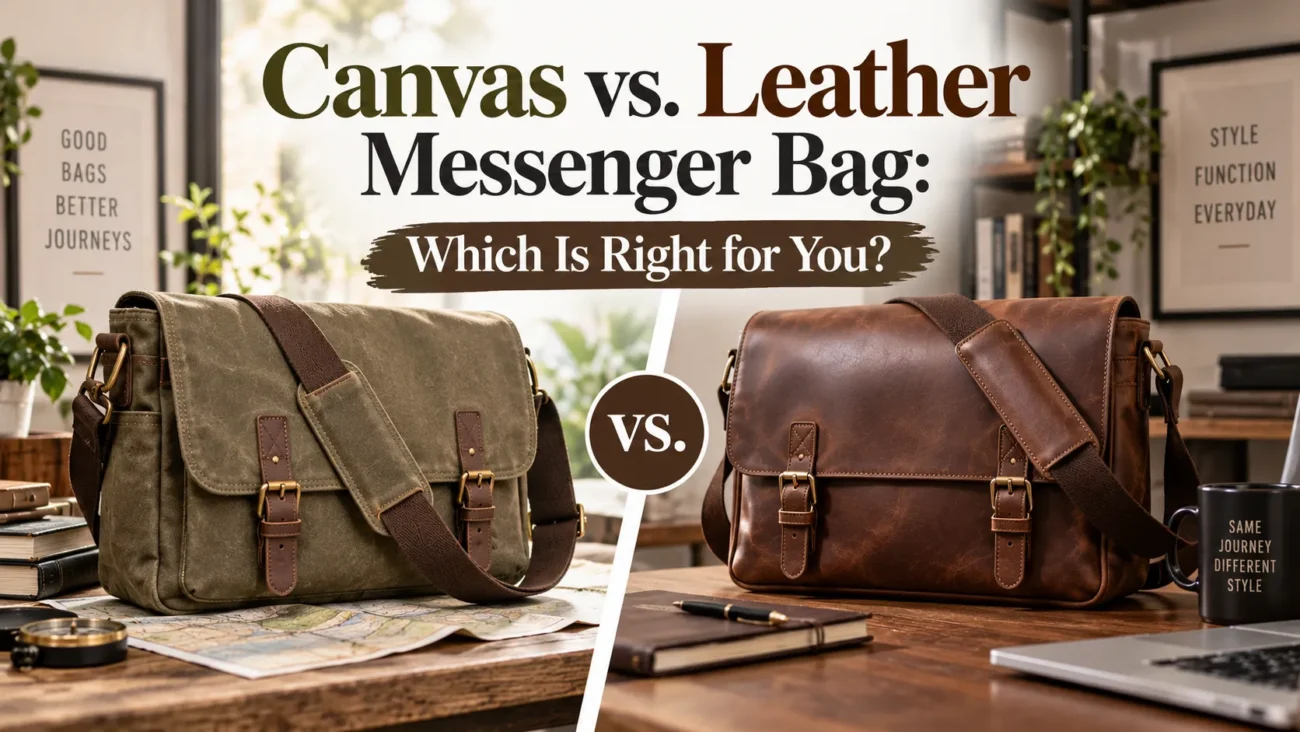
Canvas vs. Leather Messenger Bag: Which Is Right for You?
Choosing between a canvas vs leather messenger bag comes down to a few honest trade-offs: weight, cost, durability, weather resistance,...
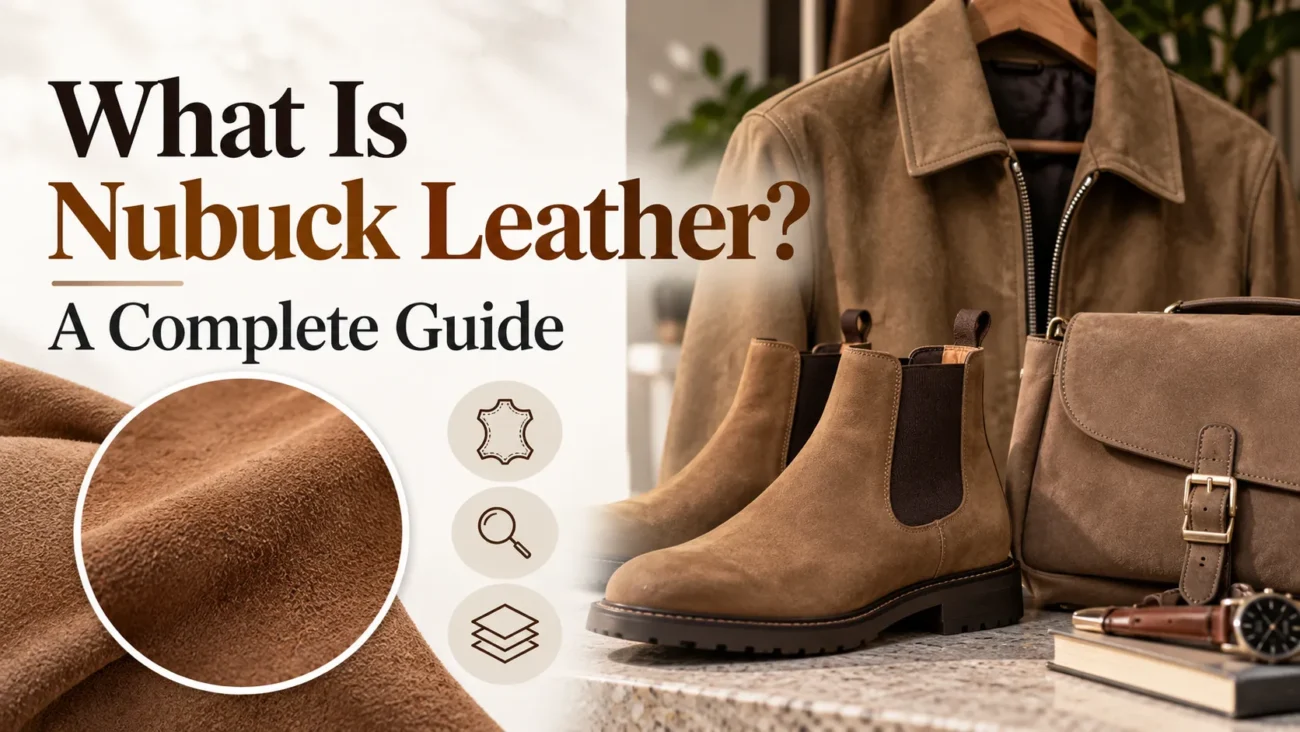
What Is Nubuck Leather? A Complete Guide
Nubuck leather is top-grain leather that has been sanded on its outer surface to create a soft, velvety nap — a material that looks and...

Fringe Crossbody Bag: The Complete Style Guide
A fringe crossbody bag is the piece that adds movement to an outfit — a hands-free bag trimmed with swaying leather or suede tassels th...

Leather Messenger Bag for Women: The Complete Guide
A leather messenger bag for women is the rare bag that carries a laptop to a meeting, a notebook to a café, and your everyday essential...

How to Choose a Leather Laptop Bag: A Buyer’s Guide
Knowing how to choose a leather laptop bag comes down to five decisions: the right bag type, the right size, the right leather grade, r...

Leather Camera Bag: The Complete Buyer’s Guide
A leather camera bag is where photography gear meets everyday style — a way to protect your camera and lens without carrying something ...