Free Shipping Over $100 · Satisfaction Guarantee · Handcrafted by Artisans


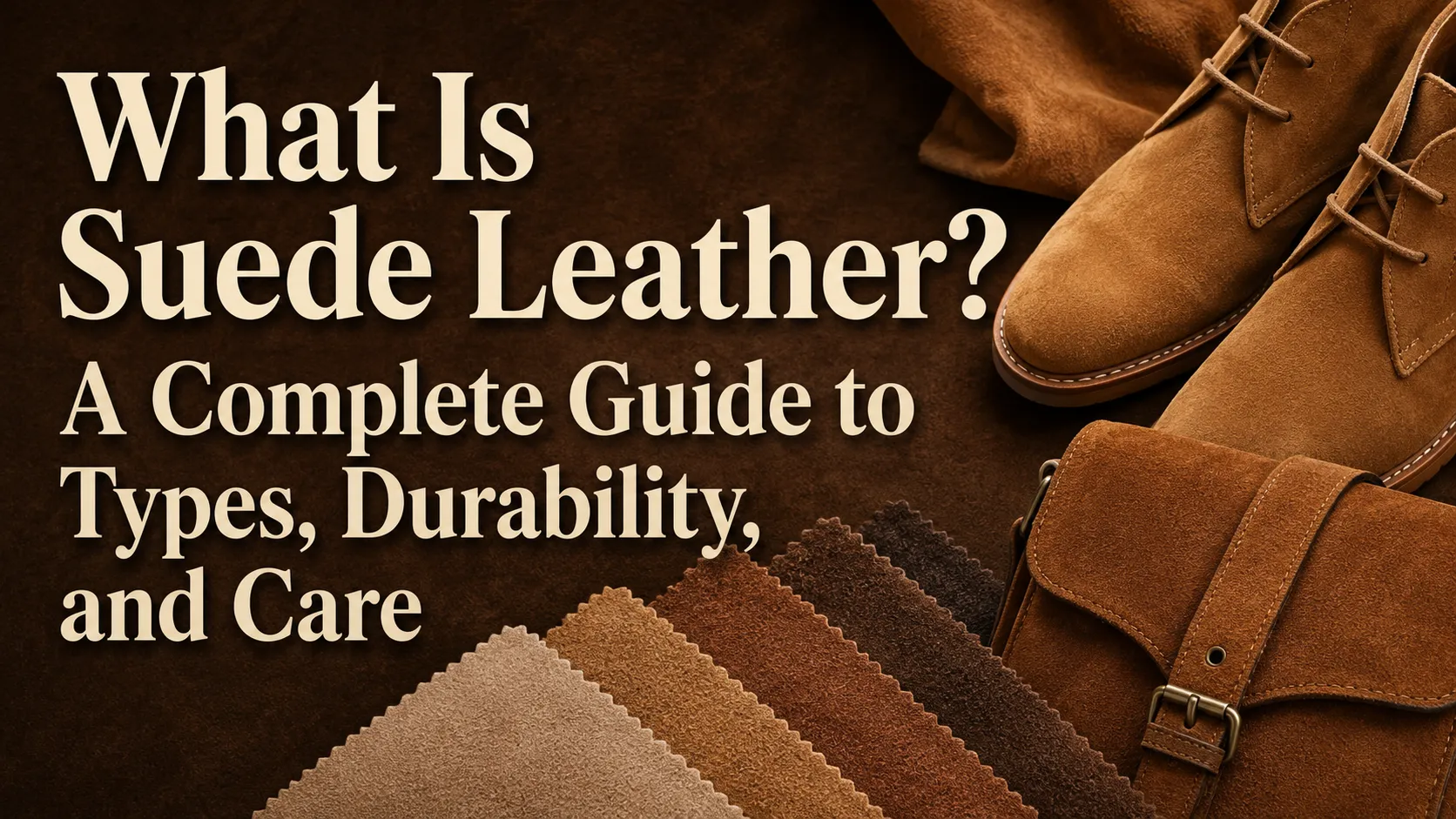
Suede leather is a soft, napped leather made from the underside of an animal hide, prized for its velvety texture and understated, matte look. You have seen it on desert boots, moto jackets, and slouchy bags — but there is a lot of confusion about what suede actually is, whether it counts as real leather, and how it holds up over time. This guide explains exactly what suede leather is, how it is made, how it compares to nubuck and full-grain leather, and how to care for it so it lasts.
What Is Suede Leather?
Suede leather is a type of real leather with a soft, fuzzy, napped finish, made from the inner or flesh side of an animal hide rather than the tough outer grain. That napped surface — a raised layer of fine fibers — is what gives suede its signature velvety feel and muted appearance. The name itself comes from the French phrase gants de Suède, meaning “gloves of Sweden,” a nod to the soft imported gloves that made the material famous.
Because it comes from the softer underside of the hide, suede is thinner, more flexible, and more supple than surface-grain leathers. It drapes beautifully and feels luxurious, which is why it is a favorite for jackets, shoes, and fashion bags.
That same softness is also its weakness. The open, exposed fibers that make suede feel wonderful also make it more delicate and far more sensitive to water and stains than tougher grades. Understanding that trade-off is the key to knowing when suede is the right choice.
How Is Suede Leather Made?
Suede is made by splitting a tanned hide into layers and working the inner layer. A full hide is too thick to use as one piece, so tanners split it into a top grain layer and one or more lower “split” layers.
The lower split does not have the dense, protective outer grain, so both of its surfaces are soft and fibrous. Tanners buff or sand that split to raise a uniform, velvety nap, and the result is suede. It is commonly made from lamb, calf, goat, pig, and deer skins, with lambskin producing the softest, most delicate suede. Thicker hides like cowhide can yield sturdier suede, while thinner skins give the plush, delicate nap used in fine garments. The depth and direction of the buffing also shape how dense and uniform the final nap looks.
This is the core reason suede behaves the way it does. It is genuine leather, but it is the underside of the hide, without the weatherproof grain layer that makes other leathers so hard-wearing. To see how the whole hide is processed, read our guide on how leather is made.
Is Suede Real Leather?
Yes, suede is real leather. It is made from genuine animal hide, just like any other leather — the only difference is which layer of the hide it comes from and how the surface is finished.
The confusion usually comes from the term “genuine leather,” which sounds like a quality mark but simply means the product is made of real leather. Suede is real leather, but it is not the strongest grade, since it comes from the softer inner split rather than the durable outer grain. Our guide to what genuine leather really means clears up that common mix-up.
Be aware that “faux suede” or “microsuede” also exists. These are synthetic fabrics designed to mimic the look of suede, and they are not leather at all — always check the label if authenticity matters to you.
Suede vs Nubuck vs Full-Grain Leather
Suede, nubuck, and full-grain leather are constantly confused, but the difference comes down to which part of the hide is used. Getting this right tells you almost everything about durability and price.
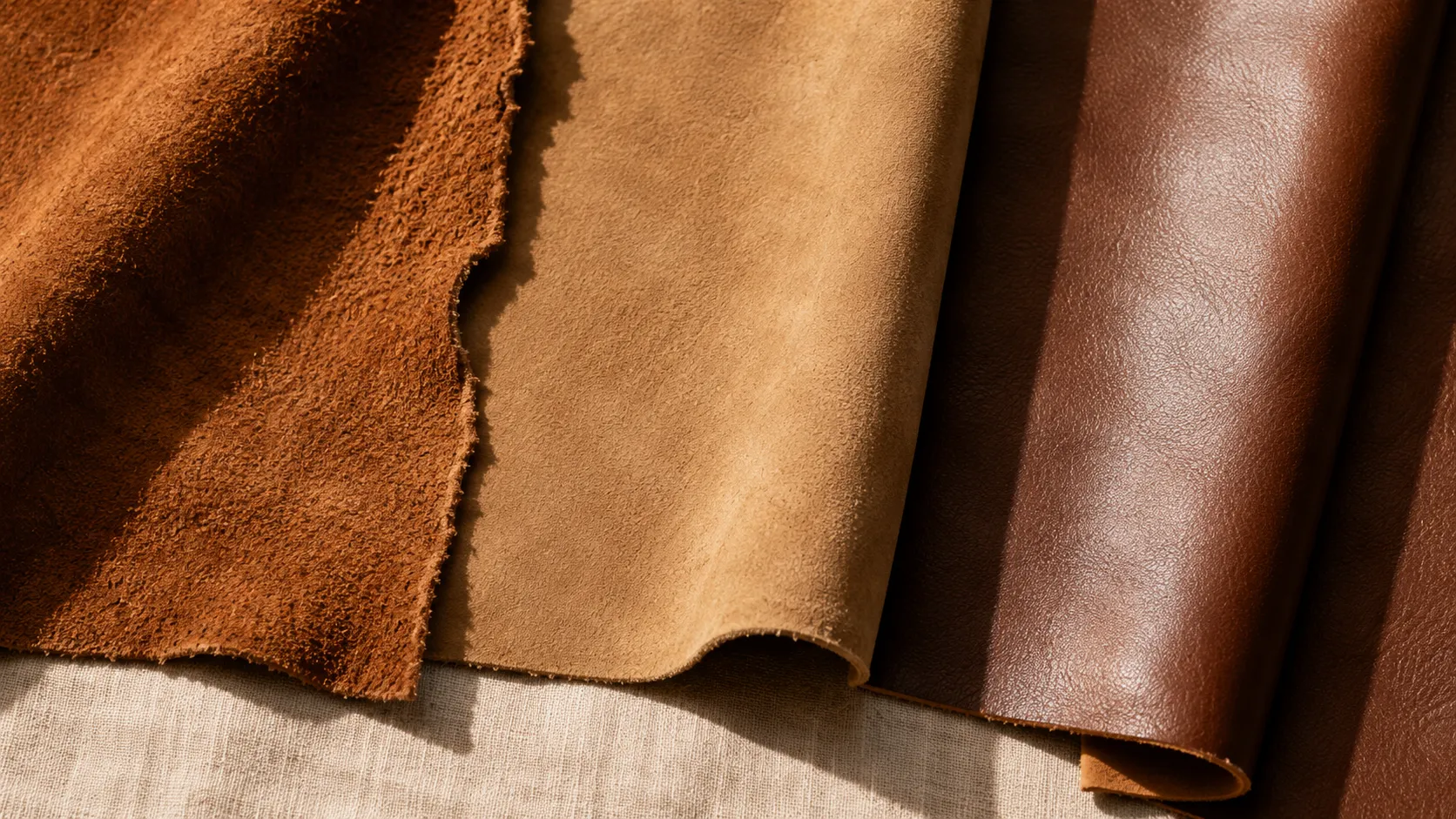
Full-grain leather uses the intact outer surface of the hide, making it the strongest and longest-lasting grade. Nubuck is also made from the outer grain, but lightly sanded to raise a fine, tight nap — so it looks a little like suede while keeping much of the grain’s strength. Suede comes from the inner split, giving it a softer, thicker nap but noticeably less durability.
| Feature | Suede | Nubuck | Full-Grain |
|---|---|---|---|
| Made from | Inner split (flesh side) | Outer grain, lightly sanded | Intact outer grain |
| Texture | Soft, thick nap | Fine, tight nap | Smooth, natural grain |
| Durability | Least durable | More durable than suede | Most durable |
| Water resistance | Low | Low–moderate | Moderate |
| Typical price | Lower | Higher than suede | Highest |
In short, nubuck is the tougher, grain-side cousin of suede. If durability is your priority, our comparison of full grain vs top grain leather and our overview of leather types go deeper into the grades.
Types of Suede Leather
Not all suede is the same, since the animal it comes from changes its feel and strength. Knowing the source helps you judge quality before you buy.
Sheepskin and lambskin suede is the softest and thinnest, common in high-end jackets and gloves. Cowhide suede is thicker and more hard-wearing, used for boots, bags, and furniture. Goatskin and pigskin suede fall in between, offering a good balance of softness and resilience, with pigskin being especially durable for its weight. Generally, the softer and finer the suede, the more delicate it is.
Remember the faux options too. “Microsuede” and “faux suede” are synthetic imitations — cheaper and easier to clean, but not real leather and without the character or longevity of the genuine material.
How to Spot Real Suede vs Faux Suede
Telling genuine suede from synthetic imitations is worth doing before you buy, since the two behave very differently over time. A few quick checks usually settle it.
Real suede has a slightly irregular nap and natural variation in color and texture, and it warms to the touch. Faux suede looks more uniform and often feels cooler and more plasticky. Genuine suede also has a subtle leather smell, while synthetics smell faintly chemical. If the label says “microsuede,” “faux suede,” or “suedette,” it is a fabric, not leather. When in doubt, the same principles in our guide on how to tell if leather is real apply to suede too.
Is Suede Durable? Pros and Cons
Suede is less durable than grain leathers, but that does not make it fragile — it simply needs the right expectations and care. With protection and gentle handling, a quality suede piece can last many years.
The upsides are real: suede is exceptionally soft, lightweight, and flexible, with a warm, matte, luxurious look that grain leather cannot replicate. It breaks in comfortably and suits fashion pieces beautifully.
The downsides matter just as much. Suede stains easily, absorbs water and oil quickly, scuffs and flattens with heavy rubbing, and is harder to clean than smooth leather. It is best for items that see gentle, considered use rather than daily rough handling. For a bag you will carry hard every day, a grain leather is the wiser investment.
Is Suede Leather Expensive?
Suede sits in the middle of the leather price range, generally costing less than nubuck or full-grain but more than bonded or heavily corrected leathers. Because it is cut from the split rather than the prized outer grain, the raw material is less expensive.
That said, price varies widely with the source animal and the maker. Fine lambskin suede in a designer jacket can cost far more than sturdy full-grain in a workbag, since softness and finish drive fashion pricing. As a rule, judge value by how you will use the piece: suede offers a luxurious look for a moderate price, but it does not match grain leather’s decades-long durability.
What Is Suede Used For?
Suede’s softness and refined look make it a favorite for fashion-forward pieces where feel and appearance matter more than ruggedness. You will find it across clothing, footwear, and accessories.
Common uses include jackets and moto styles, desert boots and dress shoes, gloves, handbags and clutches, and accents on furniture and interiors. In bags, suede appears most often on totes and slouchy shoulder styles where its drape is an asset.
It is less common on hard-working everyday bags, where exposure to weather and abrasion is a liability. When you do choose suede, matching the piece to a gentler use case is what keeps it looking good. Our guide to choosing a leather bag can help you weigh material against how you will actually use it.
How to Care for Suede Leather
Caring for suede is different from caring for smooth leather, and using the wrong products can ruin it. The golden rule is to keep water and standard leather creams away from it.
Brush suede regularly with a dedicated suede brush to lift the nap and remove loose dirt, always following the direction of the fibers. Treat it with a suede-specific protector spray to build some resistance to water and stains, and reapply periodically. For scuffs, a suede eraser or a gentle brush usually restores the surface.
Never soak suede or apply the oils, waxes, and conditioners meant for grain leather, as these will flatten the nap and darken the surface permanently. Because suede is porous, it is not waterproof — if it gets wet, blot gently, let it air dry away from heat, then brush the nap back up. Our broader guides on cleaning leather and keeping leather protected from water cover grain leather, but suede always needs its own gentler routine.
Frequently Asked Questions
Is suede real leather?
Yes. Suede is genuine leather made from the inner split, or flesh side, of an animal hide. The difference between suede and other leathers is which layer of the hide is used and how the surface is finished — suede’s soft nap comes from buffing the fibrous inner layer. Only synthetic “faux suede” or “microsuede” is not real leather.
How long does suede leather last?
With proper care, quality suede can last many years, though generally not as long as full-grain leather because it comes from the softer inner split. Regular brushing, a suede protector spray, and keeping it away from rain and heavy abrasion make the biggest difference. Suede used gently on jackets or fashion bags lasts far longer than suede exposed to daily rough handling.
Is suede waterproof?
No. Suede is porous and absorbs water quickly, so it is not waterproof and can stain or stiffen if it gets soaked. A suede protector spray adds some water resistance, but it is not a guarantee. If your suede gets wet, blot it gently, let it air dry away from direct heat, and brush the nap back up once dry.
What is the difference between suede and nubuck?
Both have a soft napped surface, but they come from different parts of the hide. Nubuck is made from the outer grain layer, lightly sanded, which keeps it stronger and more durable. Suede is made from the softer inner split, giving it a thicker, plusher nap but less durability. Nubuck usually costs more as a result.
Is suede leather worth it?
It depends on the use. Suede is worth it for fashion pieces — jackets, dress shoes, and elegant bags — where its softness and matte look shine and it will not face heavy weather or abrasion. For a hard-working daily bag, a grain leather offers far better durability and water resistance. Choose suede for style, grain leather for endurance.
Suede Leather: The Bottom Line
Suede leather is a genuine, soft, napped leather cut from the inner side of the hide, loved for its velvety feel and understated look. It is not as tough or weather-resistant as full-grain leather, so it rewards gentle use and the right care — regular brushing, a protector spray, and no water or standard leather cream.
If you love the look of suede, choose it for pieces that will not take daily punishment, and protect it from the start. And if you want a bag built to be carried hard for decades, full-grain leather is the more durable investment. Explore our handcrafted, full-grain range to see the difference for yourself.
Browse Our Full-Grain Leather Bags ->
Related posts
Leather Bucket Bag: What It Is, How to Wear It, and How to Choose One
A leather bucket bag is a roomy, cylinder-shaped handbag with a flat base and a drawstring top that cinches shut — as practical as it i...
What Is Suede Leather? A Complete Guide to Types, Durability, and Care
Suede leather is a soft, napped leather made from the underside of an animal hide, prized for its velvety texture and understated, matt...
Leather Messenger Bag: How to Choose the Right One for Work and Commuting
Knowing how to choose a leather messenger bag comes down to a few honest questions: will it protect your laptop, sit comfortably across...
Leather Duffle Bag: How to Choose the Right One for Travel, Gym, and Weekends
A leather duffle bag is one of the most stylish and durable ways to pack for a short trip, blending the roomy, soft-sided shape of a cl...
Leather Shoulder Bag: How to Choose the Right One for Everyday Use
A leather shoulder bag is one of the most versatile everyday bag styles you can own, carried on one shoulder with a short strap and sit...
Leather Backpack: How to Choose the Right One for Work, Travel, and Everyday Use
Knowing how to choose a leather backpack comes down to a few honest questions: will it fit your laptop, sit comfortably on your shoulde...